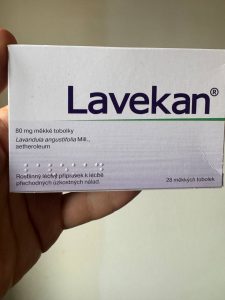
When people hear “Lavender,” they think of spa days, bath bombs, and Grandma’s potpourri. It is often dismissed as weak aromatherapy.
However, in Germany, Lavender isn’t just a smell; it’s a prescription.
A specific preparation of lavender oil known as Silexan (sold as CalmAid or Lavean/Lavekan) has been clinically studied to rival benzodiazepines (like Lorazepam) for Generalized Anxiety Disorder (GAD).
Does this floral pill actually work for insomnia, or is it just overpriced perfume? This review analyzes the science of lavender oil pills, the notorious “lavender burps,” and I (Alex) share my underwhelming experience with both the oral and topical forms.
What is Silexan (Lavender Oil 80mg)?
What does lavender do to the brain?
Lavender oil contains phytochemicals called Linalool and Linalyl Acetate.
- Mechanism: These compounds inhibit voltage-gated calcium channels in the brain (similar to how the drug Lyrica/Pregabalin works, but much weaker). This reduces the release of excitatory neurotransmitters like glutamate and norepinephrine.
- The Result: It lowers the “fight or flight” response without necessarily acting as a heavy sedative. It is an anxiolytic (anxiety reducer) rather than a hypnotic (sleep inducer).
Is lavender oil a sedative?
Technically, no. It relaxes the nervous system, which allows sleep to happen, but it doesn’t force it.
Forms: Pills vs. “Lipstick” vs. Oil
1. Oral Capsules (Silexan/CalmAid):
This is the only form with robust clinical data. It involves swallowing 80mg of pharmaceutical-grade lavender oil in a softgel.
Why take it: For systemic anxiety and racing thoughts.
2. Topical (“Lipstick” or Roll-on):
These are balms applied under the nose or on the temples.
- How it works: Olfactory stimulation. The smell triggers the limbic system (emotion center) to relax.
- Where to put lavender oil for sleep? Under the nose, temples, or bottom of the feet (reflexology theory, though scientifically thin).
3. Pillow Sprays:
Aromatherapy meant to condition the brain to associate the scent with sleep (Pavlovian conditioning).
Reddit & Community Consensus
What do users on r/Nootropics and r/Anxiety report?
The Good:
- “Nature’s Lyrica”: Users with mild anxiety often report a noticeable reduction in physical tension and chest tightness within 45 minutes.
- “No Addiction”: Unlike benzos, there is no withdrawal or tolerance buildup.
The Bad:
- “The Lavender Burps”: This is the 1 complaint. About 30-50% of users report burping the taste of flowers for hours after taking the pill. Pro-tip: Keep them in the freezer to delay digestion until they pass the stomach.
- “Weak for Sleep”: Many users find it great for daytime stress but insufficient for severe insomnia.
- “Estrogen Concerns?”: Does lavender increase estrogen? There are some limited, debated studies suggesting lavender might be an endocrine disruptor (increasing estrogen/blocking testosterone) in boys, but this is generally considered negligible for adult usage.
Alex’s Personal Review
The following is based on my personal logs.
I tested Lavean (Silexan 80mg) for two months to see if it could replace my heavier supplements.
My Experience (The Capsules):
I took one 80mg capsule 1 hour before bed.
- Effect: Zero. I didn’t feel calmer. I didn’t fall asleep faster.
- Side Effect: The burps. Oh, the burps. It felt like I had swallowed a bottle of perfume. It was distracting and unpleasant while trying to fall asleep.
- Wife’s Test: My wife tried it for a week. She also reported zero effect on her sleep onset or anxiety levels.
- Rating: 2/10
My Experience (The “Lipstick” Balm):
I bought a lavender sleep balm to apply under my nose.
- Effect: It was pleasant. The ritual of applying it and the smell provided a momentary distraction from stress. It possibly helped via the placebo effect or just by creating a “sleep cue.”
- Verdict: Better than the pills because no burps, but still weak.
- Rating: 3/10
!!! Conclusion: For me, Lavender is marketing. It might work for mild anxiety, but for stubborn maintenance insomnia or a racing mind, it was useless.
Where to Buy:
If you want to try the clinical version, look for Nature’s Way CalmAid (USA) or Lasea/Lavean (Europe). It is also available on iHerb.com.
Safety & Side Effects
What are the bad side effects of lavender?
- Gastrointestinal: Nausea, burping (eructation), and diarrhea.
- Skin: Topical oil can cause contact dermatitis (rashes) in sensitive people.
How long does it take for lavender oil to kick in?
Smell: Immediate.
Capsule: 45 to 90 minutes.
Update for December 2025:
Since I first reviewed Lavender Oil, the conversation has shifted. We finally have clarity on the infamous “hormone disruption” fears that scared men away from this supplement, and improved delivery technology has solved the 1 complaint (the burps).
1. The Hormone Verdict: Safe for Men?
For years, men avoided lavender due to headlines claiming it caused gynecomastia (enlarged breast tissue) in young boys.
The 2025 Consensus: Recent toxicology reviews have clarified that these cases were linked specifically to topical, complex essential oil blends (often containing Tea Tree oil) used in excessive amounts on prepubescent children.
The Silexan Safety Data: There is no evidence that oral pharmaceutical-grade Silexan (80mg) acts as an endocrine disruptor in adult men. It does not lower testosterone or raise estrogen in clinical trials.
The Biohacker Take: If you are an adult male, oral Silexan is now considered safe. If you are a parent, keep the essential oil diffusers out of the nursery just to be safe.
2. The “No-Burp” Upgrade (Enteric Coating)
My original review gave this supplement a low rating because of the “perfume burps.” In 2025, the market has finally adapted.
The Tech: High-end brands now use Enteric-Coated or Nano-Emulsified softgels.
The Result: These capsules do not dissolve in the stomach. They pass intact into the small intestine, where the oil is absorbed without reflux.
Recommendation: If you buy CalmAid or Lasea, specifically check the box for “Gastric Resistant” or “Enteric” labeling. If it doesn’t say it, do not buy it—you will taste flowers all night.
3. The 160mg “Panic Protocol”
While 80mg is the standard dose for Generalized Anxiety, new meta-analyses (2024–2025) suggest that 160mg (2 capsules) is the threshold for acute sleep onset.
The Data: At 160mg, Silexan rivals 0.5mg of Lorazepam for anxiety reduction but without the sedation or addiction risk.
My Protocol Update: If 80mg did nothing for you (like in my initial review), try 160mg specifically 90 minutes before bed. The higher dose appears to have a stronger impact on the 5-HT1A (Serotonin) receptor, which helps “turn off” the racing mind.
4. The “Golden Stack” Update
Biohackers in 2025 rarely take Silexan alone. The “Non-Sedative Anxiety Stack” is:
Silexan (80-160mg) + Magnesium L-Threonate + L-Theanine (200mg).
Why: Silexan quiets the emotional brain (Limbic system), Magnesium relaxes the muscles, and Theanine focuses the mind. Together, they prevent the “Tired but Wired” state without causing morning grogginess.
5. The Daytime Stress Buffer
A surprising use-case in 2025 is taking Silexan with breakfast.
The Logic: It doesn’t make you sleepy (non-hypnotic). Instead, it lowers your baseline reaction to stress throughout the day.
The Result: By the time you get to bed, you haven’t accumulated the high cortisol load that usually keeps you awake. It works upstream of the sleep problem.
Summary
Lavender Oil (Silexan) is a legitimate anxiolytic in medical literature, but a hit-or-miss tool for real-world insomniacs.
- Try it if: You have mild daytime anxiety and want a non-addictive alternative to benzos.
- Skip it if: You have a sensitive stomach (the burps are real) or severe insomnia.

By: Alex Warenstein.
Bio: Alex Warenstein is a sleep biohacker and founder of Night Time Comfort. After battling chronic insomnia and circadian disruption, he now helps others optimize their sleep using data-driven protocols. Read full story.
Disclaimer: Alex is not a doctor. This content is for educational purposes only. Always consult a specialist.