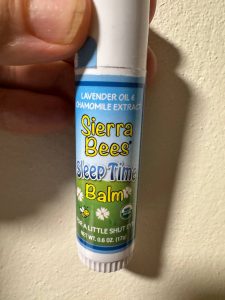
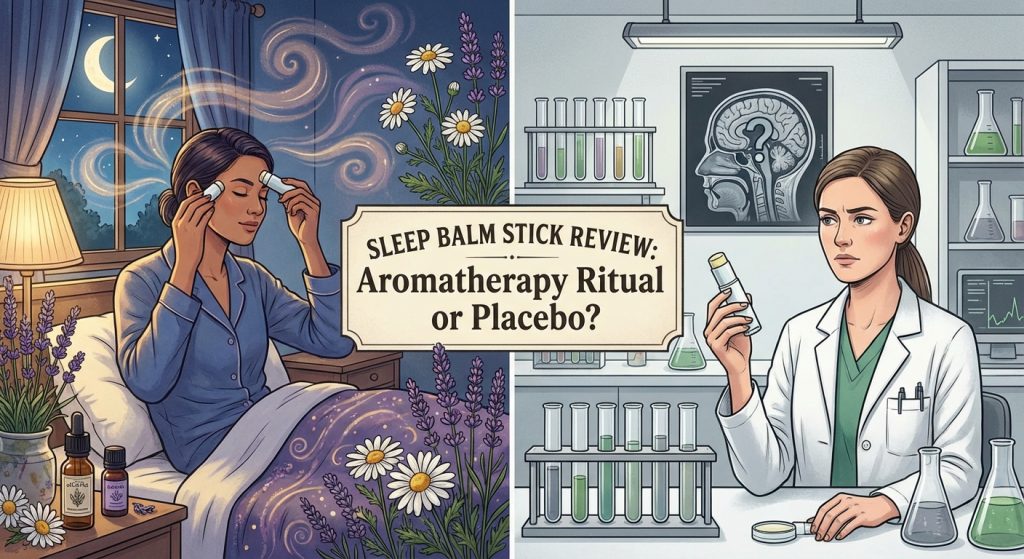
In the vast, often expensive landscape of sleep optimization—where we track our deep sleep with rings, tape our mouths, and swallow handfuls of magnesium—there exists a humble, low-tech contender: the sleep balm stick. You have likely seen these tins or twist-up tubes at the checkout counter of health food stores or listed as “essential” items in “mommy blogs.” They promise a drift into dreamland using nothing but the power of scent, usually a blend of lavender, chamomile, and bergamot suspended in a beeswax base.
For the data-driven biohacker or the chronic insomniac who has tried prescription medications, a stick of scented wax can seem almost laughably simple. Can a smell really compete with a cortisol spike at 3 AM? Is this merely a pleasant placebo for people who don’t have “real” sleep problems?
The answer, based on current 2025 research and deep dives into user experiences across the most relevant sleep forums, is nuanced. While a sleep balm is unlikely to cure Sleep Apnea or fix a severe circadian rhythm misalignment on its own, dismissing it entirely ignores a powerful biological mechanism: the direct hardline between your nose and your brain’s emotional control center.
This is a comprehensive review of the “Sleep Balm” category (specifically focusing on the popular lavender-based sticks like Badger and similar formulations). We will analyze the mechanism of action, the reality of the “Pavlovian sleep cue,” and how this compares to systemic solutions like Lavender Oil (Silexan) 80mg capsules.
The Mechanism:
To understand why a topical sleep aid might work, we have to look at anatomy. When you swallow a supplement like Magnesium L-Threonate, it has to pass through your digestive system, enter the bloodstream, and eventually cross the blood-brain barrier. It is a long journey.
Scent takes a shortcut. The olfactory bulb, located inside your nose, is the only part of the central nervous system that is directly exposed to the external environment. It has a direct neural pathway to the limbic system—specifically the amygdala (responsible for processing emotion and fear) and the hippocampus (responsible for memory).
This is why a specific smell can instantly trigger a vivid childhood memory or a sudden wave of nausea. The signal does not have to be filtered through the thalamus (the brain’s relay station) like other senses. It hits the emotional center first.
The “Relaxation” vs. “Sedation” Distinction
It is critical to correct a common misconception: applying a sleep balm is not the same as taking a sedative. A sleep balm review that claims the scent will “knock you out” is misleading.
The mechanism here is anxiolytic (anxiety-reducing), not hypnotic (sleep-inducing). By stimulating the olfactory system with specific terpenes like linalool (found in lavender), you are attempting to downregulate the sympathetic nervous system (fight-or-flight) and encourage the parasympathetic nervous system (rest-and-digest) to take over.
According to a 2025 meta-analysis published in Frontiers in Psychiatry, inhalation aromatherapy has shown statistical significance in improving subjective sleep quality and reducing anxiety symptoms in comorbid insomnia. However, the data suggests that while it helps people feel calmer, it does not necessarily change objective sleep architecture (like the duration of Deep Sleep vs. REM) in the same way that temperature manipulation or light control does.
The Pavlovian Sleep Cue: Why Rituals Work
Perhaps the most potent aspect of a lavender sleep stick is not the chemical composition of the oil, but the psychological conditioning it creates. This is often referred to as a Pavlovian sleep cue.
Ivan Pavlov famously conditioned dogs to salivate at the sound of a bell. Similarly, humans can condition their brains to release sleep hormones and lower heart rates in response to a specific sensory trigger. If you apply a specific scent to your pulse points or under your nose every single night—and only at night—your brain begins to associate that scent with the act of sleeping.
In discussions on Reddit’s r/insomnia and various biohacking forums, this is the most consistently reported benefit. Users who travel frequently note that while hotel rooms smell different and feel unfamiliar (which usually triggers the “first-night effect” and keeps one hemisphere of the brain alert), the familiar scent of their Badger sleep balm or similar product acts as a safety signal. It tells the primitive brain: “The environment is safe; the routine is active; it is time to shut down.”
This “sensory anchor” is vital for those suffering from Tired But Wired syndrome, where the body is exhausted but the mind remains hyper-vigilant.
Ingredients Profile: What Are You Actually Inhaling?
Most quality sleep balms rely on a triad of essential oils. Let’s break down the science behind the usual suspects found in these sticks.
1. Lavender (Lavandula angustifolia)
The heavyweight champion of aromatherapy for insomnia. The active compounds are linalool and linalyl acetate.
- The Science: Research indicates that inhaling lavender can increase slow-wave sleep (deep sleep) and reduce the time to fall asleep (sleep onset latency) in mild cases of insomnia. It interacts with the GABAergic system—the same neurotransmitter system targeted by benzodiazepines and GABA supplements, though the olfactory interaction is much milder and indirect compared to ingestion.
- The Reality: It works best for “busy brain” anxiety rather than physical pain or metabolic wake-ups.
2. Roman Chamomile (Anthemis nobilis)
Often paired with lavender.
- The Science: Chamomile contains apigenin, a bioflavonoid that binds to benzodiazepine receptors. While we often discuss Apigenin as an oral supplement for sleep, inhaled chamomile is traditionally used for its calming, mild sedative effects.
- The Reality: In a balm, the concentration of apigenin entering the system is negligible compared to a capsule. The benefit here is almost entirely olfactory and associative.
3. Bergamot or Sandalwood
These are often added to ground the scent. Sandalwood has compounds (santalol) that have shown sedative effects in rodent studies, often comparable to low doses of pharmaceutical sedatives, though human data is less robust.
The Base: Beeswax and Oils
The delivery method matters. Unlike a pillow spray, which dissipates quickly, a balm uses beeswax, olive oil, or castor oil to trap the volatile essential oils on the skin. This allows for a slow release of the scent over several hours. For people with dry skin or those who sleep in air-conditioned rooms, the lipid barrier also prevents irritation that pure essential oils might cause.
User Experience: The Community Verdict
Analyzing the chatter on platforms like Mumsnet, Reddit (specifically r/insomnia and r/Supplements), and reviews from 2024-2025, a clear pattern emerges regarding the efficacy of sleep balms.
The “Parental Transfer” Phenomenon
Many adults start using sleep balms like the Badger sleep balm because they used them on their children. On parenting forums, these balms are described as “magic” for toddlers. Desperate parents, struggling with their own sleep, try the leftover stick and find that the soothing ritual works for them too. This reinforces the idea that the efficacy is largely behavioral—it is a signal of comfort and safety.
The “Just a Nice Smell” Camp
A significant portion of users report that while the balm makes the experience of going to bed more pleasant, it does not stop them from waking up at 4 AM. This aligns with the understanding that aromatherapy helps with sleep onset (falling asleep) via relaxation but has little power to prevent nocturnal hypoglycemia or maintain sleep through strong biological drives like a full bladder or sleep apnea events.
The “Anchor” Users
The most successful users are those who stack the balm with other habits. They apply the balm while doing 4-7-8 breathing, or right after putting on their blue light blocking glasses. For these users, the balm is the final “enter key” in a long string of commands sent to the nervous system.
A Personal Perspective: The “Wife Test”
While I personally rely heavily on data from my Apple Watch Ultra 2 and specific supplements to manage my sleep architecture, my wife (45) has a different approach. She does not suffer from chronic insomnia but has occasional trouble “switching off” after a stressful day of work.
She has been using a popular lavender & bergamot sleep balm stick for the past six months.
Her Rating: 6/10
Her Experience:
“It doesn’t knock me out like a pill. If I’m really stressed or if I drank coffee too late, the balm does nothing. But on a normal night, it’s my favorite part of the routine. I rub it on my wrists and a tiny bit under my nose. The smell makes me feel happy and cozy. It’s like a trigger that tells my body the day is done. I keep using it not because it’s a strong medicine, but because without it, something feels missing.”
This anecdote perfectly encapsulates the role of a relaxation ritual. It is not a heavy hitter, but it is a consistent comfort.
Balm Stick vs. Silexan Capsules: What’s the Difference?
It is crucial to distinguish between sniffing lavender and ingesting it. In the structure of our sleep stack, you will see a separate entry for Lavender Oil (Silexan 80mg) Review. These are two completely different mechanisms.
1. The Balm (Topical/Inhaled):
- Mechanism: Olfactory stimulation of the limbic system.
- Primary Benefit: Immediate psychological grounding, “Pavlovian” habit formation, mild relaxation.
- Best For: People who need a bedtime ritual, those sensitive to pills, or those who want a pleasant sensory experience.
- Side Effects: Minimal. Possible skin irritation if sensitive to essential oils.
2. Silexan Capsules (Oral Ingestion):
- Mechanism: Systemic absorption. Silexan (a standardized lavender oil preparation) modulates voltage-gated calcium channels in the brain, similar to how the anxiety medication Pregabalin works (though much milder).
- Primary Benefit: Clinical reduction of anxiety, reduced ruminating thoughts, improved sleep duration secondary to lower anxiety.
- Best For: People with Generalized Anxiety Disorder (GAD), “busy brain” insomnia, or physical tension.
- Side Effects: “Lavender burps” (a distinct floral taste when burping), mild GI discomfort.
Comparison:
If your problem is that you cannot stop worrying about tomorrow’s meeting, the Silexan capsules are statistically more likely to help than the balm. If your problem is that you feel restless and lack a winding-down routine, the sleep balm stick is the better, gentler tool.
How to Use a Sleep Balm Stick for Maximum Effect
If you decide to add this aromatherapy for insomnia tool to your arsenal, do not just apply it randomly. Treat it as a protocol.
1. Consistency is King: Use it every single night for at least two weeks. You are trying to build a neural association. If you only use it when you are already panicking about not sleeping, your brain might associate the smell with the panic, not the sleep.
2. Target the Pulse Points:
- Wrists: Rub it on the inside of your wrists. When you sleep on your side with your hands near your face, the body heat will release the scent throughout the night.
- Temples: A small amount on the temples can help with tension headaches, often associated with tired but wired symptoms.
- Under the Nose (Philtrum): This provides the most direct olfactory hit. However, be careful—some balms are strong. Test a small amount first to ensure it doesn’t irritate the sensitive skin or eyes.
- Chest: Applying it to the sternum allows the scent to rise naturally as you breathe.
3. Combine with Breathwork: Once applied, engage in a technique like 4-7-8 breathing or Yoga Nidra. Inhale the scent deeply through the nose for 4 seconds, hold for 7, exhale for 8. This forces the olfactory signal to combine with a physical vagus nerve reset.
4. Environment: Ensure your room is cool and dark. Even the best aromatherapy cannot compete with a hot room or bright streetlights. Check your sleep hygiene checklist basics first.
Limitations: What the Balm Will Not Do
We must be realistic to avoid disappointment.
- It will not fix low oxygen: If you have UARS or Sleep Apnea, no amount of lavender will open your airway. If you suspect these issues, look into Home Sleep Apnea Tests or devices like the Wellue O2Ring to track your oxygen saturation.
- It will not fix a bad mattress: If your Tempur mattress is too hot or your pillow alignment is wrong causing neck pain, a balm is just a band-aid on a broken leg.
- It will not counteract caffeine: If you drank a double espresso at 4 PM, the adenosine blockage in your brain is far stronger than the relaxing signal of chamomile.
Who Should Buy This?
The Sleep Balm is for you if:
- You struggle to “switch modes” from work/daytime to sleep/nighttime.
- You travel often and find it hard to sleep in strange beds.
- You are looking for a non-ingestible, safe addition to your stack.
- You want to create a comforting ritual that signals safety to your nervous system.
- You have a partner who doesn’t mind the smell (or who might benefit from it too).
Skip this if:
- You are highly sensitive to smells (it can trigger migraines in some).
- You have severe maintenance insomnia (waking up multiple times) caused by metabolic issues or pain.
- You are expecting a “knock-out” pill effect.
Integrating with Your Sleep Stack
The beauty of the sleep balm is that it interferes with nothing. You can use it alongside Magnesium L-Threonate, Liposomal Apigenin, or even while wearing a CPAP mask (some users apply a tiny bit near the air intake filter, though check your manufacturer’s warnings first).
It pairs exceptionally well with Pink Noise. The combination of a consistent soundscape via the Soundcore Sleep A30 sleep earbuds and a consistent “smellscape” creates a sensory cocoon that effectively isolates you from the outside world.
Summary
The Sleep Balm Review verdict is positive, provided your expectations are managed. It is not a pharmaceutical sedative. It is a tool for behavioral conditioning.
The lavender sleep stick works by leveraging the connection between the olfactory bulb and the limbic system to lower emotional arousal. More importantly, it acts as a powerful Pavlovian sleep cue. If used consistently, the scent becomes a biological “Save & Quit” button for your brain. While clinical data shows only modest improvements in objective sleep metrics compared to strong interventions, the subjective feeling of comfort, ritual, and relaxation makes it a worthy, low-risk addition to a comprehensive sleep hygiene protocol. It may not force you to sleep, but it definitely invites you to relax.

By: Alex Warenstein.
Bio: Alex Warenstein is a sleep biohacker and founder of Night Time Comfort. After battling chronic insomnia and circadian disruption, he now helps others optimize their sleep using data-driven protocols. Read full story.
Disclaimer: Alex is not a doctor. This content is for educational purposes only. Always consult a specialist.