You stare at the supplement aisle, overwhelmed. There is Magnesium Citrate, Glycinate, Oxide, Malate, and Taurate.
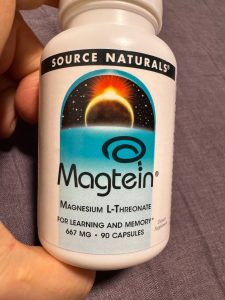
But recently, biohackers like Andrew Huberman and Peter Attia have been championing a newer, more expensive form: Magnesium L-Threonate (often patented as Magtein).
The claim is bold: unlike other forms that just relax your muscles or make you poop, L-Threonate is the only form that effectively crosses the blood-brain barrier to increase magnesium concentrations inside the brain.
This review cuts through the marketing hype. We will analyze the science of Magtein benefits, compare it to the popular Glycinate for sleep, and I (Alex) will share my personal experience adding it to my stack.
The Science: Why Magnesium Matters for Sleep
Magnesium is an essential cofactor for over 300 enzymatic reactions. For sleep, its primary role is regulating GABA (Gamma-Aminobutyric Acid), the neurotransmitter that quiets down nerve activity. Think of GABA as the brake pedal for your brain.
What are the symptoms of a magnesium deficiency?
- Muscle cramps (Charley horses).
- Anxiety and racing thoughts.
- Insomnia (specifically trouble falling asleep).
- Heart palpitations.
Most people are deficient because modern soil is depleted of minerals.
The Problem with Generic Magnesium
Why not just take the cheapest pill?
- Magnesium Oxide: Has a terrible absorption rate (around 4%). It mostly stays in your gut and causes diarrhea.
- Magnesium Citrate: Absorbs better, but it is primarily an osmotic laxative. It pulls water into the intestines. Great for constipation, terrible for sleep if you have to wake up to use the bathroom.
This leaves us with the two heavyweights for sleep: Magnesium Glycinate vs. Magnesium L-Threonate.
Magnesium L-Threonate: The “Brain” Magnesium
Developed by researchers at MIT, L-Threonate is a magnesium salt of L-threonic acid (a metabolite of Vitamin C).
The Unique Mechanism
The defining feature of L-Threonate is its ability to elevate magnesium levels in the cerebrospinal fluid.
- Cognitive Function: Studies suggest it improves synaptic density and plasticity (learning and memory).
- Sleep Onset: By increasing magnesium directly in the brain, it may more effectively calm the NMDA receptors (which cause excitability) and boost GABA than other forms that get stuck in the blood or muscles.
The “Bathroom” Factor
Unlike Citrate or Oxide, L-Threonate generally does not cause loose stools. Because it is absorbed efficiently into the bloodstream and brain, less of it sits in the gut to attract water. This is crucial for avoiding Nocturia (waking up to pee).
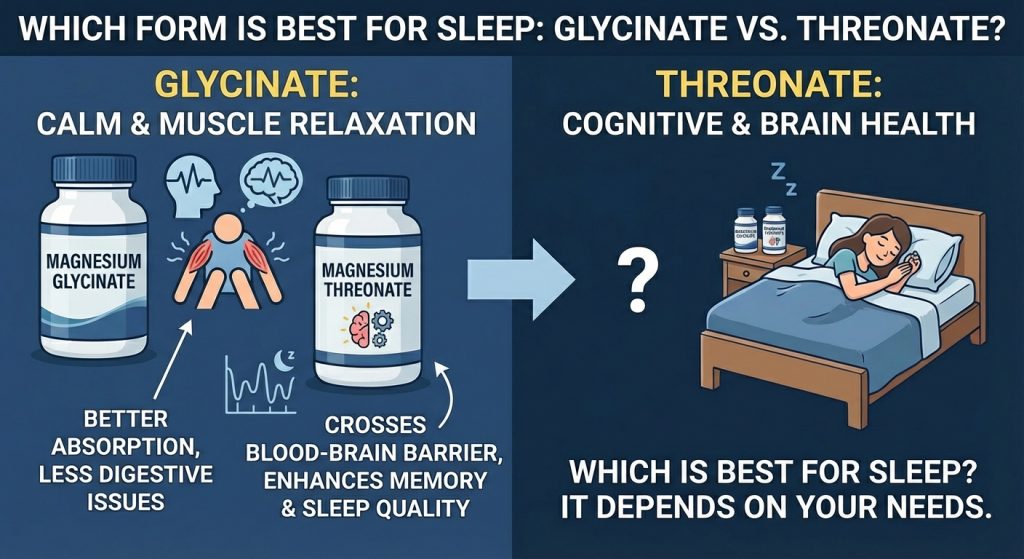
Which Form is Best for Sleep: Glycinate vs. Threonate?
This is the most common question on Reddit (r/Nootropics and r/Supplements).
Magnesium Glycinate:
- Pros: Cheaper. Contains Glycine, an amino acid that lowers body temperature and promotes sleep. Very gentle on the stomach.
- Cons: Does not cross the blood-brain barrier as efficiently as Threonate.
- Best for: General relaxation, physical tension, and tight muscles.
Magnesium L-Threonate:
- Pros: Superior brain bioavailability. Nootropic effects (clearer thinking).
- Cons: Expensive.
- Best for: Racing thoughts, anxiety-induced insomnia, and cognitive longevity.
The Verdict:
If your insomnia is physical (restless legs, tension), use Glycinate. If your insomnia is mental (cannot turn off your brain), use Magnesium L-Threonate.
Reddit & Community Consensus
What do real users say?
The Good:
- “Vivid Dreams”: Many users report a significant increase in dream recall and vividness, suggesting an impact on REM sleep.
- “Quiet Mind”: The most consistent report is a reduction in “looping thoughts” before bed.
- “No Fog”: Unlike melatonin, users rarely report grogginess the next day; instead, they feel mentally sharper.
The Bad:
- “Stimulation”: A minority of users (approx 10-15% on forums) report that L-Threonate is stimulating if taken right before bed. This is likely due to increased brain connectivity. These users prefer taking it with dinner or in the morning.
- “Withdrawal”: Some anecdotal reports suggest mild headaches if they stop taking it abruptly after long-term use.
- “Price”: It is often 3x the price of Glycinate.
Alex’s Personal Review
The following is based on my personal logs and testing.
I started testing Magnesium L-Threonate (Life Extension Neuro-Mag) after my success with Glycinate plateaued. I was looking for something to specifically target the “tired but wired” feeling at 11 PM.
My Experience:
- I take 147mg elemental magnesium (approx. 2000mg of Magtein) about 45 minutes before sleep.
- Unlike Glycinate, which makes my body feel heavy, Threonate feels like it turns the volume knob down on my internal monologue. It is not a sedative—it doesn’t “knock me out.” It just makes the transition to sleep smoother.
- Headaches: Some users report headaches in the first week as brain blood flow changes.
- Groggy? Does magnesium make you sleepy the next day? Generally, no. Magnesium usually improves energy by supporting ATP production.
- Buy it if: You can afford it, and your sleep problems are “brain-based” (anxiety, racing thoughts, focus issues).
- Skip it if: You are on a budget or mostly suffer from muscle cramps (stick to Glycinate).
Crucially, it has zero impact on my digestion. I do not wake up to use the bathroom more often, which was a dealbreaker with Citrate.
My Rating: 7/10
It works for me, but it is subtle. It is not a miracle cure like a sleeping pill. However, it helps me fall asleep faster (reduced sleep onset latency). It is a permanent part of my stack because of the cognitive benefits, even if the sleep effect is mild.
Where to Buy:
I personally use Life Extension Neuro-Mag (available on Amazon/iHerb) because they use the official patented Magtein raw material. Be wary of generic brands that don’t display the “Magtein” logo; they may be counterfeit.
Dosage and Safety
How much magnesium to take before bed?
The standard dose for L-Threonate is usually 144mg – 200mg of elemental magnesium (which requires taking 3 large capsules of the powder).
Are there side effects?
Can I take Vitamin D and Magnesium at night?
Yes. Magnesium is required to activate Vitamin D. However, some people find Vitamin D interfering with melatonin production, so Vitamin D is safer in the morning, while Magnesium is safe at night.
Update for December 2025
Since my original review, the debate around Magnesium L-Threonate has shifted from “does it work?” to “when should I take it?”
1. The New Challenger: Magnesium Acetyl-Taurate (ATA Mg)
For years, L-Threonate was the only option for crossing the blood-brain barrier effectively. In late 2025, biohackers on Reddit/r/Nootropics and Longecity are shifting attention to Magnesium Acetyl-Taurate (ATA Mg).
The Science: ATA Mg combines magnesium with Taurine in a specific acetylated form. It appears to target neuronal cells specifically.
The Difference: While Threonate increases synaptic density (neuroplasticity), ATA Mg seems superior for calming hyperexcitability (migraines and seizures) and inducing relaxation.
The Verdict: If L-Threonate makes you feel “too wired” or stimulates your brain too much at night, ATA Mg is now considered the better “Evening Brain Magnesium.”
2. The Protocol Shift: “The AM/PM Split”
A major trend in the r/Biohackers and Blueprint communities in 2025 is the move away from taking Threonate right before bed.
The Problem: About 15-20% of users (including myself on occasion) report a “paradoxical stimulation”: feeling mentally sharp and awake if they take Threonate at 11:00 PM. This is likely due to increased blood flow and synaptic firing.
The Fix: The new standard protocol is to take Magnesium L-Threonate in the late afternoon (4:00 PM – 6:00 PM) or with dinner. This allows the magnesium to saturate the brain and the “focus” effect to taper off before sleep, leaving you with the calming benefits without the stimulation.
The Night Cap: Save your Magnesium Glycinate for 30 minutes before bed.
3. Bryan Johnson’s “Blueprint” Approach
As of late 2025, tech biohacker Bryan Johnson’s protocol emphasizes Magnesium Glycinate specifically for his evening routine to maximize Deep Sleep scores.
The “Stack” Strategy: If you have the budget, the current “God Tier” stack is not choosing between them, but using both.
Morning/Afternoon: L-Threonate (for Brain Age, Memory, and BDNF).
Night: Glycinate (for physical relaxation and temperature regulation).
4. Safety Update: The “Rebound” Warning
New anecdotes from 2025 forums (Reddit/r/Nootropics) have highlighted a “Rebound Effect.”
The Issue: Because L-Threonate acts on NMDA receptors (similar to how some medication works), stopping it “cold turkey” after months of high-dose daily use can trigger 2-3 days of Rebound Insomnia or mild headaches.
The Solution: Do not just run out of pills. If you plan to cycle off, taper your dose over 3-4 days (3 capsules -> 2 -> 1 -> 0).
5. Interaction Watch: Vitamin D
Current guidance suggests that high-dose Magnesium depletes Vitamin D reserves (because magnesium is used to process the vitamin). If you are loading up on Magtein for your brain, ensure your morning stack includes Vitamin D3 + K2 to maintain the balance.
Summary
Magnesium L-Threonate is the Ferrari of magnesium supplements. It is expensive and specialized.
It won’t knock you out cold, but it might just silence the noise enough to let you drift off.

By: Alex Warenstein.
Bio: Alex Warenstein is a sleep biohacker and founder of Night Time Comfort. After battling chronic insomnia and circadian disruption, he now helps others optimize their sleep using data-driven protocols. Read full story.
Disclaimer: Alex is not a doctor. This content is for educational purposes only. Always consult a specialist.