Introduction: The View from the Patient Side
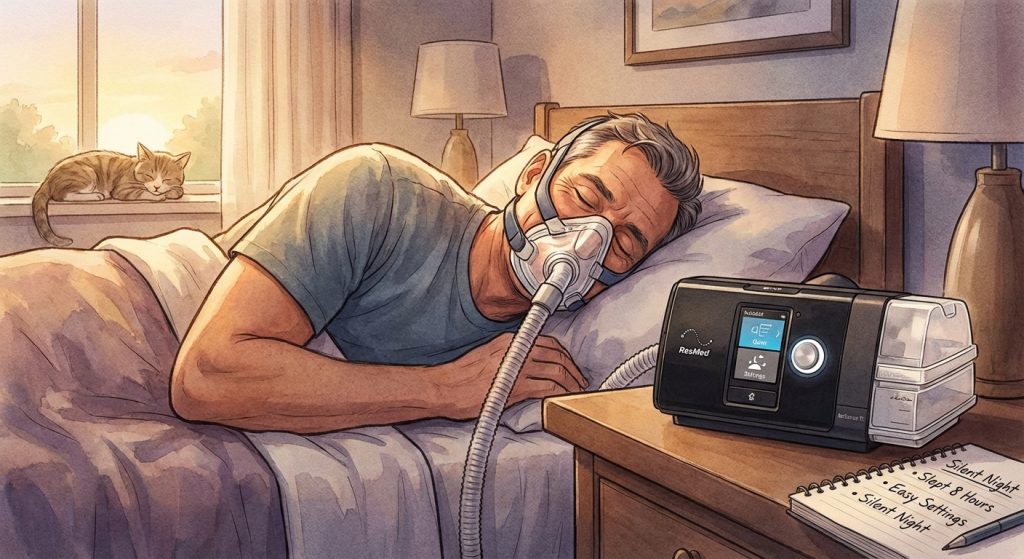
My name is Josh. I am 38 years old, and like many of you reading this, I fought a losing battle against fatigue for years before finally accepting that my snoring wasn’t just “noise”—it was Obstructive Sleep Apnea (OSA). I am a close friend of Alex Warenstein, and while his journey involved a deep dive into insomnia and supplements, mine has been strictly mechanical. I require positive airway pressure to breathe at night.
I am not a doctor. I am a patient who has spent thousands of hours sleeping with a plastic hose attached to my face. My primary machine is the ResMed AirSense 11 AutoSet, and my travel backup is the ResMed AirMini. I have lived with the S11 since it essentially replaced the legendary AirSense 10, and I have navigated every frustration from “rainout” flooding my nose to the dreaded “motor whine” that turned out to be a user error.
If you are reading this, you are likely in one of two camps: you just received a diagnosis and are looking for the best APAP machine 2026 has to offer, or you have an AirSense 11 that is whistling at you, drying out your sinuses, or blasting you with too much pressure, and you can’t get an appointment with your sleep specialist for another three months.
This article is my attempt—and the collective attempt of the sleep community—to help you master this machine. I give this device a solid 9 out of 10, but that score comes with caveats. It requires setup, knowledge of the clinical menu access, and a specific maintenance routine to reach that potential.
What is the ResMed AirSense 11 AutoSet?
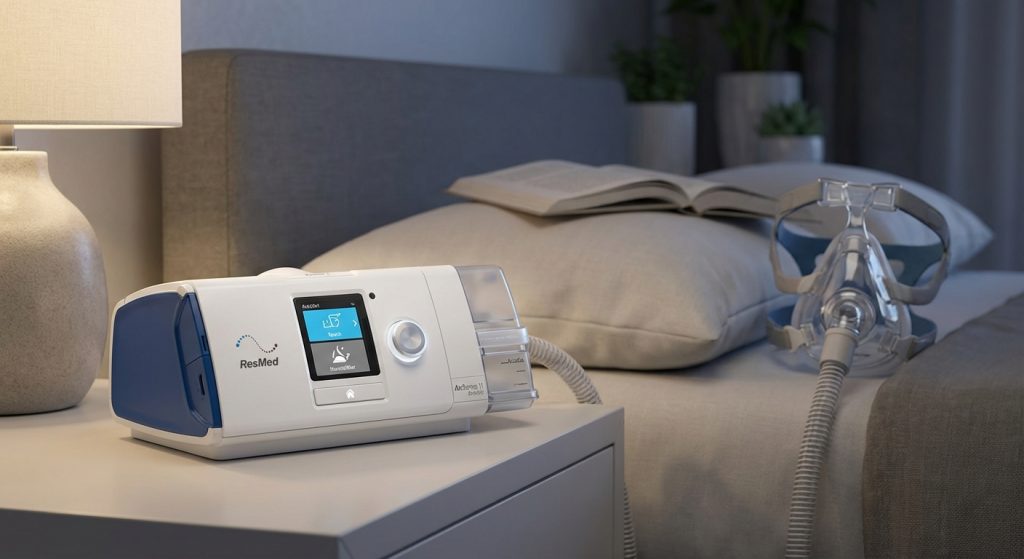
The AirSense 11 is not merely a cosmetic update to the S10. It represents a shift in how ResMed approaches therapy algorithms. The most critical “under the hood” change is that the AirSense 11 AutoSet integrates the “For Her” algorithm directly into the standard machine. Previously, you had to buy a specific “For Her” model to access this mode. Now, it is a toggle in the settings.
Why does this matter for a man like me? Because the “For Her” algorithm is arguably a misnomer. It is simply a more sensitive, gentler algorithm designed to treat flow limitations (the narrowing of the airway that precedes an apnea) without the aggressive pressure spikes of the standard AutoSet mode. Many men in the community find this mode superior for comfort, yet they never try it because of the name.
The machine is smaller, lighter (1130g with the humidifier tub), and uses a 24V power supply that draws about 56W typically. It supports Over-the-Air (OTA) updates, meaning the firmware can change overnight, theoretically improving the algorithm without you buying a new device.
The Noise Debate: S10 vs. S11 Noise Levels
One of the most contentious topics in the community is the S11 noise levels. The official specifications state the machine runs at 27 dBA with the humidifier. On paper, this is whisper-quiet. However, acoustic character matters more than decibels.
The AirSense 10 had a low, rhythmic “chugging” sound that many found hypnotic—like white noise. The AirSense 11 has a higher-pitched, digital motor sound. For the first week, I thought it was louder.
However, after spending time on ApneaBoard and CPAPtalk, I realized that 90% of the “noise” complaints regarding the S11 are actually humidifier leak issues. If the water chamber is not seated with significant force—until you hear a distinct, snapping click—the seal is imperfect. This creates a high-pitched whistle or hissing sound that fluctuates with your breathing. This is not motor noise; it is an air leak.
When seated correctly, the S11 is effectively silent. If you hear Darth Vader breathing or a tea kettle whistling, do not blame the motor immediately. Eject the tank and slam it back in.
The Humidification System: 380ml of Reality
The integrated humidifier is both the machine’s best feature and its Achilles heel. The tub capacity is 380ml. ResMed claims this provides over 8 hours of humidification. In the real world, specifically during winter when your bedroom humidity drops below 30%, this creates a problem.
If you use the ClimateLineAir 11 heated tubing (which is proprietary to the S11—your old S10 tubes will not fit) and set the humidity to Level 6 or higher with a tube temperature of 27°C (80°F), you will run out of water by 5:00 AM. When the tank runs dry, the smell of “hot plastic” can wake you up.
The Fix: You must utilize the “Auto” Climate Control setting. The machine measures the ambient humidity and temperature of the room and adjusts the heater plate to maintain 85% relative humidity in the mask. This prevents the tank from boiling off water too fast. If you still experience dryness, you need to lower the tube temperature, not just crank the humidity level, to prevent “rainout” (condensation).
The Calcium Problem & The Vinegar Protocol
The manual says to use distilled water. We all know that. We also know that carrying gallons of distilled water home from the grocery store is annoying, and in many parts of Europe (where the Lowenstein Prisma Smart Max is popular), distilled water is hard to find.
If you use tap water or filtered water, the heater plate in the AirSense 11 will develop a white, crusty calcium scale within two weeks. This creates uneven heating and can harbor bacteria.
The Community Solution: You do not need to throw the tank away. The community-verified protocol for scaling is simple.
- 1. Once a week, or whenever you see white residue.
- 2. Fill the tank with a solution of 1 part white vinegar to 9 parts water (some users go as strong as 1:3 for heavy scale).
- 3. Let it soak for 30 to 60 minutes during the day. Do not soak it for 12 hours, as acid can eventually degrade the silicone seals.
- 4. Rinse thoroughly with warm water and let it air dry.
This dissolves the mineral deposits completely and keeps the heating efficiency high.
Mask Compatibility: My Top Picks
The AirSense 11 works with any standard CPAP mask, but the synergy varies. My personal “Gold Standard” setup involves two very different masks, depending on my skin condition and beard growth.
1. ResMed N30i AirTouch
This mask was released after the machine but feels made for it. It is a “unicorn” style mask (tube connects at the top of the head), which allows me to sleep on my side without the hose dragging the mask off. The “AirTouch” designation means the nasal cushion is wrapped in memory foam rather than silicone.
- Why it works: The memory foam creates a seal even at lower pressures (like 6-7 cmH2O) where silicone might flutter. It eliminates the red marks on the nose bridge.
2. Bleep Eclipse
This is for the minimalists. It uses adhesive “Halos” to stick the ports directly to your nostrils. There is no headgear. No straps.
- Why it works: It has zero leaks. Zero. Because it magnetically snaps to your nose, the AirSense 11 leak rate graph in OSCAR becomes a flat line. If you struggle with the “For Her” algorithm being too sensitive to leaks, this mask solves the hardware side of the equation.
Clinical Settings: Taking Control of Your Therapy
Most machines are delivered with “lazy” doctor settings: a pressure range of 4–20 cmH2O. This is the factory default. It means the machine starts at the lowest possible pressure (4) and can go to the maximum (20).
For an adult, a pressure of 4 cmH2O is suffocating. It feels like breathing through a straw. This sensation, known as “air hunger,” causes many beginners to rip the mask off in a panic. You must optimize this.
How to Access the Clinical Menu
Do not be afraid of this menu. It is where the real adjustments happen.
- 1. On the home screen, locate the “My Options” and “My Sleep View” squares.
- 2. Place two fingers on the screen, pressing both squares simultaneously.
- 3. Hold for about 3 seconds.
- 4. The background will turn white, and you will see “Clinical Home.”
Community Recommended Settings (The “Josh” Protocol)
!!! Disclaimer: I am not a doctor. These are the settings most commonly cited as effective by patients on ApneaBoard and Reddit for typical OSA. Our information is provided only so that you can have an informed dialogue with your doctor on this topic.
- 1. Mode: AutoSet (or AutoSet For Her if you are sensitive to pressure swings).
- 2. Min Pressure: Raise this from 4 to 7 cmH2O. This provides enough pneumatic splinting to keep the airway open and eliminates the feeling of suffocation.
- 3. Max Pressure: 15 or 16 is usually sufficient. Leaving it at 20 is fine, but capping it prevents “runaway pressure” caused by mask leaks.
- 4. EPR (Expiratory Pressure Relief): Set this to 3 and Full Time. This lowers the pressure by 3 cmH2O when you exhale, making it feel like natural breathing rather than fighting a leaf blower.
Note: If your Min Pressure is 7 and EPR is 3, your exhale pressure is 4. If you set Min Pressure to 6, EPR effectively only drops it to 4 (the machine’s floor). This is why a minimum of 7 is the sweet spot for comfort. - 5. Ramp: Turn it Off or set it to Auto. If you set your minimum pressure correctly (to 7), you likely won’t need a Ramp. Waiting 20 minutes for air is frustrating.
Data Analysis: Moving Beyond myAir
The myAir app is a gamified summary. It gives you a score out of 100. It tells you “Great job!” or “Adjust mask.” It is useless for diagnosing why you feel tired.
The AirSense 11 has an SD card slot on the left side. Even if your provider didn’t give you a card, you can buy any generic SD card (up to 32GB) and insert it. The machine will write detailed breath-by-breath data to this card.
You need to download OSCAR (Open Source CPAP Analysis Reporter). It is free software for PC/Mac.
- OSCAR data export allows you to see your flow rate waveform.
- You can distinguish between Obstructive Apnea (throat closing) and Central Apnea (brain forgetting to breathe).
- You can see “Flow Limitation” graphs. If your flow limits are high but AHI is low, you will still feel like a zombie. This indicates you need to turn on the For Her algorithm or increase EPR.
Real Patient Feedback: The Community Consensus
I have aggregated opinions from hundreds of users across SleepHQ, ApneaBoard, and r/CPAP to give you a transparent look at who this machine actually helps.
Who It Helps (The Success Stories)
- 1. The “Sensitivity” Group: Patients who switched to the AutoSet for Her mode report significantly fewer micro-arousals. The softer pressure transitions prevent the “pressure jerk” that wakes people up.
- 2. The EPR Users: People who utilized EPR Level 3 combined with a Min Pressure of 7+ report the highest long-term compliance. They don’t feel like they are fighting the machine.
- 3. The Climate Control Fans: Users in dry climates (Arizona, heated winters in Northern Europe) who rely on the ClimateLineAir 11 report less nasal congestion compared to older machines without heated tubes.
- 4. The Data Nerds: Patients using OSCAR to fine-tune their therapy. Being able to see that a leak happened at 3:00 AM due to a pillow shift allows for actionable corrections.
- 5. The Travelers: Those who travel to hotels love the side cover option. It reduces the footprint significantly compared to the “brick” design of older Philips machines.
- 6. The Light Sleepers: Once the humidifier leak fix (reseating the tank) is applied, this group rates the motor sound as smoother and less intrusive than the S10.
Who It Fails (The Struggle)
- 1. The “Factory Settings” Victims: Users left on 4–20 pressure without EPR. They report air hunger, panic, and bloating (aerophagia) because they swallow air trying to breathe.
- 2. The Tank Leakers: A significant percentage (approx. 22% of complaints) struggle with the tank seal. If you have arthritis or weak grip strength, snapping the S11 tank shut is harder than on the S10.
- 3. The Connectivity Issues: About 24% of negative feedback relates to myAir not syncing. The S11 uses different cellular modems. If you are in a poor coverage area, the data won’t upload. This doesn’t affect therapy, but it causes anxiety for patients who need compliance for insurance.
- 4. The Off-Grid Campers: The S11 draws more peak power and uses a different plug than the S10. Users trying to run it on generic batteries often fail. You need a dedicated 24V DC converter and to turn off the heated tube/humidifier to get through a night on a Jackery or similar battery.
- 5. The “Phantom” Noise: People who experience “gurgling” or “whistling.” This is almost always “rainout” (water in the tube) or a leak, but they perceive it as a machine defect.
- 6. The Dry-Outs: Users with very high leak rates find the 380ml tank empties too fast, drying them out by morning. The solution is fixing the leak, not a bigger tank, but it remains a complaint.
Travel: AirSense 11 vs. AirMini
I own both. The ResMed AirMini is my “backpack only” device. It uses HumidX (waterless humidification), which is essentially a moisture-capturing filter. It is loud. It sounds like Darth Vader breathing through a snorkel.
The AirSense 11 is my “suitcase” device. If I am staying in a hotel for more than two nights, I bring the S11. The humidification is superior, the noise is lower, and the therapy comfort is better.
If you are camping, you have a choice. The AirMini is efficient on batteries because it has no heater plate. The AirSense 11 requires a significant battery bank (like an EXP48 Pro or a large Jackery 300+) if you want to use humidity. If you turn off the humidifier and heated tube on the S11, its power consumption drops drastically, making it viable for camping with a 12V-to-24V DC converter cord.
Summary: The Verdict from Josh
The ResMed AirSense 11 AutoSet is the current king of the hill for a reason. It is not perfect—the water tank geometry is annoying, and the reliance on cellular data can be spotty. However, the core therapy—the algorithm that pushes air down your throat to keep you alive—is the best in the business.
If you are struggling with it, the problem is likely your settings, not the machine.
- Is your minimum pressure too low (4)? Raise it.
- Is your mouth dry? Check your mask seal or switch to the N30i AirTouch.
- Is it noisy? Slam that tank in harder.
- Do you feel bad despite a “good” score? Buy an SD card and install OSCAR.
Don’t let a default setting dictate your sleep quality. This machine is a tool; you have to learn how to wield it.

By: Alex Warenstein.
Bio: Alex Warenstein is a sleep biohacker and founder of Night Time Comfort. After battling chronic insomnia and circadian disruption, he now helps others optimize their sleep using data-driven protocols. Read full story.
Disclaimer: Alex is not a doctor. This content is for educational purposes only. Always consult a specialist.