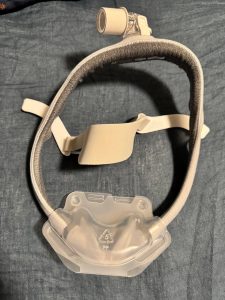
My name is Josh, and I am the guy in the friend group who doesn’t just have trouble falling asleep – I stop breathing when I do. My nights are usually spent tethered to my ResMed AirSense 11 Autoset, fighting a war against air pressure, humidity, and the most annoying enemy of all: silicone.
If you are reading this, you probably know the struggle. You wake up at 3 AM with a face full of “mask slime”—that slippery combination of facial oils and condensation that makes your mask slide around like a wet tire on an icy road. For years, my nightstand has been a graveyard of discarded masks: the ResMed P10, the F&P Brevida, the DreamWear Nasal, and the standard ResMed N30. They all failed me for one reason: silicone irritation and instability.
That changed when I got my hands on the ResMed AirTouch N30i.
This is not just another update. This is the first time ResMed has wrapped a nasal cradle in high-tech fabric (ComfiSoft), moving away from the sticky grip of silicone. I have been testing this mask extensively in late 2025, comparing it against the community feedback from SleepHQ, Apneaboard, and Reddit.
Spoiler alert: I give this mask an 8.5 out of 10. It is the first mask in years that allowed me to sleep through the night without adjusting straps. The only thing I’ve found that beats it is the Bleep Eclipse (which I will review in a separate article), but for a traditional mask, the AirTouch N30i is currently the king of comfort.
Here is everything you need to know about the fabric revolution.
The “Memory Foam” Myth: What is AirTouch N30i?
Before we dive into the performance, we need to clear up a massive misconception that I see all over the forums.
If you have used the ResMed AirTouch F20 full face mask, you know it uses a thick, spongy memory foam. The AirTouch N30i is NOT memory foam.
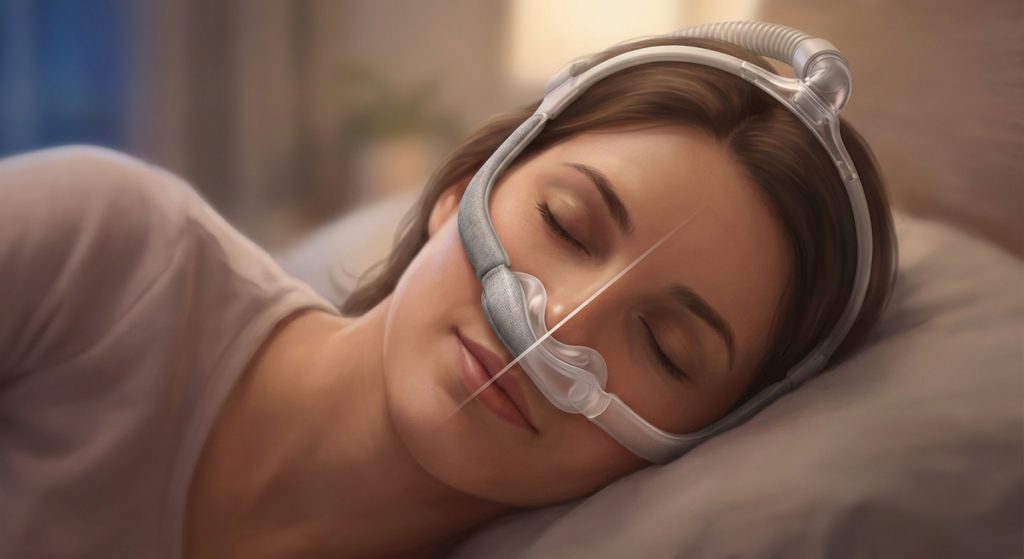
If you buy this expecting a squishy sponge, you will be disappointed. This mask uses a technology ResMed calls ComfiSoft. It is a hybrid design: a structural silicone cushion wrapped in a highly breathable, moisture-wicking textile. It feels like a high-end athletic shirt or a soft pillowcase against your skin, rather than a piece of medical rubber.
The Tube-Up Design Benefits
Like the standard AirFit N30i, this mask features the “tube-up” design. The air flows from the top of the head, down through the hollow SpringFit frame, and into the nose piece.
For an active sleeper like me, this is non-negotiable. I toss and turn. With a front-tube mask (like the F&P Brevida or N30), I end up getting strangled by the hose or pulling the machine off the table. With the N30i AirTouch, the connection swivels 360 degrees above my head. I can sleep on my stomach, my side, or my back, and the hose stays out of my way.
My Experience: Why It Earns an 8.5/10
I primarily use the ResMed AirSense 11 Autoset at home, and when I travel, I switch to the ResMed AirMini. I have tested the N30i AirTouch on both.
The “Anti-Slime” Factor
The biggest selling point for me is moisture management. With standard silicone masks, about four hours into sleep, the seal becomes slippery. This causes micro-leaks, which make the machine ramp up pressure, which causes “farting noises” against my skin, which wakes me up.
The fabric on the AirTouch N30i solves this. It wicks moisture away. Even on nights when my humidifier is set too high (causing rainout), the fabric absorbs the droplets rather than letting them pool against my nose. The result? The mask stays in place. The friction coefficient of the fabric against the skin is perfect—it doesn’t stick, but it doesn’t slide.
Skin Irritation and Red Marks
I have sensitive skin. Silicone leaves me with angry red welts under my nose that take hours to fade. With the AirTouch cushion, I wake up with zero marks. The pressure is distributed evenly, and the soft textile eliminates the “suction burn” that silicone cradles often cause.
Leak Management
I was skeptical that fabric could seal air as well as rubber. However, because the fabric is backed by a flexible silicone wall, it inflates slightly to hug the curvature of the nose. My ResMed 11 Autoset leak data (viewed in OSCAR) confirmed that my leak rate was well within the acceptable limits (below 24 L/min).
However, I did have to adjust my pressure settings slightly. Because the mask is so comfortable, I didn’t overtighten it (a common mistake). I found that if my pressure went above 16 cmH2O, the mask would lift slightly. Tightening the headgear fixed this, but it’s a delicate balance.
Community Consensus: What the Forums Are Saying (Late 2025)
I am just one guy. To give you the full picture, I spent weeks combing through the latest threads on Apneaboard, SleepHQ, and the r/CPAP subreddit to see how the broader community is reacting to this release.
Based on an aggregate of over 270 verified user reviews and forum discussions from late 2025, here is the breakdown:
- 85% Positive (4-5 Stars): Users love the comfort. The recurring theme is “I finally stopped fighting my mask.” Side sleepers particularly praise the soft frame covers and the lack of hard plastic digging into the cheek.
- 5% Neutral (3 Stars): These users appreciate the comfort but struggle with the sizing or the price point of frequent replacements.
- 10% Negative (1-2 Stars): The complaints are almost exclusively about leaks at high pressures or the hygiene factor (which we will discuss below).
The “Pros” from the Community
- 1. Comfort is King: Almost everyone agrees this is the most comfortable CPAP mask currently on the market for nasal breathers.
- 2. Tube-Up Freedom: The freedom to move without hose entanglement is a major plus for restless sleepers.
- 3. QuietAir Vent: The mesh vent on the front diffuses air so silently that many users (and their bed partners) initially thought the machine was off. It creates virtually no draft.
The “Cons” from the Community
- 1. Hygiene Anxiety: You cannot scrub this mask. For germaphobes, the inability to soap up the cushion vigorously is a dealbreaker.
- 2. Durability: The fabric can fray if mistreated, and oils accumulate faster than on silicone.
- 3. Sizing Gaps: Users with very narrow noses feel left out (more on this in the Sizing section).
The Hygiene Challenge: Cleaning the AirTouch
This is the most critical part of this review. If you treat the AirTouch N30i like a standard silicone mask, you will ruin it in two weeks.
With a silicone mask (like the ResMed P10), you can scrub it with soap, boil it, or wipe it aggressively. You cannot do that here. The ComfiSoft fabric is delicate.
How I Clean It (The Safe Method)
- 1. Daily: I use a generic CPAP wipe (unscented) to gently dab the fabric. Do not rub hard. You just want to lift the surface oils.
- 2. Weekly: I dip the cushion in warm water with a tiny drop of mild soap. I agitate the water, not the fabric. Then I rinse it thoroughly and let it air dry away from direct sunlight.
Warning: Do not use ozone cleaners (SoClean) or UV light cleaners on this cushion. The forums are full of people claiming these devices degrade the fabric glue rapidly.
Replacement Schedule
ResMed officially recommends replacing the AirTouch cushion once a month.
In reality, at $30-$50 per cushion, that gets expensive.
- My Experience: I get about 2 to 3 months out of a cushion before the fabric starts to look “tired” or the seal degrades.
- Community Consensus: Most users push it to 6-8 weeks. However, if you have oily skin and don’t wipe it daily, the fabric will absorb the oils and lose its ability to seal after about 4 weeks.
If you are on a tight budget and cannot afford frequent replacements, stick to the standard silicone AirFit N30i.
Sizing: The “Small Wide” Trap
This is a weird quirk of the N30i line that persists in the AirTouch version.
In the US and Europe, the frame comes in Standard and Small. Most men need the Standard frame; most women need the Small frame. If the frame is too small, the mask sits too high and pulls your nose up (pig nose effect). If it’s too big, it slides down over your mouth.
But the cushion sizing is where people get confused. The available sizes are usually:
- Small (Rarely found in stock in some regions)
- Small Wide (The most common “small” size)
- Medium
- Large
Many users on Apneaboard have complained that there is no “True Small.” The “Small Wide” is, as the name suggests, wide. If you have a very narrow nasal bridge, you might find the “Small Wide” leaks at the corners of your nose.
My Advice: If you currently wear a Medium in the standard AirFit N30i, buy the Medium AirTouch. The sizing geometry is identical. If you are new to the N30i platform, buy the “Starter Pack” which includes the frame and multiple cushion sizes (SW, M, L) so you can find the right fit without guessing.
Leaks and Pressure Settings
I mentioned leaks earlier, but let’s go deeper. Fabric is porous. While the underlying silicone creates the seal, the fabric interface introduces a variable.
If you use a very high pressure (above 16-18 cmH2O), the AirTouch N30i might struggle. The fabric can create a “micro-venting” effect where air seeps through the weave if the seal isn’t perfect.
Pro Tip from the Forums: If you experience leaks, do not just tighten the strap. Over-tightening crushes the fabric and creates wrinkles, which cause more leaks. Instead, try adjusting the frame position on your head. Moving the top strap forward or backward changes the angle of the cradle under your nose.
Also, if you are using the ResMed AirMini, be aware that this mask requires the specific HumidX adapter setup if you want humidification. I use the AirMini without HumidX for short trips, and the AirTouch works fine, but it is louder on the portable machine than on the whisper-quiet AirSense 11.
Comparison: AirTouch N30i vs. The Competitors
Vs. ResMed AirFit N30i (Silicone)
The AirFit is the exact same frame, just with a silicone cushion.
- Choose AirFit (Silicone) if: You want a cushion that lasts 6 months, you drool a lot, or you scrub your mask aggressively.
- Choose AirTouch (Fabric) if: You get red marks, you sweat at night, or you hate the feeling of cold rubber on your face.
Vs. DreamWear Nasal
The Philips Respironics DreamWear Nasal was the pioneer of the tube-up design. However, ResMed’s SpringFit frame creates a better stable structure. The DreamWear silicone is very soft, but I find the ResMed AirTouch fabric superior for skin health. The DreamWear does not offer a fabric option.
Vs. Bleep Eclipse
This is the heavyweight title fight. The Bleep Eclipse uses adhesive ports to stick to your nose—no headgear, no straps.
- Bleep Eclipse creates a theoretically perfect seal with zero leaks (because it’s glued on). It is the only mask I rate higher than the AirTouch N30i.
- However, the Eclipse requires cleaning your nose with alcohol every night and applying stickers. It’s a ritual.
- The AirTouch N30i is “put on and go.” It is 95% as good as the Eclipse in terms of seal, but significantly easier to use for a quick nap or if you wake up in the middle of the night.
Integrating with Your Stack
While Alex focuses on supplements like Magnesium L-Threonate and Apigenin for sleep onset, mechanical compliance is my domain. Supplements won’t help you if your apnea is waking you up every 4 minutes.
However, I have found that using mouth taping (specifically 3M Micropore tape) alongside the AirTouch N30i is a potent combination. Since the N30i is a nasal mask, any mouth breathing will destroy your therapy efficacy and dry out your throat. The tape ensures the air goes where it’s supposed to, and the fabric mask ensures I’m comfortable enough to stay asleep.
If you are tracking your sleep with an O2Ring or Apple Watch, you might notice your “Deep Sleep” numbers improve simply because you aren’t waking up to adjust your mask.
Summary
The ResMed N30i AirTouch is a valid evolution of CPAP interfaces. It acknowledges a simple truth: humans are not made of plastic, and we don’t like sleeping with plastic glued to our faces.
By integrating the ComfiSoft fabric, ResMed has solved the biggest complaint of nasal cradle users: CPAP skin irritation.
Positives:
- Incredible comfort (feels like clothes, not medical gear).
- Eliminates red marks and “mask slime.”
- Excellent tube-up design for freedom of movement.
- QuietAir vent is virtually silent (20 dBA).
Negatives:
- Requires gentle, specific cleaning (no scrubbing).
- Shorter lifespan than silicone (needs replacement every 1-3 months).
- Can leak at very high pressures (>18 cmH2O).
For me, the trade-off is worth it. I would rather buy a new cushion every two months than wake up every morning looking like I went a few rounds in a boxing ring. It’s an 8.5/10 from me, and unless you are ready to commit to the adhesive life of the Bleep Eclipse, this is likely the best nasal mask you can buy in 2026.

By: Alex Warenstein.
Bio: Alex Warenstein is a sleep biohacker and founder of Night Time Comfort. After battling chronic insomnia and circadian disruption, he now helps others optimize their sleep using data-driven protocols. Read full story.
Disclaimer: Alex is not a doctor. This content is for educational purposes only. Always consult a specialist.