You have tried melatonin. You have tried magnesium. But have you tried lowering your thermostat… from the inside?
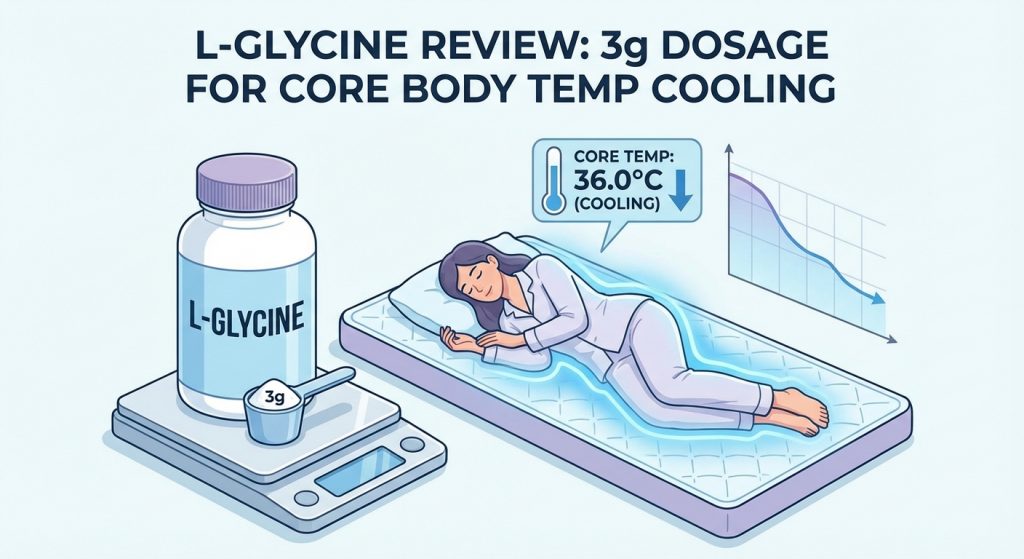
L-Glycine is a simple amino acid with a unique superpower: it helps your body dump heat. To enter Deep Sleep, your core body temperature must drop by roughly 1°C. If you run hot, you stay awake.
Glycine has been a staple in Eastern Europe for decades, where it is often prescribed by doctors for stress and sleep. However, in the West, it remains controversial. Does it actually cross the blood-brain barrier? Is the diuretic side effect worth the risk?
This review analyzes the science behind the glycine 3g dosage, its cooling mechanism, and I (Alex) share my mixed experience with this affordable supplement.
The Origin: A Soviet Staple?
While Glycine is gaining traction in Western biohacking circles now, it has a long history in Eastern Europe and Russia. Millions of people have taken it for decades to treat anxiety, stress, and insomnia, often under medical guidance.
Despite this long history of use, Western medicine remains skeptical about one key factor: bioavailability. There is ongoing debate about how efficiently oral glycine crosses the blood-brain barrier in humans compared to animal models.
The Mechanism: How Glycine Cools You Down
What does glycine do to your brain?
Glycine is an inhibitory neurotransmitter (similar to GABA). It calms the central nervous system. But its primary benefit for sleep is thermal.
1. Vasodilation: Glycine increases blood flow to the extremities (hands and feet).
2. Heat Dump: By moving warm blood to the surface of the skin, heat radiates out of the body.
3. Core Cooling: As heat leaves the skin, the core body temperature drops. This drop signals the brain to initiate sleep onset and transition into Deep Sleep (NREM3).
Does glycine spike insulin?
Generally, no. In fact, glycine is often used to stabilize blood sugar and improve insulin sensitivity, which prevents nocturnal hypoglycemia (waking up hungry).
Dosage: The 3 Gram Rule
Is it okay to take glycine every day?
Yes, it is a non-essential amino acid found in food (bone broth, gelatin). However, to get the sleep benefits, you need a supraphysiological dose.
The Study Dose: Most successful sleep studies use 3 grams (3000mg) taken 1 hour before bed.
The Food Gap: You would need to eat a massive amount of collagen to get this much free glycine rapidly. Supplementation is the only practical way to get the acute cooling effect.
The Side Effect: The Diuretic Trap
What are the negative side effects of glycine?
While safe for the liver and kidneys in healthy people, Glycine has one major downside for sleep: it is a diuretic.
- The Mechanism: Glycine increases renal blood flow and filtration.
- The Result: For some users, taking 3g of glycine guarantees a 3 AM bathroom trip (Nocturia). This defeats the purpose of taking it for sleep.
Note: If you already struggle with waking up to pee, proceed with caution. (See Stop Waking Up to Pee: Nocturia).
Reddit & Community Consensus
What do users say on r/Nootropics and r/Biohackers?
The Good:
1. “Deep Sleep Scores”: Many Apple Watch/Oura Ring 4 users report a measurable increase in Deep Sleep scores when taking 3-5g of Glycine.
2. “Wake Up Fresh”: Users often report feeling more refreshed even on less sleep, likely due to sleep architecture improvement.
The Bad:
1. “The Toilet Run”: A significant number of users stopped taking it because of the diuretic effect.
2. “Nothing Happened”: A split in the community exists—some swear by it, others feel absolutely nothing (potentially due to the blood-brain barrier issue).
Alex’s Personal Review
The following is based on my personal logs.
I have been taking L-Glycine on and off for years. My grandmother recommended it to me long ago for ‘calming the nerves,’ so it has always been in my cabinet as a gentle way to relax before sleep.
My Experience:
I take 3 grams roughly 1-2 hours before bed. The powder is sweet (like sugar), so it is easy to take.
Does it work? Honestly, I am conflicted. I don’t feel a “wave of relaxation” like I do with Apigenin. I don’t feel the “heaviness” I get from Magnesium.
However, on nights I take it, my body temperature does seem more regulated. I rarely wake up sweating.
My Rating: 6/10
I continue to take it largely as a placebo or “just in case” because it is incredibly cheap and safe. But the science regarding the blood-brain barrier lingers in my mind—am I just eating expensive sugar? I haven’t noticed a diuretic effect personally, but the benefits are subtle at best.
Where to Buy:
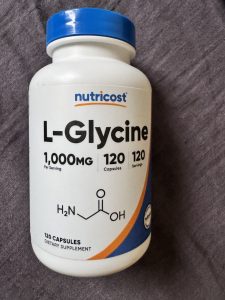
I use NOW Foods Glycine Powder. It is pure, cheap, and lasts forever.
Update for December 2025
Since my original review, the narrative around Glycine has shifted dramatically. It is no longer just a “sleep powder”; it has become the other half of the most popular longevity stack in the biohacking world.
Here is the essential new information for late 2025.
1. The Rise of “GlyNAC” (Longevity Over Sleep?)
If you follow longevity research (specifically the Baylor College of Medicine studies cited heavily in 2024/2025), you know the focus has moved to GlyNAC – a combination of Glycine and N-Acetylcysteine (NAC).
The Science: Researchers found that taking Glycine and NAC together corrects Glutathione deficiency (the body’s master antioxidant) and improves mitochondrial function in older adults.[2]
The Protocol: The “Blueprint” crowd (including Bryan Johnson) now emphasizes Glycine primarily for this cellular repair.
The Hack: If you are taking Glycine solely for anti-aging, you do not need to take it at bedtime. You can take it in the morning (like Johnson’s “Longevity Mix”) to avoid the nighttime bathroom trips while still reaping the mitochondrial benefits.
2. Solved: Why Some People Feel “Wired” (The NMDA Paradox)
In my original review, I mentioned a split in the community—some slept better, some felt more awake. In 2025, we have a clearer understanding of the mechanism: NMDA Receptor Activation.
The Mechanism: While Glycine is inhibitory (calming), it is also a co-agonist at NMDA receptors, which are excitatory (glutamate).
The Verdict: If you take Glycine and feel your mind “racing” or “buzzy” instead of cooling down, you are likely genetically predisposed to this excitatory response.
Action: If this happens to you, stop taking it at night. You are not “doing it wrong”; your neurochemistry simply treats it as a stimulant. Move your dose to the morning or switch to Taurine (3g), which lowers body temperature without the NMDA risk.
3. The “Collagen” Backdoor
A massive trend on r/Biohackers in 2025 is replacing pure Glycine powder with Hydrolyzed Collagen Peptides.
Why? Collagen is roughly 33% Glycine. Taking 10-15g of Collagen protein provides the necessary 3-5g of Glycine but releases it more slowly into the bloodstream.
The Benefit: User logs suggest this slower release mitigates the “diuretic spike” (peeing at 3 AM) and reduces the risk of the “wired” feeling, while still providing the raw materials for deep sleep repair.
4. The “Taurine” Alternative (For the Wired Group)
If Glycine keeps you awake, the 2025 biohacker standard is to swap it for Taurine.
Why: Taurine also lowers body temperature and activates GABA receptors, but it does not stimulate the excitatory NMDA receptors.
The Dose: 3 grams of Taurine creates a similar thermal cooling effect without the risk of the “wired” feeling. It is the safer bet for anxious sleepers.
5. Clarification: Magnesium Glycinate is NOT Enough
I see this error constantly on SleepHQ forums in 2025.
The Math: A standard capsule of Magnesium Glycinate contains ~100mg of Magnesium and maybe ~800mg of Glycine.
The Gap: To get the thermal cooling effect shown in sleep studies, you need 3,000mg (3g) of Glycine.
The Reality: You would need to take 4-5 Magnesium pills to get enough Glycine, which would overdose you on Magnesium (causing diarrhea). It is much more effective to take Magnesium L-Threonate for your brain and add standalone Glycine powder to hit the sleep-cooling threshold without the digestive upset.
Summary
L-Glycine is a low-risk, low-cost experiment.
- Try it if: You sleep “hot,” you want to improve Deep Sleep metrics, or you want a safe, natural relaxant.
- Avoid it if: You have a sensitive bladder or wake up to pee frequently.
It might cool you down, or it might just be a sweet placebo. At $15 a bottle, it is worth finding out.

By: Alex Warenstein.
Bio: Alex Warenstein is a sleep biohacker and founder of Night Time Comfort. After battling chronic insomnia and circadian disruption, he now helps others optimize their sleep using data-driven protocols. Read full story.
Disclaimer: Alex is not a doctor. This content is for educational purposes only. Always consult a specialist.