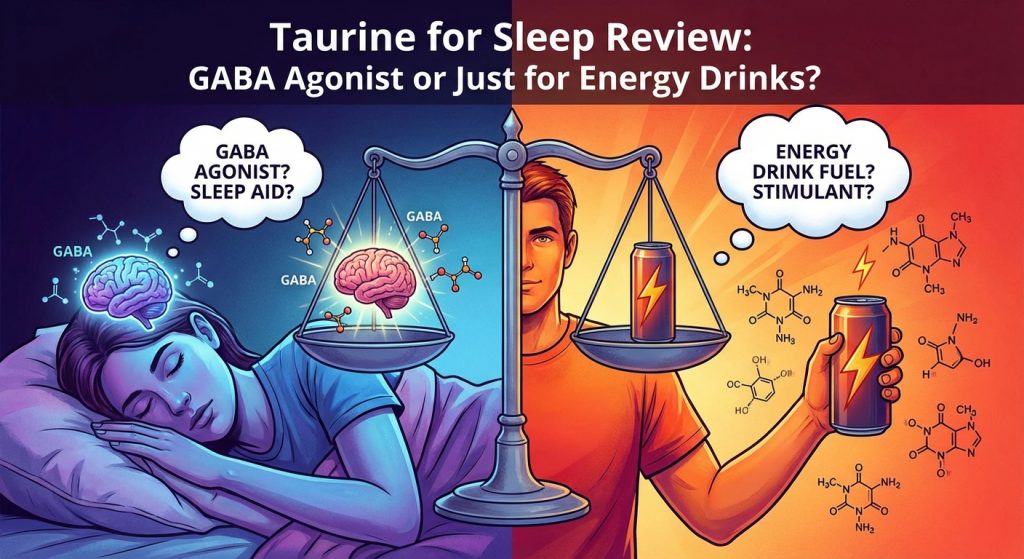
When people hear “Taurine,” they think of Red Bull. They assume it is a potent stimulant that gives you wings.
This is a marketing lie.
Taurine is an amino acid (technically an amino sulfonic acid) that is actually a GABA agonist. In the central nervous system, it acts as a sedative. Energy drink companies add it to “take the edge off” the massive caffeine dose so you don’t get the jitters.
But if you take it without the caffeine, can it help you sleep? Biohackers are increasingly using high-dose Taurine for sleep to lower body temperature and calm racing hearts.
This review analyzes the science of taurine dosage sleep protocols, its synergy with Magnesium, and I (Alex) share my 6.5/10 experience testing it as a standalone sleep aid.
What is Taurine? (The “Bull” Myth)
Does taurine give you energy or make you tired?
Taurine is found abundantly in the brain, heart, and muscles. It is an “inhibitory” neurotransmitter.
- Stimulant? No. It does not stimulate the central nervous system like caffeine. It stabilizes cell membranes and regulates calcium flow.
- Sedative? Yes. It activates GABA(A) receptors (specifically the glycine receptor site) in the thalamus, which helps “gate” sensory information so you can fall asleep.
Why is taurine in energy drinks?
To prevent the “caffeine crash” and anxiety. It smooths out the stimulant effect.
The Mechanism: Why It Helps Sleep
1. GABA Agonism
Like L-Theanine, Taurine increases GABA activity. This calms the “firing rate” of neurons. If your brain is buzzing with thoughts, Taurine acts as a chemical dampener.
2. Thermoregulation (The Cooling Effect)
Just like L-Glycine, Taurine helps lower core body temperature.
The Science: It dilates blood vessels in the skin, allowing heat to escape. A drop in core temperature is the biological trigger for sleep onset.
Dosage and Timing
How much taurine should I take for sleep?
- Standard Dose: 1,000mg to 3,000mg.
- The “Mega” Dose: Some studies use up to 6g, but for sleep, 3 grams (3,000mg) seems to be the sweet spot for temperature regulation.
How long before bed?
Take it 60 to 90 minutes before sleep. It takes time to absorb and initiate the cooling process.
Is it better to take taurine at night or in the morning?
- Morning: For exercise recovery and cognitive focus.
- Night: For sleep and anxiety reduction. It works well at both times because it is “adaptogenic” in nature—it stabilizes whatever is out of balance.
Reddit & Community Consensus
I analyzed threads on r/Nootropics and r/Biohackers.
The Good:
- 1. “The Magnesium Potentiator”: Many users report that Magnesium Taurate (magnesium bound to taurine) is the ultimate sleep form because you get the benefits of both.
- 2. “Heart Calm”: Users with ectopic heartbeats or anxiety-induced palpitations swear by it. “It quiets my heart so I can ignore it and sleep.”
- 3. “Vivid Dreams”: Similar to Glycine, users often report deeper sleep and more memorable dreams.
The Bad:
- 1. “Rebound Anxiety”: A small minority report feeling anxious as it wears off (glutamate rebound), though this is rare compared to alcohol or benzos.
- 2. “Diuretic”: Like Glycine, high doses can make you pee. If you have Nocturia, be careful taking 3g of powder with water right before bed.
Alex’s Personal Review
The following is based on my personal logs.
I tested Taurine (3g powder) for one week to see if it could replace my Glycine/Magnesium stack.
My Experience:
I took 3 grams dissolved in water 1 hour before bed.
- The Feeling: It is very subtle. I didn’t feel “sleepy.” I felt “stable.” My heart rate (tracked on Apple Watch Ultra 2) dropped slightly faster than usual during the first hour of sleep.
- Sleep Onset: No noticeable improvement. I still lay there for my usual time.
- Maintenance: I slept fine, but I didn’t notice the “deep sleep” boost I get from Tart Cherry or Apigenin.
My Rating: 6.5/10
It didn’t hurt, but it didn’t wow me. I felt like it was doing something beneficial for my physiology (heart health, hydration), but as a direct “I need to sleep NOW” tool, it was weak. I plan to re-test it later combined with Magnesium L Threonate to see if the synergy is the key.
Where to Buy:
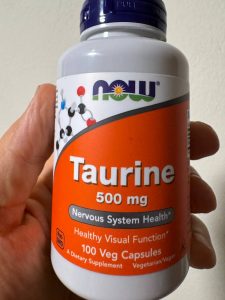
NOW Foods or Nutricost offer bulk powder which is very cheap on iHerb.com.
Safety & Side Effects
What are the negatives of taurine?
- Kidneys: Can taurine damage kidneys? No evidence in healthy people. In fact, it protects against oxidative stress in kidneys. However, those with existing kidney failure should limit protein/amino intake.
- Stomach: High doses on an empty stomach can cause mild nausea.
What should you not mix with taurine?
It is generally safe. Can you take magnesium and taurine together? Yes, highly recommended.
Why was taurine banned?
It was briefly banned in France years ago due to a suspected link to deaths in energy drink consumers (mixed with caffeine/exercise), but the ban was lifted after studies proved Taurine was not the culprit (it was likely the caffeine/dehydration).
Update for December 2025:
Since I first reviewed Taurine, a landmark study published in Science (mid-2024, still trending in 2025) linked Taurine deficiency to aging itself. This has transformed Taurine from a “sleep aid” into a daily longevity staple for biohackers.
1. The “Glycine Alternative” (Solving the Wired Effect)
A critical discovery in 2025 is that Taurine is the perfect substitute for people who get “wired” from Glycine.
The Problem: Glycine can activate excitatory NMDA receptors in some people, causing insomnia instead of sleep.
The Fix: Taurine lowers body temperature and activates GABA without touching the NMDA receptor. If Glycine keeps you awake, switch to 3g of Taurine. It provides the same thermal cooling with zero risk of stimulation.
2. The Longevity Protocol (Columbia Study)
The scientific consensus has shifted. We now know that Taurine levels drop by 80% as we age.
The 2025 Standard: Biohackers are taking 3-6 grams daily (split doses) not just for sleep, but to mimic the “youthful” levels associated with longer lifespan in animal models.
The Sleep Impact: By restoring youthful levels, users report better Sleep Maintenance (staying asleep) because the brain’s inhibitory system is robust enough to ignore minor disturbances.
3. Magnesium Taurate vs. The Stack
Should you buy pre-made Magnesium Taurate or mix them?
The Math: A capsule of Magnesium Taurate usually contains only ~400mg of actual Taurine. To get the sleep benefits (3g), you would need to take 8 pills (overdosing on Magnesium).
The Recommendation: Buy Magnesium Glycinate/Threonate for your magnesium source, and buy Bulk Taurine Powder for your taurine source. Take them together. Do not rely on the “chelated” form to give you enough Taurine.
4. Safety Update: “Empty Stomach” Acidity
High-dose Taurine powder (3g+) is slightly acidic.
The Warning: Taking it with just a sip of water right before lying down has caused Silent Reflux in some users.
The Fix: Dissolve it in a full glass of water and drink it 45 minutes before bed to allow it to clear the esophagus.
Summary
Taurine is the misunderstood calmness molecule.
- Buy it if: You have heart palpitations at night or want to stack it with Magnesium.
- Skip it if: You want a strong sedative.

By: Alex Warenstein.
Bio: Alex Warenstein is a sleep biohacker and founder of Night Time Comfort. After battling chronic insomnia and circadian disruption, he now helps others optimize their sleep using data-driven protocols. Read full story.
Disclaimer: Alex is not a doctor. This content is for educational purposes only. Always consult a specialist.