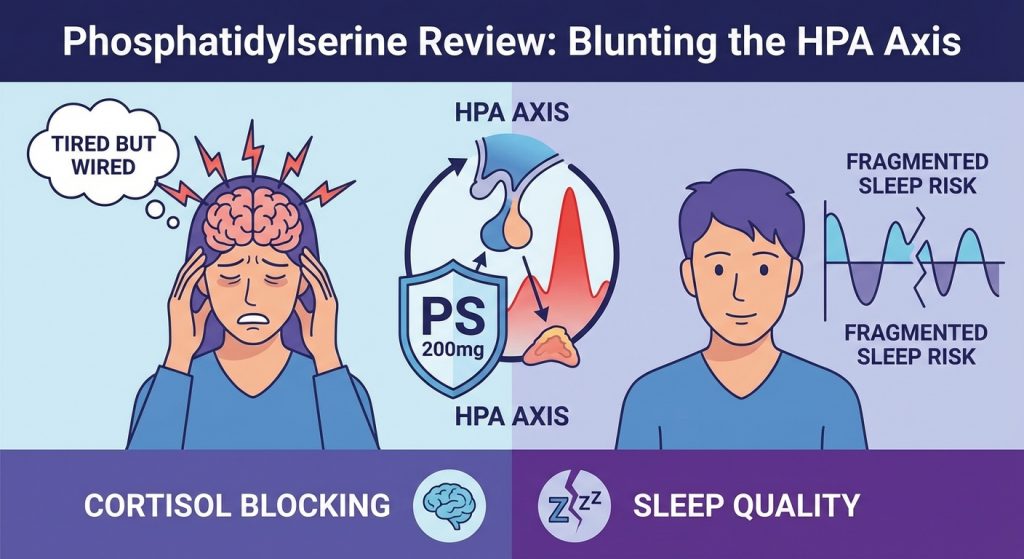
If you wake up at 3 AM with your heart racing, your mind instantly planning your to-do list, and a feeling of “buzzing” anxiety, one common pattern is a stress-arousal spike, and for some people that lines up with cortisol rising earlier than it should at night (Sleep Foundation).
This is the “Tired but Wired” syndrome. Your body is exhausted, but your adrenal glands think you are running from a tiger.
Phosphatidylserine (PS) is often marketed as a “cortisol blocker,” but it’s more accurate to think of it as a stress-response modulator: it isn’t a sedative, and the human data is mixed depending on context and timing. Mechanistically it’s discussed as acting “upstream” in the HPA axis (pituitary ACTH → adrenal cortisol), but I treat it as a calibration tool—not a guaranteed off-switch (Cleveland Clinic).
But like Ashwagandha, it is a double-edged sword. If you take it wrong, you might just feel weird. This review analyzes the science of PS at 200 mg, explains how to time it based on your circadian rhythm, and shares my (Alex’s) struggle to calibrate this potent supplement.
What is Phosphatidylserine?
What does phosphatidylserine do in the brain?
PS is a phospholipid (a type of fat) that covers and protects the cells in your brain and carries messages between them. It is critical for keeping your mind and memory sharp.
Source: Historically, PS was derived from cow brains (a practice stopped due to concerns about mad cow disease), but modern supplements are derived from soy or sunflower lecithin.
Mechanism: It may modulate the Hypothalamus-Pituitary-Adrenal (HPA) axis, and some studies report a blunted ACTH/cortisol response to stress or exercise rather than “turning cortisol off” (JISSN via Taylor & Francis).
Does phosphatidylserine increase dopamine levels?
Some research suggests it may help normalize neurotransmitters, including dopamine and serotonin, which can improve mood and focus, but its primary claim to fame is cortisol management.
The Calculation: Timing is Everything
Just like with Ashwagandha KSM-66, PS tends to be timing-sensitive: many people find it works best when the dose is aligned with when they get “tired but wired,” not just how much they take.
The Methodology:
Cortisol follows a diurnal rhythm: blood testing is commonly interpreted with the assumption that cortisol is highest in the morning and lower later in the day (MedlinePlus). If you keep waking up at 3 AM, it often means your sleep/arousal system is getting activated too early—and over time that can become a loop where poor sleep itself nudges stress hormones upward (Harvard Medical School).
1. If you wake up at 3 AM:
- The Spike: For many people, cortisol and alertness can start creeping up in the early-morning hours, even before sunrise.
- The Intercept: You need PS in your blood before the rise starts.
- Protocol (common split-dose experiment): 100mg with dinner (6 PM) + 100mg about 60–90 minutes before bed (10 PM); the idea is to support a lower baseline earlier, and avoid taking the full dose right at lights-out if you’re prone to feeling mentally “active.”
2. If you are anxious all evening:
Protocol: Take 200 mg in the late afternoon (4 PM) to prevent evening stress from accumulating and keeping you from winding down.
How much phosphatidylserine should you take a day?
Many cognitive-support studies use around ~300mg/day, while some stress/exercise studies have tested higher doses (e.g., 600–800mg/day); for sleep/stress self-experiments, people commonly start low (100mg) and only adjust if they can clearly tell it helps.
Reddit & Community Consensus
What do biohackers on r/Nootropics and r/Sleep report?
The Good:
- 1. “The 3 AM Savior”: The most consistent positive report is from people who used to wake up with a racing heart at 3 AM. PS stopped the adrenaline surge.
- 2. “Calm Focus”: Unlike sedatives, users report feeling calm but clear-headed. Does phosphatidylserine cause brain fog? Usually the opposite—it clears it.
- 3. “Gym Recovery”: Athletes use it to lower exercise-induced cortisol, preventing burnout.
The Bad:
- 1. “Insomnia Worsened”: A subset of users report that PS makes them too alert if taken at night. This might be due to increased acetylcholine or dopamine.
- 2. “Vivid Dreams”: Like Ashwagandha, it can intensify REM sleep.
- 3. “Too Low Cortisol”: If you have diagnosed adrenal insufficiency (e.g., Addison’s disease) or you’ve repeatedly measured low cortisol with appropriate timing, PS may be the wrong tool and can feel like “flatness” or low drive; in that case, it’s smarter to clarify the pattern before pushing doses (See 24h Salivary Cortisol Test).
Alex’s Personal Review
The following is based on my personal logs.
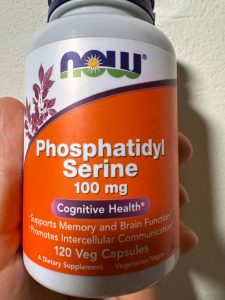
I tested Phosphatidylserine (Food Now PS 100mg) during a high-stress month where I was waking up at 4:00 AM daily.
My Experience:
I started with 200mg at bedtime.
- The Effect: I definitely felt a shift. The physical sensation of “anxiety in the chest” vanished. It works.
- The Problem: Timing. Taking 200mg right at bed sometimes made me feel mentally “active,” even if I was physically relaxed. I shifted to taking 100 mg with dinner and 100 mg at bedtime. This worked better, but I struggled to find the perfect balance.
- The Result: I saw the potential, but after a week, I stopped because I felt I needed a more precise map of my cortisol (the 24h test) before messing with my hormones further.
My Rating: 7.5/10
It is a serious tool. It isn’t a “maybe it works” herbal tea. In the right context, it may reduce the stress-hormone response and take the edge off “tired but wired,” but it’s not guaranteed and it’s easy to overdo the timing. But like Ashwagandha, it requires calibration.
Where to Buy:
Look for supplements with the Sharp-PS or SerinAid patented forms (like Jarrow or NOW Foods) on iHerb.com. Sunflower-derived PS is best if you avoid soy.
Safety & Side Effects
Who should not take phosphatidylserine?
- Low Cortisol: If you struggle to wake up in the morning and have low energy all day, do not take this. You need cortisol.
- Blood Thinners: If you use prescription anticoagulants/antiplatelets, treat PS like any other supplement stack change—double-check compatibility before adding it.
Does phosphatidylserine affect the heart?
Generally, no: it lowers stress, which can help the heart, but always check for interactions.
Update for January 2026
Since Sep 2025, the PS-for-sleep conversation has gotten more practical: PS is less about “knocking you out” and more about reducing stress-arousal so your sleep system can do its job. Here are the top updates (Sep 2025 → end of Jan 2026).
1. Expectation reset: PS is a stress-response tool, not a sleeping pill
A clinician-written overview from Mayo Clinic summarizes it well: the evidence is promising for stress response and cognition, but still limited. Translation: expect “less wired,” not instant sleep.
2. Late-2025 RCT data: sunflower-derived PS was well-tolerated, and sleep effects weren’t dramatic
A randomized, placebo-controlled trial tracked mood and sleep alongside PS supplementation (PubMed Central). Translation: PS doesn’t behave like a sedative; if it helps your nights, it’s likely by dialing down arousal rather than forcing sleepiness.
3. A newer “timing” insight: late training + late meals can push night cortisol up (making PS feel hit-or-miss)
A 2025 review on cortisol and timing notes that frequent evening/high-intensity sessions are linked to higher nocturnal cortisol and poorer sleep quality (MDPI). Translation: if you lift late, try separating PS from workout windows and pull “stress inputs” earlier before you blame the supplement.
4. Safety edge case (Nov 2025): be cautious with “stimulant + stack” combos
A case report described recurrent irritability and suicidality after adding phosphatidylserine + citicoline to methylphenidate in a child (Psychiatry and Clinical Psychopharmacology). Translation for adults: if you use stimulants or psychiatric meds, introduce PS cautiously and change one variable at a time.
5. “Forum-tested” tweak (late-2025): take PS earlier than you think
The most repeated community tip is “don’t take PS at lights-out”—take it 1–2 hours before bed or split it with dinner, especially if you’re the type who gets mentally activated (r/sleephackers). If you want the conservative “what the evidence can claim” framing alongside that timing idea, the Mayo Clinic overview is a good anchor.
6. Biohacker update: the boring levers (meal timing, stimulants, evening light) reduce “baseline arousal,” making PS easier to calibrate
Even the hardcore optimization crowd keeps converging on the same basics—finish your last meal hours before bed, avoid caffeine far earlier than you think, and keep evenings low-light (Blueprint (Bryan Johnson)). Translation: those levers reduce baseline arousal, so PS feels more consistent at lower doses.
Summary
Phosphatidylserine is a targeted option some people try for stress-linked maintenance insomnia (“tired but wired”), especially 3 AM awakenings.
- Use it if: You wake up alert/anxious in the middle of the night.
- Avoid it if: You trend low-energy/“flat” and suspect low cortisol.
- 100mg Dinner + 100mg ~60–90 min pre-bed (adjust if it makes you feel too alert).
If insomnia is chronic, CBT-I remains the most evidence-based foundation; a good starting point is the American Academy of Sleep Medicine.

By: Alex Warenstein.
Bio: Alex Warenstein is a sleep biohacker and founder of Night Time Comfort. After battling chronic insomnia and circadian disruption, he now helps others optimize their sleep using data-driven protocols. Read full story.
Disclaimer: Alex is not a doctor. This content is for educational purposes only. Always consult a specialist.