You are exhausted. You snore, or perhaps you just wake up feeling like you were hit by a truck. You suspect Sleep Apnea, UARS, or something worse.
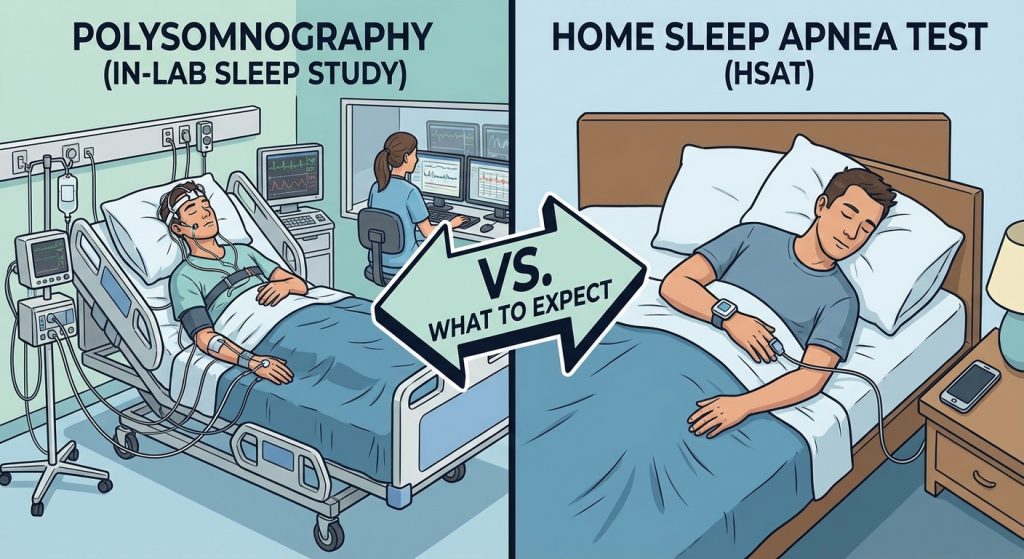
You have two choices: You can spend a night in a medical clinic hooked up to 20 sensors (Polysomnography), or you can mail-order a device, strap it to your finger, and sleep in your own bed (Home Sleep Test).
In a perfect world, everyone would get a full sleep diagnosis in a lab immediately. In reality, wait times for sleep clinics can range from 3 to 12 months depending on your country and insurance. This leads many patients to take matters into their own hands with devices like the WatchPAT One or Wellue O2Ring.
This guide is a patient-to-patient breakdown of the Polysomnography vs home test debate. We will cover what to expect during a sleep lab study, why home tests sometimes fail to detect UARS, and how to navigate the diagnostic gap if you cannot see a doctor immediately.
The Gold Standard: In-Lab Polysomnography (PSG)
Polysomnography (Type 1 Study) is the most comprehensive test available. It is the only way to get a complete picture of your sleep architecture.
What to Expect: The “Borg” Experience
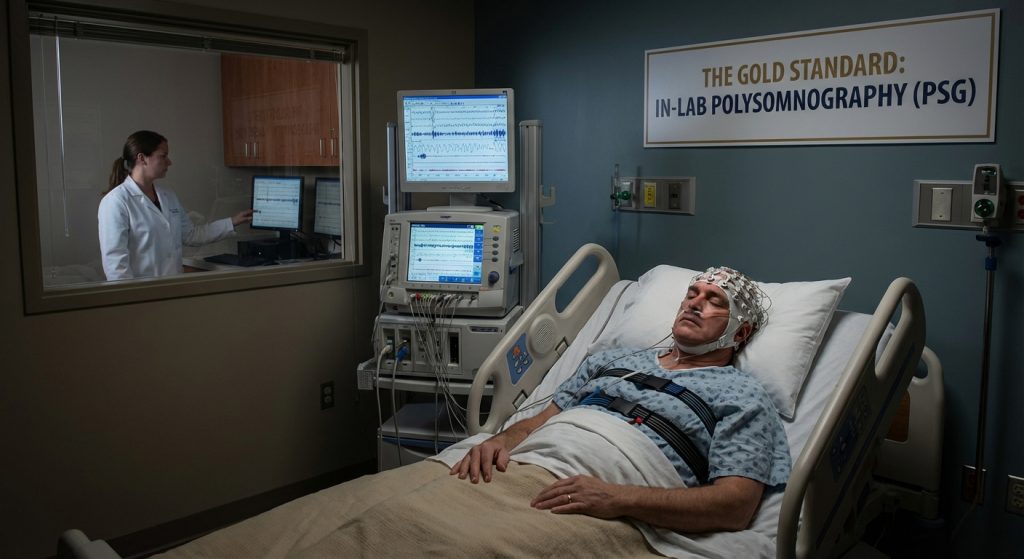
If you manage to get a referral and an appointment, here is the reality of the sleep doctor visit.
- 1. Arrival: You arrive at the sleep lab (usually in a hospital or specialized center) around 8:00 PM.
- 2. The Hook-Up: A technician will spend 45-60 minutes attaching sensors to your body. This includes:
- EEG (Electroencephalogram): Electrodes glued to your scalp to measure brain waves (Alpha, Theta, Delta). This proves exactly when you are asleep and what stage you are in.
- EOG (Electrooculogram): Sensors near eyes to detect REM sleep.
- EMG (Electromyogram): Sensors on your chin and legs to detect muscle tension and twitching (crucial for Restless Legs Syndrome).
- ECG (Electrocardiogram): Heart rhythm monitoring.
- Respiratory Bands: Belts around your chest and stomach to measure breathing effort.
- Cannula/Thermistor: A tube in your nose to measure airflow.
- 3. The Night: You will be asked to sleep on your back for part of the night. There is usually an infrared camera and a microphone recording you.
- 4. Bathroom Breaks: Yes, you can go to the bathroom. You simply call out to the technician (who is watching from another room), and they unplug a “master box” that connects your wires, allowing you to walk to the restroom.
Why You Need This (The Pros)
Brain Waves (EEG): This is the critical difference. A home test guesses you are asleep. A PSG knows. It is the only way to diagnose non-respiratory issues like Narcolepsy or REM Behavior Disorder.
The “Effort” Belts: These differentiate between Obstructive Apnea (throat closed) and Central Apnea (brain stops signaling).
Expert Analysis: A board-certified sleep physician reviews the epoch-by-epoch data. You do not have to guess.
The Cons
The “First Night Effect”: It is hard to sleep with wires glued to your head in a strange room. Data is sometimes skewed because your sleep quality is naturally worse in the lab.
Cost and Access: It is expensive ($1,000 – $3,000 without insurance) and hard to schedule.
The Medical Alternative: Home Sleep Apnea Tests (HSAT)
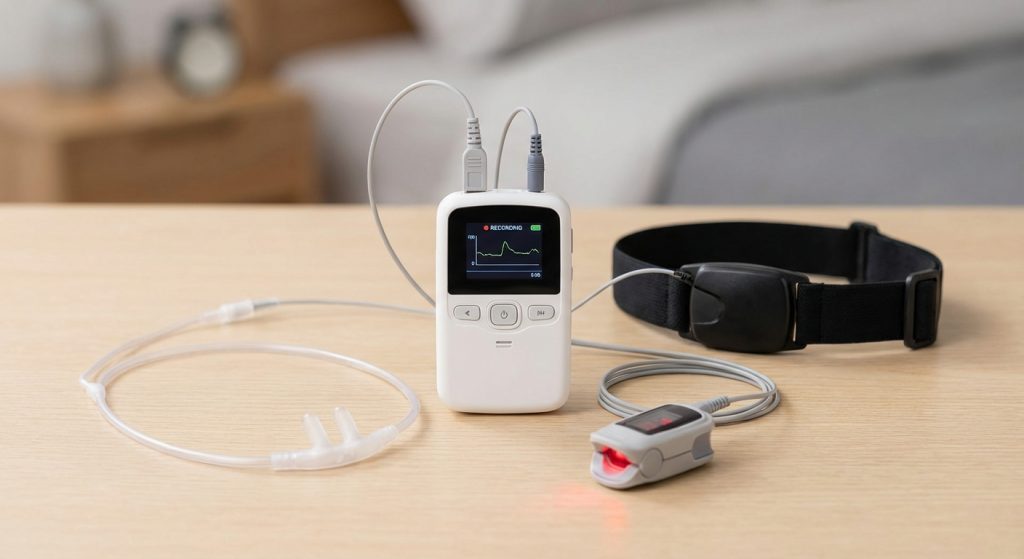
If a PSG is impossible, doctors prescribe Home Sleep Apnea Tests (Type 3 Studies). The market leader here is often the WatchPAT One.
How It Works (PAT Technology)
Unlike standard oximeters, the WatchPAT measures Peripheral Arterial Tone (PAT). When your airway collapses, your nervous system surges, causing blood vessels in your finger to constrict.
The Device: A wrist unit, a finger probe, and a small sensor glued to your chest (to measure position and snoring).
Accuracy: Studies show high correlation with PSG for Obstructive Sleep Apnea.
Pros and Cons
Pros: You sleep in your own bed. It detects REM sleep better than standard wearables. It is disposable and easy to use.
Cons: It can underestimate the severity of Apnea (AHI) because it doesn’t measure total sleep time via brain waves. It measures “recording time.” If you lie awake for 4 hours and sleep for 4, the machine might average your apnea events over 8 hours, cutting your severity score in half.
The Consumer “Triage”: O2Ring and Pulse Oximetry
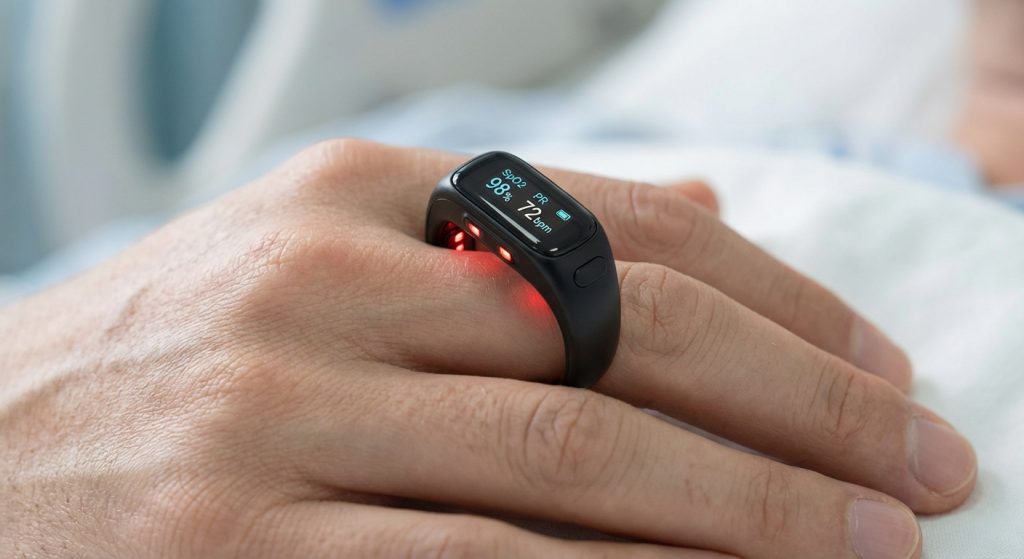
What if you can’t get a prescription? Many biohackers and patients turn to Type 4 consumer devices like the Wellue O2Ring.
How It Works
As detailed in our O2Ring Data Analysis guide, this ring tracks oxygen and heart rate every 4 seconds.
The Role of the O2Ring
It is a screening tool, not a diagnostic tool.
The Good: It helps you spot oxygen desaturation and pulse spikes. If you see your oxygen drop to 85% with a heart rate spike, you know something is wrong. It gives you the evidence to push your doctor for a full study.
The Bad: It cannot detect sleep stages. It cannot detect central apnea. It requires you to interpret the data.
The Danger of Self-Diagnosis (Author’s Experience)
I must share a personal warning. Based on my O2Ring data, I was convinced I had UARS (Upper Airway Resistance Syndrome). My heart rate spiked frequently, and I felt unrefreshed. I spent months researching BiPAP machines and mouth taping.
The Truth: When I finally got a Polysomnography, the results were clear: Zero Apnea. Zero UARS. My respiratory effort was normal.
The Lesson: My O2Ring spikes were likely caused by movement or micro-arousals from other causes (like cortisol or temperature). Consumer devices can generate “False Positives.” The O2Ring is a red flag generator, not a doctor.
Biohacker Tests: The “MAD” Experiment
In alternative health communities, when access to doctors is blocked, some patients use functional tests.
The Mandibular Advancement Device (MAD) Test:
Concept: You buy a cheap, boil-and-bite anti-snore mouthpiece from Amazon (approx. $30-$50).
Method: Wear it for 3 nights.
Analysis: If your symptoms (brain fog, fatigue, 3 AM wake-ups) significantly improve, it strongly suggests your issue is obstructive (Apnea or UARS). The device pulls the jaw forward, opening the airway.
Warning: This is not a cure (cheap devices hurt your teeth long-term), but it is a powerful data point to bring to a doctor.
Reddit & Forum Consensus: What Patients Say
On communities like r/SleepApnea and ApneaBoard, the consensus is clear:
- 1. “HSAT Underestimates”: Many users report testing “Negative” on a home test, only to test “Severe” in a lab. If your home test says you are fine, but you feel terrible, demand a PSG.
- 2. UARS is Invisible at Home: Home tests rely on oxygen drops (Desaturation). UARS patients often maintain their oxygen levels but struggle to breathe. Home tests frequently miss this.
- 3. The “Shower” Factor: Patients overwhelmingly prefer home testing for comfort, but admit the data is often “blunt.”
The 4% Rule: Why Home Data is Tricky
If you use an O2Ring, you need to understand how to read it.
- The 4% Rule: Medical insurance often requires a 4% drop in oxygen to count as an “event.”
- The Reality: A 3% drop coupled with a brain awakening ruins your sleep just as much.
- Read more: SpO2 & Oxygen Desaturation: Understanding the 4% Drop Rule.
When You MUST See a Doctor
While home tracking is fascinating, certain symptoms require immediate professional in-lab sleep study:
- 1. Narcolepsy Symptoms: Falling asleep instantly during the day, sleep paralysis, hallucinations.
- 2. Seizures: Unusual movements at night.
- 3. Insomnia + Snoring: The combination often signals “Complex Sleep Apnea.”
- 4. Leg Kicking: Suspected Restless Legs Syndrome or PLMD requires leg sensors (EMG) to diagnose.
Summary
The decision between a Polysomnography vs home test often comes down to access.
- The Ideal Path: Go to a sleep lab. It is the only way to get a definitive answer. Let the doctor analyze the EEG data.
- The Realistic Path: If the waitlist is 6 months, buy an O2Ring or order a WatchPAT One. Use them to gather data.
- The Warning: If your O2Ring shows scary data, verify it. If it shows “clean” data but you are exhausted, do not assume you are healthy. You may have UARS or RLS, which the ring cannot see.
Ultimately, gadgets are tools for advocacy. Use your data to fight for the medical care you deserve.

By: Alex Warenstein.
Bio: Alex Warenstein is a sleep biohacker and founder of Night Time Comfort. After battling chronic insomnia and circadian disruption, he now helps others optimize their sleep using data-driven protocols. Read full story.
Disclaimer: Alex is not a doctor. This content is for educational purposes only. Always consult a specialist.