Many people use melatonin supplements to nudge their sleep timing (especially for jet lag), but they’re not the only option — see Mayo Clinic. But a growing body of research is pointing toward a more natural, complex alternative: the juice (or extract) of the Montmorency Tart Cherry.
In a small LSU-led pilot study in older adults with insomnia, drinking Montmorency tart cherry juice twice daily was associated with about 84 extra minutes of sleep on average (PubMed). That is nearly an hour and a half of extra rest.
But is it just the melatonin? Or is there something else in the cherry? And does the sugar content of the juice cause a metabolic crash that wakes you up later?
In this review, I (Alex) analyze the science of procyanidins, compare juice vs. capsules, and share my 8/10 experience using it as a “whole food” sleep aid.
What is Tart Cherry Extract?
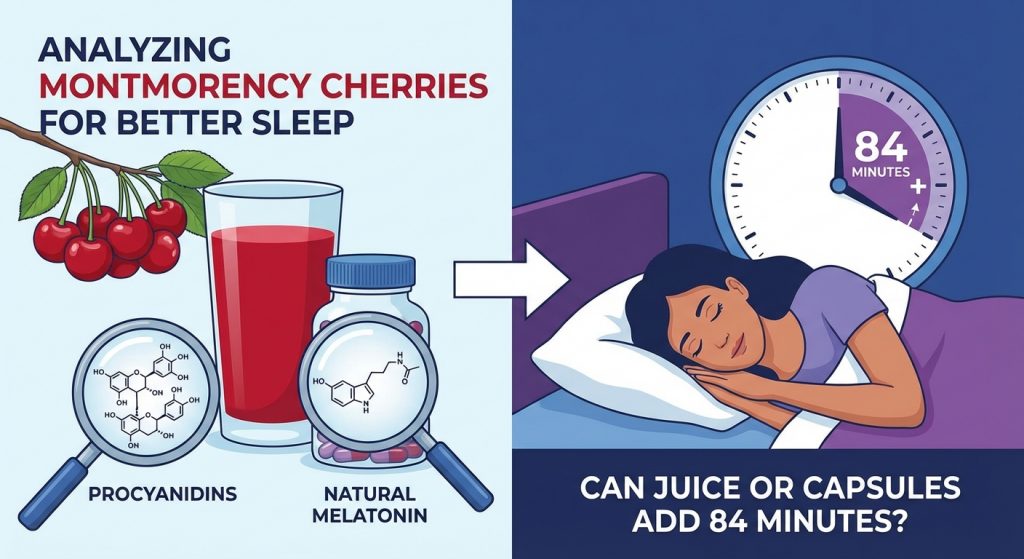
Unlike the sweet Bing cherries you buy at the grocery store, Montmorency cherries (Prunus cerasus) are sour. This tartness signals a high concentration of phytochemicals.
The “Double Action” Mechanism:
- 1. Natural Melatonin + Tryptophan: Tart cherries are a food source of melatonin and also contain tryptophan, which is part of why they’re discussed as a food-based sleep support (overview: Sleep Foundation).
- 2. The Procyanidin B-2 Angle: One proposed mechanism is that tart-cherry polyphenols (including procyanidin B-2) may help preserve tryptophan availability by influencing IDO activity, which could support downstream serotonin/melatonin pathways (American Journal of Therapeutics).
Is tart cherry a natural anti-inflammatory?
Yes — tart cherries are rich in anthocyanins and other polyphenols, and for some people that “less sore / less achy” feeling can make sleep easier, even if the sleep studies are still relatively small (Cleveland Clinic).
Juice vs. Capsules: The Sugar Problem
This is the most critical decision for the user.
The Juice:
- Pros: High bioavailability, hydrating.
- Cons: Sugar. An 8oz glass of tart cherry juice contains roughly 25g of sugar (mostly natural, but still significant).
- As discussed in our Nocturnal Hypoglycemia guide, if you’re personally sensitive to late-night sugar, juice right before bed can backfire (hunger or a 3 a.m. wake-up), which is why timing and dose matter.
The Extract (Capsules):
- Pros: Zero sugar. High concentration of polyphenols (Procyanidins). Easier to take.
- Cons: Slightly slower absorption.
- Verdict: For sleep maintenance, capsules are often the cleaner option because they avoid the late-night sugar load and are easier to dose consistently.
Tart Cherry vs. Synthetic Melatonin
Is tart cherry juice better than taking melatonin?
- Melatonin Pills: A hammer. They force a signal. Good for Jet Lag or acute onset issues.
- Tart Cherry: A builder. It provides the building blocks (Tryptophan support) and the signal (Melatonin). It feels more “natural.” And because the melatonin “signal” from food tends to be smaller, some people report fewer next-day side effects than with high-dose (5mg+) melatonin — though experiences vary.
Comparison to Pistachios:
Interestingly, pistachios are another melatonin-containing food people bring up, and the fat/protein can feel steadier than juice for blood sugar — though the “sleep effect” is still very individual.
Reddit & Community Consensus
I analyzed threads on r/Biohackers, r/Insomnia, and r/Running (where it is popular for recovery).
The Good:
- 1. “Deep Sleep Boost”:
Many users with Oura Ring wearables report a measurable increase in Deep Sleep scores, likely due to the cooling/anti-inflammatory effect. - 2. “No Hangover”: Unlike synthetic melatonin or antihistamines, users report waking up feeling clean and refreshed.
- 3. “Muscle Recovery”: Athletes often use it to reduce DOMS (Delayed Onset Muscle Soreness), which indirectly helps sleep by reducing discomfort.
The Bad:
- 1. “The Juice Wake-Up”: Several users reported that drinking the juice right before bed caused them to wake up to pee (Nocturia) or wake up hungry (Hypoglycemia).
- 2. “Mild Effect”: For severe, chronic insomnia, some users found it “too weak” compared to drugs. It’s a nutrition-based support tool, not a sedative.
- 3. “Cost”: Authentic Montmorency juice is expensive. Capsules are more affordable long-term.
Alex’s Personal Review
The following is based on my personal logs.
I incorporated Tart Cherry Extract (Capsules) into my stack for two months to see if I could replace my melatonin spray.
My Experience:
- I took 1000mg (standard dose) of extract 60 minutes before bed.
- Onset: Slower than the spray. It took about 45-60 minutes to feel “heavy.”
- Quality: The sleep felt very organic. I didn’t feel “drugged.”
- The Juice Test: I tried the juice for a week. While delicious, I noticed my heart rate spiked slightly higher during the first hour of sleep (digesting sugar), and I woke up once to pee. The capsules eliminated this issue.
My Rating: 8/10
For me, it was a solid, low-drama addition for sleep continuity and recovery, with a noticeable but not miracle-level effect.
Why do I still prefer my Melatonin Spray? Precision. I can control the exact timing (20 mins before bed) with a spray. With Cherry Extract, the digestion time varies. Also, as someone sensitive to carb-crashes, I prefer to avoid any risk of metabolic wake-ups, even though capsules are safe.
However, if you hate the idea of “hormones” (synthetic melatonin), this is the best natural alternative. It feels very similar to eating a handful of pistachios before bed.
Where to Buy:
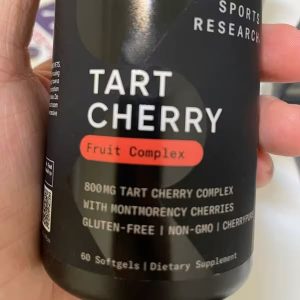
Look for Sports Research or Life Extension brands on iHerb.com that specify Montmorency cherries. Generic “cherry” extract is often just cheap fruit powder.
Safety & Side Effects
What are the negative side effects of tart cherries?
Digestion: High doses (especially juice) can cause loose stools or stomach cramping due to sorbitol content.
Kidneys: Tart cherry products have been studied in the context of uric acid, but if you have kidney disease (or you’ve been told to watch potassium), keep portions modest and favor clearly standardized capsules over large servings of juice.
Does it interact with meds?
Because tart cherry juice/extract contains active polyphenols (and some sources flag possible interactions with blood thinners), I treat tart cherry as a “double-check first” situation if you take warfarin or other anticoagulants.
Update for January 2026
Since September 2025, the tart-cherry-for-sleep conversation has gotten more practical and more evidence-aware. Here are the 6 updates that matter most:
1. The newest review takeaway: “modest, not magic.” A recent review of tart cherry and sleep finds the overall effect tends to be real but modest, with many studies still small — useful as a supportive tool, not a guaranteed fix (PubMed Central).
2. Better “how to try it” guidance (dose + form). Updated consumer guidance now commonly points to ranges like juice/concentrate or extract capsules, with the main idea being consistency and not overdoing sugar (Sleep Foundation).
3. Timing hack from sleep communities: don’t chug it at lights-out. A lot of people do better sipping it about an hour before bed (and diluting concentrate) to reduce bathroom trips and late-night stomach drama (Cleveland Clinic).
4. Extract/capsules got a fresh “inflammation” datapoint (sleep-adjacent, but relevant). A randomized controlled trial (Epub Nov 2025) found that four weeks of tart cherry extract lowered CRP (an inflammation marker) and urate; if aches/stiffness are what wake you up, this “less inflammation” angle may be part of why some people sleep better (PubMed).
5. Recovery + sleep is still the strongest real-world niche. A 2025 scoping review in athletes flagged tart cherry juice as one of the more promising nutrition interventions for sleep metrics (still limited data, but directionally positive) — which maps well to “trained hard → sore → sleep worse” nights (MDPI Sports).
Summary
Tart Cherry Extract is a popular recovery-friendly sleep support: it’s a food-based way to add polyphenols and a small melatonin signal.
- Buy it if: You want a “whole food” solution, have muscle pain, or want to boost Deep Sleep.
- Form: Buy Capsules to avoid the sugar crash and bathroom trips.
- Protocol: Many labels land in the 500mg–1000mg range, and many people take it about an hour before bed.

By: Alex Warenstein.
Bio: Alex Warenstein is a sleep biohacker and founder of Night Time Comfort. After battling chronic insomnia and circadian disruption, he now helps others optimize their sleep using data-driven protocols. Read full story.
Disclaimer: Alex is not a doctor. This content is for educational purposes only. Always consult a specialist.