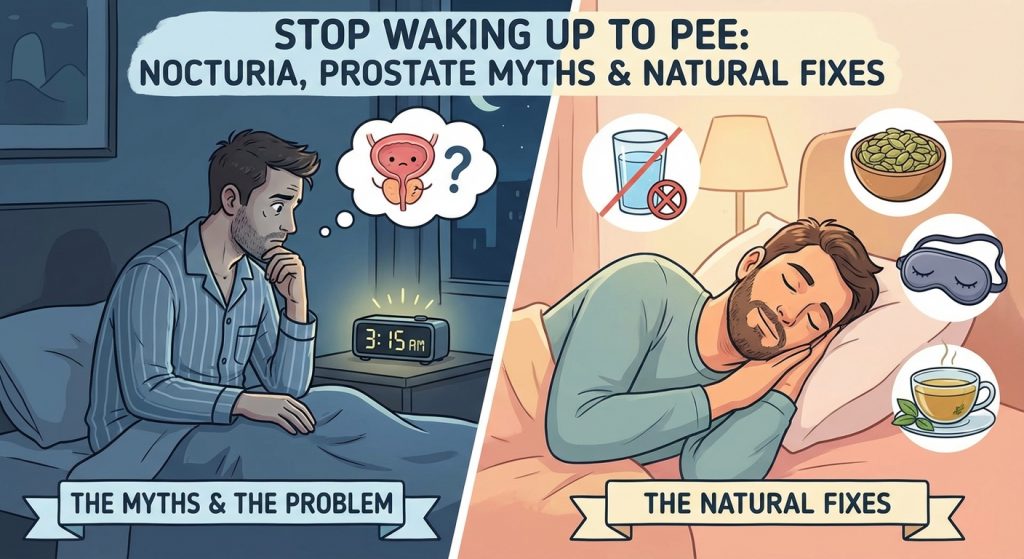
It is the silent sleep killer. You fall asleep fine, but at 2:00 AM—and again at 4:30 AM—you are forced out of your warm bed to stumble into the bathroom.
This pattern is often called Sleep Nocturia, and clinically it falls under nocturia—waking at night to urinate more than once (Mayo Clinic).
For millions of people, frequent nighttime urination is the primary cause of sleep fragmentation. You aren’t just losing sleep time; you are interrupting the deep sleep cycles necessary for physical repair. Many men assume it is inevitably an enlarged prostate (BPH). Many women assume it is just a consequence of aging or childbirth.
However, in many people, nocturia is multifactorial—sleep depth, breathing, evening fluids/food, stress physiology, and certain medications can all contribute.
In this guide, we’ll walk through bladder biology, why blood pressure medications like amlodipine can contribute in some people, and why some people experiment with natural compounds like Pygeum Africanum as part of a broader sleep-and-urination strategy.
The Biology: Why Do We Pee at Night?
To fix the problem, you must understand the mechanism. In many adults, nighttime urine production drops enough that they can often sleep for long stretches without needing a bathroom trip—so repeated wakeups are worth pattern-matching to a specific cause. This is controlled by a delicate hormonal balance.
1. ADH (Anti-Diuretic Hormone)
At night, ADH (vasopressin) is produced in the hypothalamus and released from the posterior pituitary into the bloodstream. This hormone tells your kidneys: “Make less urine and concentrate it.”
The Failure: In some people, ADH signaling is weaker with age or certain health patterns, so nighttime urine production doesn’t drop as much as it should. The bladder reaches its “wake-up” threshold much sooner than normal.
2. The Bladder-Brain Axis
Your bladder has stretch receptors. When it is roughly half full, it sends a mild signal to the brain. During the day, you feel this. During deep sleep, your brain should inhibit this signal.
The Failure: If your sleep is light (due to stress or noise), or if the bladder is overactive (OAB), the signal breaks through the sleep barrier, waking you up.
The “Chicken or Egg” Problem: Are You Waking Up to Pee?

This is the most critical distinction to make before trying supplements.
Scenario A: True Nocturia
Your bladder is painfully full. You wake up, rush to the bathroom, and release a large volume of urine (a meaningful amount, not just a quick drizzle).
Cause: Kidneys are producing too much liquid (Polyuria).
Scenario B: The Wake-First Phenomenon
You wake up for no apparent reason (perhaps due to a cortisol spike or noise). You lie there for 30 seconds. Your brain scans your body: “Is anything wrong?” It notices a tiny amount of urine in the bladder. It decides: “Well, since we are awake, let’s go.” You go to the bathroom, but release a very small amount.
Common drivers: insomnia, fragmented sleep, or sleep apnea. The urination is a side effect of waking up, not the primary trigger.
The Cortisol Connection:
If you consistently wake up between 3:00 AM and 4:00 AM, it can line up with the body’s normal early-morning cortisol rise or stress-related arousals. Once cortisol wakes you, your sensory awareness heightens. You feel the urge to void simply because you are conscious, not because you need to.
Dietary Triggers: What You Eat (and Drink) Matters

If you are suffering from sleep nocturia, your evening intake is the first suspect.
1. The Water Trap (Late-Night Overhydration)
Many people drink massive amounts of water right before bed to “hydrate.”
The Issue: If you drink a large amount of water right before bed, you simply give your kidneys extra volume to clear while you’re trying to sleep—so the bladder fills sooner. Clinically significant sodium dilution (hyponatremia) is a different scenario and typically involves very excessive intake or specific medical situations.
The Fix: Many people do better by cutting most fluids in the last 2–3 hours before bed; if you’re thirsty, sip small amounts—sometimes with a tiny pinch of sea salt—instead of chugging plain water.
2. The Hidden Diuretics: Polyols and “Sugar-Free”
Are you eating “healthy” sugar-free snacks or mints in the evening?
The Culprit: Sweeteners like Sorbitol, Mannitol, and Xylitol (Sugar Alcohols/Polyols).
The Effect: These are osmotic laxatives; in some people, they can also worsen evening urgency—via gut irritation, bloating, and increased pelvic/bladder sensitivity. Check your toothpaste and evening snacks.
3. Salt: Too Much or Too Little?
Too Much: High-sodium dinners cause your body to retain fluid. When you lie down to sleep, that fluid moves from your tissue to your kidneys, creating urine.
Too Little: Low-salt diets can prevent your body from holding onto water, causing it to pass right through you.
4. Bladder Irritants
Caffeine: Half-life of 6 hours. It increases kidney filtration and irritates the bladder muscle (detrusor).
Alcohol: Suppresses ADH (Vasopressin). Even one glass of wine removes the “brake” on your kidneys, causing flood-level urine production.
Spicy Foods & Tomatoes: Acidic foods can trigger Overactive Bladder (OAB) symptoms in sensitive individuals.
Read more: The Anti-Sleep Diet: 5 Foods That Destroy Sleep Quality.
Medication and Medical Triggers
Sometimes, the pills keeping you healthy are destroying your sleep.
Can Amlodipine Cause Nocturia?
It can contribute for some people: amlodipine is a calcium channel blocker for high blood pressure, and its FDA prescribing information lists peripheral edema (leg/ankle swelling) as a common adverse effect (FDA).
The Mechanism: A common side effect is peripheral edema (swelling in the ankles and legs). During the day, gravity pulls fluid into your legs.
The Night Shift: When you lie down to sleep, your legs are now level with your kidneys. That accumulated fluid drains back into the bloodstream, is filtered by the kidneys, and turns into urine.
The Fix: Talk to your doctor. Sometimes taking the medication in the morning helps, or using compression socks during the day prevents the fluid buildup.
Sleep Apnea (The Hidden Cause)
This is one of the most commonly missed drivers of frequent nighttime urination. Sleep medicine research describes links between obstructive sleep apnea, repeated arousals, and hormone signaling (including atrial natriuretic peptide) that can increase nighttime urine production (Journal of Clinical Sleep Medicine). For many people, treating apnea (for example, CPAP or mandibular devices) can reduce nocturia substantially.
The Prostate Connection (BPH)
For many men over 50, benign prostatic hyperplasia (BPH) is a common contributor, and nocturia is one of its classic symptoms (NIDDK).
The Theory: The prostate gland surrounds the urethra. As it enlarges, it squeezes the tube, making it hard to empty the bladder completely. If you leave 100ml of urine in the bladder, it fills up again much faster.
The Test: If urinary symptoms are persistent, worsening, or disruptive, a urologist can evaluate LUTS/BPH and discuss evidence-based options (American Urological Association). Separately, PSA screening isn’t “one-size-fits-all”: for men 55–69 it’s typically a shared decision, and routine PSA screening is generally not recommended for men 70+ (USPSTF).
Alex’s Experience: The “Healthy” Prostate Paradox
A personal note from the author:
I underwent full urological testing. My PSA was perfect (low), and the physical exam showed no significant enlargement. Yet, I was waking up 2-3 times a night to urinate.
This suggests that inflammation (prostatitis), bladder irritability, or spasms can drive nocturia even when the prostate isn’t meaningfully enlarged on examination. This led me to explore herbal biohacking solutions like Pygeum, which drastically changed my life.
Natural Fixes and Biohacks
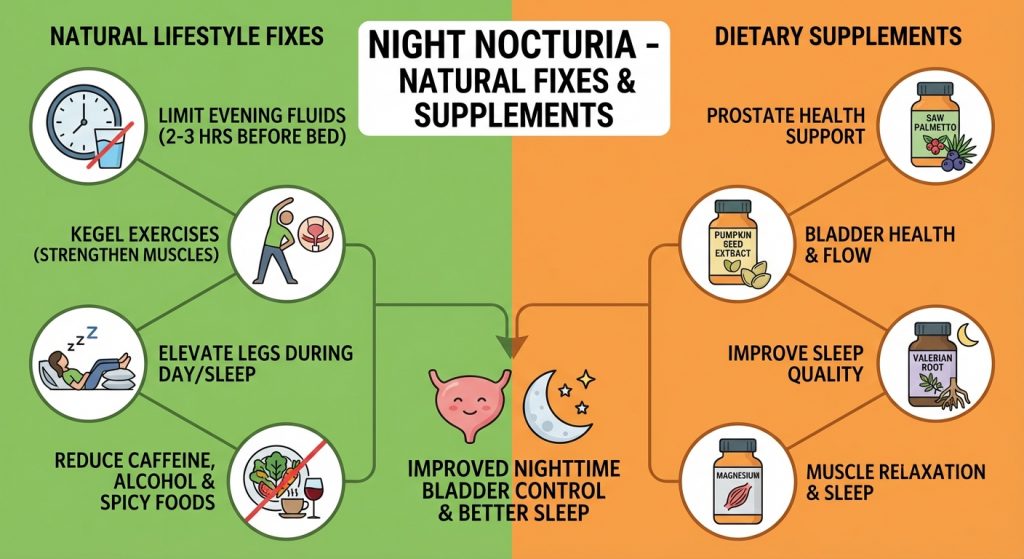
If you have ruled out serious medical issues, these protocols can help you retrain your bladder.
- 1. Pygeum Africanum
Derived from the bark of the African Cherry tree.How it may help: In studies of men with urinary symptoms (often BPH-related), Pygeum extracts have shown modest improvements in overall urinary symptoms, including nighttime frequency; proposed mechanisms include anti-inflammatory effects and changes in smooth-muscle signaling.
Alex’s Protocol: I started taking Pygeum Africanum (420mg of 50:1 extract) nightly. Within two weeks, my bathroom trips dropped from 3 to 0 or 1. It feels like it “calms” the bladder nerve signals.
Community Consensus: Highly rated on Reddit biohacking forums for “non-bacterial prostatitis” and general frequency issues.
- 2. Graminex (Flower Pollen Extract)
The Alternative: Another option with some clinical data is flower pollen extract (often sold as Cernilton/Graminex). Trials suggest modest improvements in subjective urinary symptoms (including nocturia) in some men with mild-to-moderate BPH; effects vary by product and dose.
- 3. The Salt Trick
Protocol: A small pinch of unprocessed sea salt or Himalayan salt under the tongue before bed.
Theory: This may help raise antidiuretic hormones slightly and help the body retain the water in the cells rather than the bladder. (Do not do this if you have high blood pressure without consulting a doctor). - 4. Sleep Position and Compression
Elevation: Elevate your legs for 30 minutes before bed (read a book with your legs up against the wall). This drains the fluid from your ankles before you sleep, allowing you to pee it out before getting into bed.Compression Socks: Wear them during the day to prevent fluid pooling.
Side Sleeping: Some evidence suggests sleeping on your side improves kidney perfusion and reduces apnea events, indirectly helping nocturia.
- 5. Mouth Taping
Why: Waking with a dry mouth often points to mouth breathing, nasal congestion, or low bedroom humidity—any of which can make you reach for water at night.
The Fix: Start with lower-risk levers (nasal strips, saline rinse, allergy control, a humidifier, and side-sleeping). Mouth taping is a popular trend, but it isn’t a good fit for many people—especially if you snore or may have sleep apnea.
Behavioral Retraining
The “Double Void” Technique
- 1. Pee 30 minutes before bed.
- 2. Brush your teeth, put on pajamas, set your alarm.
- 3. Pee again right before getting into bed.
This ensures the bladder is completely empty.
The 21-Second Pee Rule
- This is a quirky but useful metric. A fun bit of physiology: researchers described a “law of urination” where many mammals empty a full bladder in roughly the same duration (PNAS).
- If you wake up at night and pee for only 5–10 seconds, it’s a useful clue that the bladder may not have been very full—and that the wake-up trigger could be sleep disruption (Apnea, Noise, Cortisol) rather than pure volume.
- Action: Focus on treating the insomnia/cortisol, not the bladder.
Medical Red Flags: When to See a Doctor
While sleep nocturia is often lifestyle-related, it can signal danger. See a urologist or GP if:
- 1. Blood: You see any pink or red in your urine.
- 2. Pain: Urination is burning or painful.
- 3. Thirst: You have unquenchable thirst (which can be a sign of high blood sugar, including undiagnosed diabetes).
- 4. Sudden Onset: The problem started overnight rather than gradually.
- 5. Incontinence: You cannot hold it and wet the bed.
Conclusion: Reclaiming Your Night
You do not have to accept waking up to pee as a normal part of aging. It is a sign that your system—whether it’s your kidneys, your prostate, or your sleep breathing—is out of balance.
Your Action Plan:
- 1. Audit Fluids: Stop drinking 3 hours before bed. Cut the alcohol.
- 2. Check Meds: Ask your doctor if your blood pressure meds are causing the issue.
- 3. Try Pygeum: If you are a man, consider Pygeum Africanum or Graminex to lower inflammation.
- 4. Test for Apnea: If you have small-volume urination but wake up frequently, use an O2Ring to look for oxygen drops; some biohackers also track overnight signals with wearables and even glucose sensors like FreeStyle Libre 3 (Libre 3) as additional context—then follow up with proper evaluation if the pattern looks concerning.
Sleep is for repairing your brain, not for visiting the bathroom.

By: Alex Warenstein.
Bio: Alex Warenstein is a sleep biohacker and founder of Night Time Comfort. After battling chronic insomnia and circadian disruption, he now helps others optimize their sleep using data-driven protocols. Read full story.
Disclaimer: Alex is not a doctor. This content is for educational purposes only. Always consult a specialist.