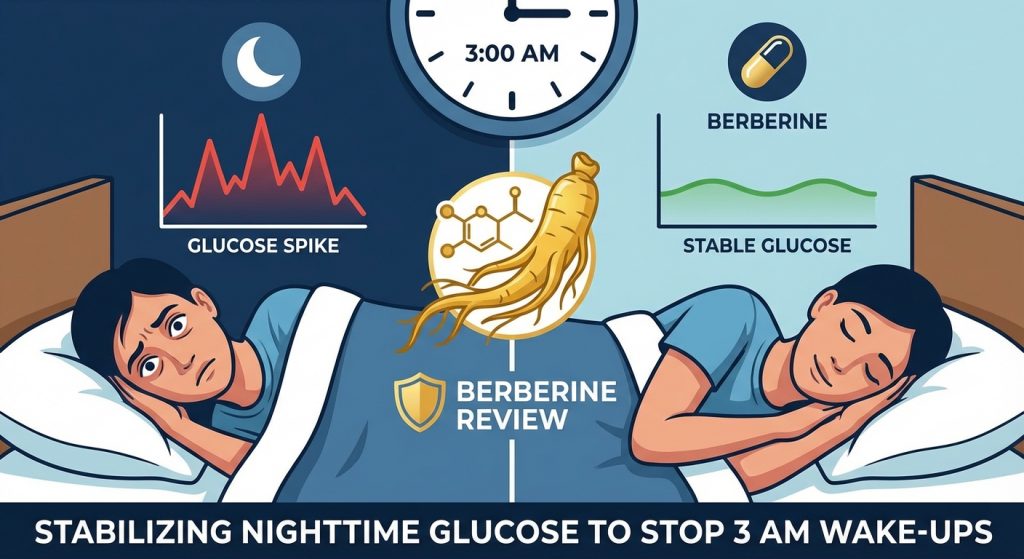
You wake up at 3:00 AM with a racing heart, sweating, and feeling strangely alert. You assume it’s stress. Sometimes, this pattern can be consistent with a late-night blood-sugar dip (often described as Nocturnal Hypoglycemia) followed by a stress-hormone ‘counter-response’ that jolts you awake.
Symptoms like sweating, shakiness, and a fast or irregular heartbeat are commonly listed as signs of hypoglycemia by the Mayo Clinic. In other words: it can feel like “stress,” even when the trigger is metabolic.
Berberine has exploded in popularity as “Nature’s Ozempic,” but both Harvard Health Publishing and the NIH’s NCCIH describe the real-world evidence as far more modest than the nickname implies. While mostly marketed for weight loss and diabetes, savvy biohackers are using it for a different purpose: Metabolic Sleep Architecture.
Does smoothing out your glucose curve actually keep you asleep? Or does taking a blood-sugar lowering agent at night risk causing the very crash you are trying to avoid?
In this review, I (Alex) analyze the science of AMPK activation, investigate the timing debate (Dinner vs. Bedtime), and share my 9/10 experience using it to flatten my nightly glucose graph.
What is Berberine?
Berberine is a bioactive alkaloid found in plants like Goldenseal, Oregon Grape, and Barberry. It has a bright yellow color and has been used in Traditional Chinese Medicine (TCM) and Ayurveda for thousands of years.
Mechanism of Action: The Metabolic Master Switch
Berberine activates an enzyme called AMPK (Adenosine Monophosphate-Activated Protein Kinase).
- Insulin Sensitivity: It may improve insulin sensitivity in some people, meaning the body may need less insulin to handle the same carbohydrate load.
- Glucose Regulation: It may blunt post-meal glucose spikes via multiple pathways (including effects on carbohydrate handling in the gut and hepatic glucose output).
Is Berberine a stimulant?
No. It does not stimulate the nervous system. However, it increases energy expenditure at a cellular level (burning fat).
The Sleep Connection: Glucose Stability
Will berberine help with sleep?
For sleep, it’s best framed as an indirect lever: if it reduces large post-dinner glucose swings for you, some people find that the 3 AM wake-up pattern becomes less frequent.
- 1. Preventing the Spike: If you eat a carb-heavy dinner, your blood sugar spikes. This leads to a massive insulin release.
- 2. Preventing the Crash: That massive insulin release causes your blood sugar to plummet 4 hours later (around 3 AM). This crash triggers Cortisol and Adrenaline release, waking you up.
- 3. The Berberine Fix: By blunting the initial spike, Berberine prevents the excessive insulin response. A smaller spike means a smaller crash. The result? You sleep through the “danger zone.”
Does berberine lower cortisol?
Indirectly, it may reduce the cortisol/adrenaline spikes that can follow a sharp nighttime glucose dip—by smoothing the swing that triggers that counter-response in the first place. By stabilizing blood sugar, it prevents the cortisol spikes triggered by hypoglycemia.
Dosage and Timing: The “Dinner” Debate
Is it better to take berberine AM or PM?
- Standard Protocol: 500mg, 15-30 minutes before a meal (Breakfast, Lunch, Dinner).
- The Sleep Warning: Some users find that taking it too late (e.g., right at bedtime on an empty stomach) can lower blood sugar too much during the night, causing them to wake up.
Reddit & Community Consensus
I analyzed the latest discussions on r/Biohackers, r/Supplements, and r/PCOS as of late 2025.
The Good:
- 1. “No More Food Coma”: Users report avoiding the post-dinner slump. They have steady energy in the evening, which helps them wind down naturally.
- 2. “Deep Sleep Boost”: Many users with Apple watches report higher Deep Sleep scores, likely due to lower body temperature (digestion generates heat; improving metabolic efficiency reduces this thermal load).
- 3. “Weight Loss”: The “Nature’s Ozempic” claim holds up in anecdotes. Reduced cravings lead to less late-night snacking.
The Bad:
- 1. “Stomach Issues”: This is the most common side effect. Diarrhea, cramping, and bloating are common if the dose is too high (1000mg+) or taken without food.
- 2. “Hypo at Night”: A minority of users reported waking up dizzy if they took it with a low-carb dinner. Lesson: If you’re fasting or doing Keto/Very Low Carb at dinner, you may want to skip late dosing (or track your response with a CGM) until you know how your body reacts.
- 3. “Muscle Gains”: Some bodybuilders avoid it post-workout because it might blunt the mTOR pathway (muscle growth), though for the average person, this is negligible.
Alex’s Personal Review
The following is based on my personal logs.
I have been taking Berberine (500mg) twice daily for over a year. I use it primarily for metabolic health and weight maintenance, but I noticed a distinct sleep benefit.
My Experience:
I take one capsule before breakfast and one before dinner.
- The Glucose Data: Using my Freestyle Libre 3 (CGM), I saw immediate results. My post-dinner glucose spike dropped from ~140 mg/dL to ~120 mg/dL.
- The Sleep Correlation: On nights I take Berberine, my overnight glucose line is almost perfectly flat.
My Rating: 9/10
It is a metabolic powerhouse. It requires discipline (taking it before meals), but the payoff for sleep stability is immense. I do not take it right at bedtime; I take it with dinner to manage the fuel source.
Where to Buy:
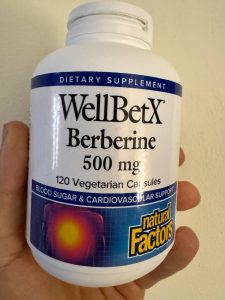
Look for Berberine HCL (Hydrochloride) or Dihydroberberine (better absorption, less stomach upset) on iHerb.com. Brands like Thorne or Integrative Therapeutics are gold standards.
Safety & Side Effects
What is the downside to berberine?
- Gastrointestinal: High risk of cramping/diarrhea initially. Start with one dose a day.
- Interactions: Berberine can affect drug-metabolizing enzymes (including CYP pathways), so medication interactions are the main non-GI risk to take seriously. Memorial Sloan Kettering Cancer Center maintains a detailed, regularly updated interaction-focused monograph on berberine.
How long can you take berberine?
Some experts recommend cycling (e.g., 3 months on, 1 month off) to prevent antimicrobial effects on the gut microbiome, though recent data suggests it might actually improve gut bacteria diversity.
Update for December 2025:
Since I first reviewed Berberine as a “metabolic anchor” for sleep, the conversation has exploded. We now have preclinical evidence linking it directly to sleep neurochemistry, not just blood sugar.
1. Dihydroberberine (The “Super” Form)
My original review focused on standard HCL. In the last couple of years, more people have been experimenting with Dihydroberberine (DHB) for the same two reasons: absorption and GI comfort.
The Problem: Standard Berberine HCL has poor bioavailability and causes significant GI distress (diarrhea) for many users.
The Upgrade: A small PubMed Central human pilot trial reported that 100–200 mg DHB produced substantially higher plasma berberine exposure than 500 mg standard berberine.
The Sleep Benefit: Users report far fewer stomach cramps at night with DHB, eliminating the “waking up to run to the bathroom” side effect that plagued HCL users.
2. The “Neurochemistry” Angle (Preclinical)
There is some preclinical work exploring berberine’s effects on sleep-related pathways, but it’s early and mostly animal data—not a settled human insomnia mechanism.
3. The Natural GLP-1 Agonist (Science Confirmation)
The “Nature’s Ozempic” nickname is mostly marketing shorthand; mechanistic reviews in Pharmaceuticals (MDPI) note that berberine can stimulate GLP-1 secretion in experimental models, but it’s not equivalent to prescription GLP-1 agonists.
The Sleep Link: GLP-1 stabilizes the Hypothalamus.
The Effect: This explains why users report feeling “satiated” and calm before bed. It stops the “midnight snack” impulse at a hormonal level.
4. Safety Update: Acute GI Intolerance
Some users report acute nausea (and occasionally vomiting) when high doses are taken on an empty stomach late in the evening.
The Issue: Acute nausea or vomiting shortly after taking high doses on an empty stomach before bed.
The Fix: Never take Berberine HCL without food. If you must take it late, ensure it is with a small fat/protein snack, or switch to the gentler Dihydroberberine form to avoid waking up with nausea.
5. The “Muscle Growth” Killer (mTOR Inhibition)
A critical warning has emerged for those using Berberine while training for hypertrophy.
The Mechanism: Berberine activates AMPK (cellular energy) but inhibits mTOR (the signal for muscle growth).
The 2025 Protocol: If you lift weights in the evening, do not take Berberine with your post-workout meal. Take it with breakfast and lunch only to avoid blunting your gains.
Summary
Berberine is the metabolic anchor for your sleep.
- Use it if: You eat carbs at dinner, wake up hungry/anxious at 3 AM, or have insulin resistance.
- Avoid it if: You are already on blood sugar medication (hypoglycemia risk) or have a very sensitive stomach.
Read Next:
Freestyle Libre 3 Review: Tracking Glucose While Sleeping |
The Anti-Sleep Diet: 5 Foods That Destroy Sleep Quality

By: Alex Warenstein.
Bio: Alex Warenstein is a sleep biohacker and founder of Night Time Comfort. After battling chronic insomnia and circadian disruption, he now helps others optimize their sleep using data-driven protocols. Read full story.
Disclaimer: Alex is not a doctor. This content is for educational purposes only. Always consult a specialist.