You lay in bed. You aren’t “anxious” in the traditional sense. You aren’t worried about a tiger. But your brain is stuck on a loop. You replay a conversation from 2018. You obsess over a mistake at work. You feel a compulsion to check the door lock for the third time.
This is the “Monkey Mind.”
While GABA supplements try to sedate the whole brain, N-Acetyl Cysteine (NAC) does something more specific: it regulates Glutamate, the brain’s primary excitatory neurotransmitter.
NAC is famous as a mucus thinner and Tylenol overdose antidote in hospitals. But in the biohacking world, it is revered for stopping obsessive-compulsive behaviors, addiction cravings, and intrusive thoughts that prevent sleep.
This review analyzes the science of glutamate regulation, why high doses might be risky, and I (Alex) share my long-term experience using it as an ex-smoker.
What is NAC? (The Master Antioxidant Precursor)
What is the main function of the NAC?
NAC is a modified form of the amino acid Cysteine. It is the rate-limiting precursor to Glutathione, the body’s “Master Antioxidant.”
- Detox: Without enough Cysteine, your liver cannot produce Glutathione to clear toxins. This is why it is critical for smokers or anyone exposed to pollution.
- Anti-Aging: By boosting Glutathione, it combats oxidative stress, a primary driver of aging.
What does NAC do to the brain?
This is where it gets interesting for sleep. NAC modulates Glutamate.
- The Glutamate Trap: Excess glutamate causes “excitotoxicity”—your neurons fire uncontrollably. This manifests as racing thoughts, OCD tendencies, and addiction cravings.
- The Fix: NAC helps transport excess glutamate out of the synapse, quieting the noise. It doesn’t sedate you; it stops the “loop.”
Dosage and The “Sweet Spot”
Is it okay to take NAC every day?
Yes, but dosage matters.
- Standard Dose: 600mg to 1200mg.
- The Risk of High Doses: Some research suggests excessive antioxidants (megadosing) might blunt the body’s natural adaptation to exercise (hormesis) or even promote cancer cell survival (in specific mouse models) by protecting them from oxidative stress.
- Stick to 600mg-1200mg. Cycle it if you are concerned.
Does NAC make you sleepy?
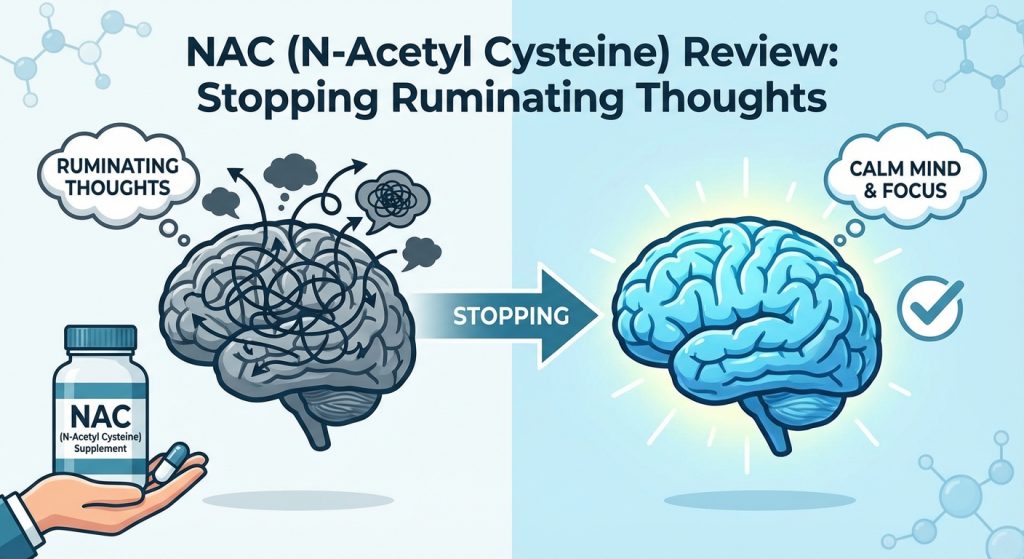
Not directly. It is not a sedative. However, for people with “Ruminating Insomnia” (OCD-spectrum thoughts), it removes the barrier to sleep.
Meta-Analysis: Studies on psychiatric conditions (OCD, Trichotillomania) show NAC significantly reduces compulsive behaviors compared to placebo. By quieting the compulsion to “think,” sleep happens naturally.
Should you take NAC in the morning or at night?
- Morning: Best for general health, mucus clearing, and anti-aging.
- Night: Best for stopping intrusive thoughts. However, for some, it can cause mild reflux if taken right before lying down due to its acidity.
Reddit & Community Consensus
What do users on r/Nootropics and r/QuitSmoking say?
The Good:
- 1. “The Noise Stopped”: The most profound report is from users with OCD or intrusive thoughts. They describe a “silence” in their head that they haven’t felt in years.
- 2. “Craving Killer”: Ex-smokers and nail-biters swear by it. It dulls the “itch” to perform a bad habit.
- 3. “Hangover Prevention”: Like L-Ornithine, it is legendary for liver protection if taken before drinking.
The Bad:
- 1. “Anhedonia”: Similar to Ashwagandha, long-term high-dose use (2g+) can lead to a feeling of emotional flatness.
- 2. “Histamine Issues”: Some users report itching or runny noses, likely due to histamine release.
- 3. “The Smell”: NAC contains sulfur. It smells like rotten eggs. This is normal.
Alex’s Personal Review
The following is based on my personal logs.
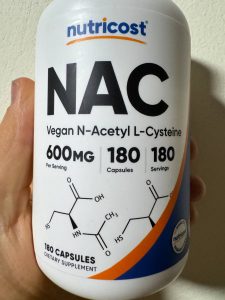
I have been taking NAC 600mg (Nutricost) for over 2 years.
Context: I am an ex-smoker. I started taking it to heal my lungs and for the anti-aging glutathione boost. My wife takes it too.
My Experience:
I don’t “feel” it kick in. It doesn’t make me sleepy. It doesn’t give me a buzz.
However, I notice that my cravings for nicotine (even years later) are non-existent when I am on it. My lung capacity feels better.
Regarding sleep: I don’t use it as an acute sleep aid. I take it in the morning or early afternoon. I cannot claim it helps me fall asleep faster directly, but my general baseline anxiety is lower.
My Rating: 6/10
This rating isn’t because it’s bad; it’s because the effects are invisible. It’s a “health insurance” supplement for me. I take it for longevity and lung health, hoping the science is right. It is a staple, but not a “magic pill” you will feel tonight.
Where to Buy:
Life Extension or NOW Foods on iHerb.com. Ensure the capsules smell like sulfur; if they don’t, it might be degraded.
Safety & Interactions
Who should avoid taking NAC?
- Bleeding Disorders: It can slow blood clotting.
- Asthma: While it helps mucus, inhaled NAC can cause bronchospasm (oral is usually fine).
Why was NAC taken off the market?
A few years ago, the FDA reviewed NAC’s status because it was approved as a drug (for Tylenol overdose) before it was sold as a supplement. However, enforcement discretion currently allows its sale, and it is widely available again on Amazon and iHerb.
Update for December 2025:
Since I first reviewed NAC as a tool for “stopping thoughts,” the scientific landscape has shifted. We have moved from viewing NAC as a standalone supplement to understanding it as half of a longevity equation. However, new safety data regarding cancer risks requires a serious look at who should take it.
1. The “GlyNAC” Standard (The New Baseline)
If you are taking NAC alone in 2025, you are using an outdated protocol.
The Breakthrough: Major studies from Baylor College of Medicine demonstrated that NAC’s ability to boost Glutathione is significantly rate-limited by Glycine deficiency.
The Data: Older adults who took GlyNAC (Glycine + NAC) showed improvements in 9 “Hallmarks of Aging,” including mitochondrial function and inflammation, which NAC alone failed to achieve.
The Protocol: The new biohacker standard is a 1:1 ratio (e.g., 600mg NAC + 600mg Glycine). This combination is now considered “Top Tier” for sustained daytime energy and mitochondrial repair during sleep.
2. The “Anhedonia” Mechanism (Dopamine Blunting)
In my original review, I mentioned emotional flatness as a side effect. We now understand the mechanism: Dopamine Modulation.
The Science: NAC lowers synaptic glutamate, which is good for anxiety, but it downstream affects dopamine signaling in the brain’s reward centers.
The Symptoms: Users describe it not as sadness, but as a “grayness.” Music sounds boring; food tastes bland; motivation drops.
The Fix: Do not take NAC 365 days a year. The 2025 community consensus is to Pulse Dose (e.g., 3 days on, 1 day off) or cycle it seasonally. If you feel the “grayness,” stop immediately—it reverses in roughly 5 days.
3. Safety Warning: The Metastasis Paradox
This is the most critical safety update of 2025.
The Risk: Recent studies indicate that while antioxidants like NAC protect healthy cells, they also protect cancer cells. In mouse models involving existing tumors (specifically lung and melanoma), NAC supplementation accelerated metastasis (spread).
The Rule: If you have active cancer or a high genetic risk of malignancy, do not take NAC without an oncologist’s approval. It is a “shield,” but shields protect the bad guys too.
4. Sleep Apnea & The “Mucus Hack”
A massive trend on forums like Apneaboard and SleepHQ in 2025 involves using NAC specifically for Airway Resistance.
The Logic: NAC is a potent mucolytic (mucus thinner).
The Hack: For people who snore or have mild Sleep Apnea due to congestion, taking 600mg NAC 60 minutes before bed thins the nasal mucus enough to facilitate nasal breathing. This is often paired with “Mouth Taping” to ensure silent, filtration-free breathing all night.
5. Bryan Johnson’s 2025 Protocol
As of late 2025, Bryan Johnson (Project Blueprint) continues to utilize NAC, but with specific nuances:
Dosage: He consumes approximately 1,800mg daily (in divided doses).
The Pairing: Crucially, he never takes it in isolation; it is always stacked with Glycine and Ginger (to prevent the gastrointestinal reflux that NAC can cause when taken on an empty stomach).
Summary
NAC is a heavy lifter for brain and liver health.
- Try it if: You have “looping” thoughts, OCD tendencies, addiction history (smoking), or want to boost glutathione.
- Skip it if: You just want simple sedation. Use Magnesium Magtein or Melatonin spray instead.

By: Alex Warenstein.
Bio: Alex Warenstein is a sleep biohacker and founder of Night Time Comfort. After battling chronic insomnia and circadian disruption, he now helps others optimize their sleep using data-driven protocols. Read full story.
Disclaimer: Alex is not a doctor. This content is for educational purposes only. Always consult a specialist.