In the West, we reach for melatonin or magnesium. In Japan, they reach for L-Ornithine.
This amino acid is a staple in the Japanese sleep market (often found in “sleep water” beverages), yet it remains relatively unknown in Europe and America. The premise is unique: instead of sedating the brain directly, it targets the liver. By reducing ammonia levels, it theoretically lowers physiological stress, allowing the body to power down.
But does it actually work for insomnia, or is it just a hangover cure masquerading as a sleep aid? This review analyzes the science of ornithine for sleep, its mechanism in the urea cycle, and I (Alex) share my underwhelming personal trial.
The Mechanism: The Liver-Brain Connection

What does L-ornithine do?
L-Ornithine is a non-essential amino acid that plays a central role in the Urea Cycle. Its primary job is to convert ammonia (a toxic byproduct of protein metabolism) into urea, which is then excreted by the kidneys.
The Stress Connection:
- Ammonia Toxicity: High levels of ammonia are neurotoxic. They cause brain fog, fatigue, and irritability.
- Cortisol: Physical stress (like intense exercise or alcohol consumption) increases ammonia. Studies suggest that L-Ornithine can lower the ratio of cortisol to DHEA, effectively blunting the body’s stress response.
- The Theory: By clearing ammonia faster, the “background noise” of physiological stress is reduced, allowing for higher quality sleep onset and duration.
Does L-ornithine increase growth hormones?
Bodybuilders use it because it may stimulate Human Growth Hormone (HGH) release, which happens primarily during Deep Sleep.
Reddit & Community Consensus
What do users on r/Nootropics and r/Biohackers say?
The Good:
- “The Hangover Hack”: It is legendary for preventing hangovers if taken before bed after drinking. This supports the liver-detox theory.
- “Waking Up Refreshed”: Users who respond well claim they wake up feeling cleaner and more energetic, rather than sedated.
The Bad:
- “No Sleep Effect”: Many users (perhaps the majority) report zero impact on falling asleep. It is not a sedative.
- “Dosage Confusion”: Some studies use massive doses (400mg vs 2000mg), leading to inconsistent user experiences.
Alex’s Personal Review
The following is based on my personal logs.
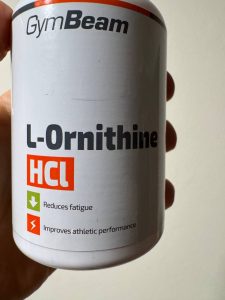
I was intrigued by the Japanese research on this. I bought a bottle of Gym Beam L-Ornithine.
My Experience:
I took 500mg about 1 hour before bed for two weeks. I paired it with my standard melatonin but removed my usual Magnesium Magtein and Apigenin to isolate the effect.
The result? Silence. Not mental silence, but a lack of effect. I didn’t fall asleep faster. I didn’t stay asleep longer. I didn’t feel any different in the morning.
My Rating: 3.5/10
For me, this was a dud. It might work wonders for an athlete with high ammonia levels or someone recovering from a night of drinking, but for standard maintenance insomnia, it did nothing. I stopped taking it.
Where to Buy:
If you want to test the liver theory, NOW Foods is a reliable brand.
Side Effects & Safety
What are the symptoms of too much ammonia in the body?
Confusion and lethargy. Ornithine helps fix this.
Is ornithine good for the liver?
Yes, it supports liver function (specifically the urea cycle).
Can you take L-ornithine every day?
Yes, it is generally safe.
Side Effects: High doses (>4g) can cause stomach upset or diarrhea.
Update for December 2025
Since my original review, L-Ornithine has remained a niche player, but new data has finally explained why it fails as a sedative but succeeds as a recovery tool. The conversation has shifted from “helping you sleep” to “helping you survive stress.”
Here is the essential new information for late 2025.
1. The “Cortisol Ratio” Breakthrough (2025 Japanese Study)
A pivotal double-blind study released in August 2025 finally validated the mechanism. Researchers found that while L-Ornithine (400mg) did not significantly lower raw cortisol spikes immediately, it drastically improved the Cortisol-to-DHEA-S Ratio.
Why this matters: A high cortisol/DHEA ratio is the biological marker of “burnout” and “tired but wired.”
The Finding: Participants didn’t fall asleep faster, but they reported significantly less “anger-hostility” and “fatigue” the next morning.
The Pivot: We stopped treating Ornithine as a sleeping pill. In 2025, we treat it as a “Stress Buffer.” It prevents the stress of today from ruining the energy of tomorrow.
2. The “Tri-Amino” Sleep Stack (Reddit Trend)
While Bryan Johnson focuses on Taurine and Tyrosine, the r/Biohackers and Insomnia subreddits have popularized the “Tri-Amino” Stack in 2025.
The Stack: L-Ornithine + L-Arginine + L-Lysine.
The Theory: Taking these three together before bed is theorized to maximize growth hormone release and vasodilation (blood flow) more effectively than Ornithine alone.
User Reports: Anecdotal logs suggest this combo promotes Deep Sleep (NREM3) specifically, rather than REM. If your Oura ring 4 says your Deep Sleep is low (<1 hour), this stack is the current community favorite to fix it.
3. The “Social Hangover” Cure
New research (late 2024) specifically looked at the Trier Social Stress Test and found that high-dose Ornithine (1,600mg) helped people recover from social stress faster.
The Protocol: I now keep L-Ornithine in my “Emergency Kit” specifically for two scenarios:
Alcohol Nights: It is undisputed as the best preventative for the “waking up anxious at 3 AM” feeling after drinking.
High-Conflict Days: If I’ve had a massive argument or a high-stakes presentation, I take 1,000mg to flush the ammonia/stress metabolic waste so I don’t carry that tension into sleep.
Summary
L-Ornithine is a specialized tool, not a general sleep aid.
- Try it if: You are an athlete, you drink alcohol frequently, or you suspect “toxic” fatigue.
- Skip it if: You just want to fall asleep faster (use Melatonin or Apigenin).
It tackles a very specific biochemical pathway that may not be the bottleneck for your insomnia.

By: Alex Warenstein.
Bio: Alex Warenstein is a sleep biohacker and founder of Night Time Comfort. After battling chronic insomnia and circadian disruption, he now helps others optimize their sleep using data-driven protocols. Read full story.
Disclaimer: Alex is not a doctor. This content is for educational purposes only. Always consult a specialist.