You follow all the sleep hygiene rules. You wear blue light blocking glasses. You keep your room cold. You fall asleep perfectly.
But at 2:00 AM, and again at 4:30 AM, you are awake. Your bladder is screaming. You stumble to the bathroom, and by the time you get back to bed, you are wide awake.
This pattern is often called nocturia—waking up more than once at night to urinate—and it’s a common reason people feel like their sleep is “fragmented” even if they fall asleep easily (Cleveland Clinic). While BPH can be a factor in men, nighttime bathroom trips can also be driven by fluid timing, caffeine/alcohol, sleep apnea, bladder sensitivity, or medications—so it helps to track patterns instead of guessing.
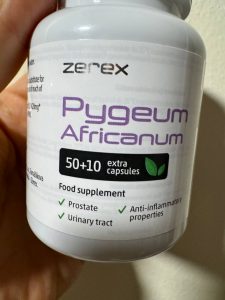
Enter Pygeum Africanum. This herbal extract (from the bark of the African cherry tree) has been studied mostly for urinary symptoms linked to BPH, with reviews suggesting symptom improvement versus placebo in some trials (ScienceDirect). In the biohacking community, it’s often framed as a “sleep helper” indirectly—because fewer nighttime bathroom trips can mean fewer awakenings.
In this review, I (Alex) summarize what research and real-world users report about bladder-control herbs, compare Pygeum to Saw Palmetto, and share my 9.5/10 experience as a single-person case study.
What is Pygeum Africanum?
What is Pygeum Africanum used for?
Pygeum is derived from the bark of Prunus africana. Indigenous tribes in Africa used it to treat “old man’s bladder.”
Analyses of standardized extracts suggest three commonly discussed compound groups:
- 1. Phytosterols: Anti-inflammatory (reduce swelling in the prostate).
- 2. Pentacyclic Triterpenes: Anti-edema (reduce fluid retention).
- 3. Ferulic Acid Esters: Often discussed as compounds that may influence lipid-related pathways in prostate tissue; the exact mechanisms in humans are still being clarified.
Does Pygeum shrink the prostate?
In practice, Pygeum is discussed more for symptom relief than for physically “shrinking” the prostate; with BPH, a lot of the day-to-day benefit people notice is about easier flow and less irritation, not a guaranteed change in prostate size (Urology Care Foundation). If urination feels easier and the bladder empties more fully, that can reduce the “wake up to pee” loop for some men.
Does Pygeum stop hair loss?
As a side note, some users anecdotally report reduced hair shedding; Pygeum is sometimes discussed as having mild 5-alpha-reductase activity, but this effect isn’t consistent or well-studied compared with prescription options.
Why It Helps Even if You Don’t Have “Prostate Problems”
This is the critical nuance. Many men (like myself) have normal PSA levels but still wake up to pee. Why?
- Prostate/urethra irritation: Even with a “normal” PSA, some men can still have irritation in the prostate/urinary tract area that makes the bladder feel jumpy at night.
- Bladder sensitivity: One theory is that Pygeum’s anti-inflammatory constituents may dial down local irritation, which for some people feels like fewer urgent “false alarms” from the bladder.
Reddit & Community Consensus
Community reports are anecdotal and skew toward strong experiences (good or bad), but repeat patterns can still be useful when you’re tracking your own results.
The Good:
- 1. “The Volume Increase”: (Note: This is the most famous/infamous effect discussed online). Users report a significant increase in seminal fluid volume. While anecdotal, it confirms the herb is biologically active in the reproductive system.
- 2. “Sleep Saver”: Many users report going from 3-4 bathroom trips down to 0-1 within two weeks. They describe it as “increasing the tank capacity.”
- 3. “Better Flow”: Users report a stronger stream, meaning the bladder empties fully. Residual urine is a major cause of waking up shortly after falling asleep.
The Bad:
- 1. “Stomach Upset”: Some users report nausea if taken on an empty stomach.
- 2. “Slow Onset”: How long does it take for Pygeum to kick in? It is not immediate. Most users report it takes 2 to 4 weeks to see the full benefit on sleep continuity.
Which is better, saw palmetto or pygeum?
- Saw Palmetto: Often used for androgen-related pathways (DHT), with mixed real-world results.
- Pygeum: Often used for urinary comfort and inflammation-linked symptoms.
- For nocturia specifically, some users report better night-time relief with Pygeum than Saw Palmetto, but responses vary person to person.
Alex’s Personal Review
The following is based on my personal logs.
I added Pygeum Africanum to my stack out of desperation. I had optimized everything else—darkness, temperature, magnesium—but I was still waking up 2-3 times a night to pee.
My Medical Context:
My PSA is 1.05 µg/L (the same as 1.05 ng/mL). That’s generally considered low, but PSA is not a “yes/no” test for BPH—so symptoms and patterns still matter. Yet, the nocturia was ruining my sleep.
My Experience:
I started taking 420mg (Standardized Extract) every morning with breakfast.
- Week 1: No change.
- Week 2: I noticed I only woke up once.
- Week 3: I slept through the night for the first time in years.
The Verdict:
It reduced my bathroom trips from 2-3 down to 0 or 1.
Of course, this wasn’t magic alone. I also stopped eating fruit at night and cut fluids 3 hours before bed (See The Anti-Sleep Diet). But I had done those dietary changes before without success. Adding Pygeum was the tipping point. It calmed my bladder nerves enough to let me sleep.
My Rating: 9.5/10
It’s a specific tool for a specific problem—and for my own “wake up to pee” pattern, it’s been the most useful non-prescription option I’ve personally tried so far.
Where to Buy:
Look for Standardized Extracts (usually 12% or 25% phytosterols) on iHerb.com. Swanson or Life Extension make reliable versions.
Safety & Side Effects
What are the side effects of Pygeum?
- Gastrointestinal: Nausea or abdominal pain (rare, take with food).
- Headaches: Reported by a small minority.
Is Pygeum hard on the liver?
Across the published trials and reviews, serious liver-toxicity signals from standardized Pygeum extracts are not a standout finding, but most studies are short and product quality varies—another reason to avoid “kitchen-sink” prostate blends and stick with a single standardized extract.
Does Pygeum affect the kidneys?
In studies and case reports, kidney-related adverse effects are not a common theme; most discussion focuses on urinary symptoms and tolerability.
Can an enlarged prostate go back to normal?
Pygeum can reduce symptoms and inflammation, effectively “normalizing” function, but it may not reverse structural growth (hyperplasia) completely without medical intervention.
Update for January 2026:
Sourcing matters more now, and it’s not just social media drama.
Prunus africana (the Pygeum tree) remains regulated under CITES Appendix II (trade controls), which is why “where it came from” and “how it was harvested” matters if you want to avoid sketchy supply (CITES).
Summary
Pygeum Africanum is the “Sleep Defender” for men. It protects your sleep from your bladder.
- Use it if: You wake up multiple times to pee, even if your PSA is normal.
- Protocol: 100mg-200mg standardized extract twice a day, or one large dose (like my 420mg) with breakfast. Give it 4 weeks.
If you are tired of the bathroom being the most visited room in your house at 3 AM, talk to your doctor about trying this.
Read Next:
Nocturnal Hypoglycemia: Is Low Blood Sugar Waking You Up? |
Best Bedtime Snacks for Deep Sleep

By: Alex Warenstein.
Bio: Alex Warenstein is a sleep biohacker and founder of Night Time Comfort. After battling chronic insomnia and circadian disruption, he now helps others optimize their sleep using data-driven protocols. Read full story.
Disclaimer: Alex is not a doctor. This content is for educational purposes only. Always consult a specialist.