In the biohacking world, we often chase immediate results. We want a pill that knocks us out in 20 minutes. But in Traditional Chinese Medicine (TCM), the approach to sleep is different. It isn’t about sedation; it is about “anchoring the spirit.”
Reishi Mushroom (Ganoderma lucidum), or Lingzhi, has a long history of traditional use in East Asia (often described as ~2,000 years), though most of that history is traditional/ethnobotanical rather than clinical—see National Cancer Institute. It was once reserved exclusively for royalty. Unlike culinary mushrooms, Reishi is woody, bitter, and inedible in its raw form. Its power lies in extraction.
While modern science investigates its immune-boosting properties, sleep sufferers are turning to Reishi for a different reason: cortisol balance. The theory is that by modulating the stress response during the day, you protect your sleep at night.
This review looks at the research on the sleep benefits of medicinal mushrooms and whether a potent 10:1 Reishi extract might support (not ‘force’) a healthier stress-and-sleep rhythm; I (Alex) also share my one-month self-experiment taking 800 mg every morning to see if it changed my 4 AM wake-ups (informational only, not medical advice).
What is Reishi? (The Spirit Calming Herb)
What is the king of all herbs?
In the Shen Nong Ben Cao Jing (an ancient Chinese herbal text), Reishi is ranked in the highest class of tonics—superior even to Ginseng. It is known as the “Mushroom of Immortality.”
Mechanism of Action:
Reishi is an adaptogen. It contains two primary bioactive compounds:
- 1. Polysaccharides (Beta-Glucans): These modulate the immune system.
- 2. Triterpenes (Ganoderic Acids): These give Reishi its bitter taste. They are believed to be responsible for the calming, anti-inflammatory, and liver-supporting effects.
The “Spirit Calming” Effect:
In TCM, insomnia is often attributed to a “disturbed Shen” (Spirit). Unlike Valerian which acts on GABA to sedate the body, Reishi acts on the nervous system to calm emotional turbulence. It doesn’t force sleep; it creates the conditions for sleep to happen.
The Cortisol Connection: Fixing the Rhythm?
Which mushroom is best for cortisol?
Reishi is one of the most commonly used ‘stress-support’ mushrooms in the supplement world; the hypothesis is that it may influence stress-signaling pathways such as the hypothalamic–pituitary–adrenal (HPA) axis.
Does Reishi Increase Cortisol?
Human data on Reishi and cortisol are limited; it’s not established that it reliably ‘raises’ or ‘lowers’ cortisol in a predictable way for everyone.
The Circadian Theory: Many people suffer from a dysregulated cortisol curve (low in the morning, high at night). By taking Reishi, the goal is to flatten the stress response throughout the day so that cortisol can naturally drop in the evening, allowing melatonin to rise.
Reishi vs. The Competition
How does it stack up against other adaptogens?
Is reishi like ashwagandha?
Ashwagandha: A root. It is “heavier” and more sedating. It creates a stronger blunting of stress but carries the risk of emotional numbness (anhedonia).
Reishi: A fungus. It is subtler. It is more about “centering” than sedating. It boosts the immune system, whereas Ashwagandha can overstimulate it in some people.
Verdict: Use Ashwagandha for severe burnout; use Reishi for anxiety combined with immune weakness.
Which is better, reishi or lion’s mane?
Lion’s Mane: A nootropic for the brain. It increases Nerve Growth Factor (NGF). It stimulates focus and memory.
Reishi: A tonic for the whole body. It focuses on the heart, liver, and nervous system.
Verdict: Lion’s Mane for the morning work session; Reishi for overall stress management.
Can I take reishi and magnesium together?
Yes. This is a very popular stack. Magnesium L-Threonate relaxes the muscles, while Reishi relaxes the nervous system.
Dosage and The “10:1” Ratio
If you buy Reishi powder, you need to understand extraction ratios.
A 10:1 extract means that 10 kilograms of raw mushrooms were used to create 1 kilogram of extract.
- Why this matters: Raw Reishi is indigestible fiber (chitin). You need a dual-extract (hot water and alcohol) to pull out the medicinal triterpenes.
- Alex’s Dose: I used 800mg of a 10:1 extract. On paper, that corresponds to ~8g of raw mushroom by weight, but extraction ratios don’t guarantee an identical ‘biological effect’ for every product or person.
Should you take Reishi in the morning or night?
This is debated.
- Night: To utilize the triterpenes for relaxation.
- Morning: To support the immune system and manage daytime stress response (preventing the accumulation of stress).
Reddit & Community Consensus
I analyzed threads from r/MushroomSupplements, r/Nootropics, and r/Biohackers. Here are the top 10 takeaways from real user experiences:
- 1. “Vivid Dreams”: This is the most consistent report. Reishi (like many mushrooms) seems to impact REM sleep, making dreams more colorful and memorable.
- 2. “Not a Sleep Aid”: Many users warn: “Don’t take this expecting to pass out.” It is an anti-stress supplement, not a sleeping pill.
- 3. “Libido Effects”: Some men report a decrease in libido with high doses (there’s some lab/in-vitro evidence that certain Reishi compounds can inhibit 5-alpha-reductase, but real-world hormone effects in humans aren’t well pinned down).
- 4. “The Zen Factor”: Users describe a feeling of “emotional stability.” Things that usually trigger anger or anxiety just bounce off.
- 5. “Immunity Shield”: Long-term users report they simply stop getting sick, even when everyone else in the office has the flu.
- 6. “Dry Mouth”: A fairly common user report; usually mild, but it’s a good signal to lower the dose or increase water intake.
- 7. “Itchy Skin”: A rare reaction, likely due to the immune system modulation.
- 8. “Fruiting Body vs. Mycelium”: The community is adamant: only buy products made from the Fruiting Body (the actual mushroom). Products made from mycelium on grain are often mostly starch filler.
- 9. “Bitter is Better”: If your Reishi extract tastes sweet or bland, it lacks triterpenes. Real Reishi is intensely bitter.
- 10. “Morning Use”: A significant portion of users prefer it in the morning coffee (often mixed with fat) because taking it at night gave them “active brain” or too much mental clarity to sleep.
Alex’s Personal Review
The following is based on my personal logs.
I decided to test Reishi Mushroom Extract (10:1) specifically to see if it could fix my 24h salivary cortisol test curve. My issue is waking up at 4:00 AM, which implies my cortisol spikes too early.
My Experience:
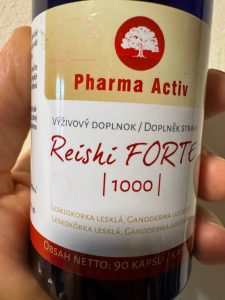
I took 800mg of 10:1 Extract every morning for 30 days. I mixed the powder into warm water (it tastes very earthy and bitter, like strong dark chocolate without the sugar).
- The Day Feel: I definitely felt an effect. Around hour 2, I felt a steady, calm energy. It wasn’t the “push” of caffeine; it was a resilience. Stressful emails didn’t spike my heart rate.
- The Sleep: Did it stop the 4 AM wake-up? No. Throughout the month, my sleep maintenance issues remained largely unchanged.
- The Side Effects: None, other than the bitter taste.
My Rating: 6/10
I am torn on Reishi. I believe it is a powerful health supplement for immunity and daytime stress resilience. I felt “healthier” on it. However, as a direct intervention for sleep maintenance insomnia or cortisol rhythm correction, it failed to move the needle for me personally. Perhaps I needed to take it at night.
I recommend it because the science on longevity and immunity is strong, but do not buy it expecting it to cure your insomnia overnight.
Where to Buy:
Quality is critical. Look on iHerb.com for Real Mushrooms, Nootropics Depot, or Oriveda, and prioritize labels that clearly state ‘Fruiting Body’ plus a beta-glucan number; for a quick consumer checklist on picking supplements, see NIH Office of Dietary Supplements.
Safety & Side Effects
Who cannot take reishi?
- Blood/bleeding risk: Reishi may have anti-platelet effects, so be conservative if you use blood thinners, high-dose aspirin/NSAIDs, or have a procedure coming up (plain-English overview: MSD Manual).
- Autoimmune/immune meds: Because Reishi is often described as immunomodulating, people with autoimmune disease or those on immunosuppressants should be extra cautious and coordinate with their clinician.
Does reishi mushroom affect the liver?
Most users tolerate it, but rare liver-injury reports exist; in practice, this is another reason to avoid ‘mystery powders’ and stick to reputable, clearly extracted products.
Jan-2026 updates:
Since I first reviewed Reishi, the most useful new info (Sept 2025–Jan 2026) is less about a ‘sleep knockout’ and more about where Reishi-containing formulas may help stressed sleepers, plus clearer signals on safety.
1. A 2026 human RCT tied better sleep quality to a five-mushroom blend that included Reishi.
In plain English: it wasn’t ‘pure Reishi,’ but it’s a clean human datapoint showing improved PSQI sleep scores plus lower stress biomarkers (including cortisol/ACTH) in stressed adults over 12 weeks. Source: PubMed.
2. Late-2025 animal data strengthened the ‘calm signaling’ story (GABA + recovery pathways).
A Ganoderma-containing formula showed sedative-hypnotic effects in mice alongside changes in GABAergic signaling and BDNF-related pathways—useful context for why some people feel more ‘settled’ rather than sedated. Source: PubMed.
3. Biohacker reality check: many Reishi products on the market are “daytime stacks,” not sleep aids.
If a product includes stimulatory components (or is framed as an energy/clarity blend), treat it as morning-only even if it contains Reishi. Source: Blueprint.
4. The gut-inflammation angle kept getting stronger in 2025.
A 2025 review summarized how Ganoderma polysaccharides can interact with immune signaling and the gut–liver axis—relevant if your sleep flares with GI stress, heavy meals, or inflammation. Source: MDPI.
5. A Reishi-for-sleep trial is now registered (cleaner Reishi-only data should follow).
It’s designed around sleep-quality outcomes with a defined Reishi liquid extract ratio—exactly the kind of design this topic needs. Source: ClinicalTrials.gov.
6. Safety note from late-2025 literature: rare acute liver-injury case reports keep appearing.
This doesn’t prove Reishi is ‘dangerous,’ but it supports conservative dosing, avoiding dubious powders, and being careful with big stacks. Source: The American Journal of Gastroenterology.
Summary
Reishi Mushroom is a long-game supplement. It is a “Tonic” in the truest sense of the word.
- Use it if: You feel ‘frazzled,’ get sick often, or want a non-sedating way to support daytime stress management.
- Skip (or pause) it if: You notice libido changes, you’re pregnant/breastfeeding, or you’re looking for a ‘knockout’ sedative tonight.
- Protocol: Most labels land somewhere around 500mg–1000mg of a Fruiting Body Extract; start low, follow the label, and treat timing (morning vs. evening) as a personal experiment.
It may not have fixed my 4 AM wake-ups, but it might be the anchor your immune system needs.

By: Alex Warenstein.
Bio: Alex Warenstein is a sleep biohacker and founder of Night Time Comfort. After battling chronic insomnia and circadian disruption, he now helps others optimize their sleep using data-driven protocols. Read full story.
Disclaimer: Alex is not a doctor. This content is for educational purposes only. Always consult a specialist.