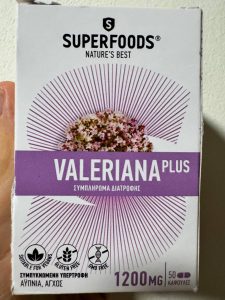
If you have ever opened a bottle of Valerian and thought something died inside, you are not alone. It smells like dirty socks, damp earth, or stale cheese.
But for thousands of years—from ancient Greece to World War II trench warfare—people have held their noses and swallowed it. Why? Because Valerian Root (Valeriana officinalis) is the heavy artillery of herbal medicine. While other herbs like Chamomile Balm gently suggest that you relax, Valerian demands it.
It acts as a physical sedative, making your limbs feel heavy and your eyelids droop. But does it actually improve sleep architecture, or does it just knock you out?
This review analyzes the science behind Valerian root benefits, its GABA-ergic mechanism, the critical importance of sourcing (Greek vs. Generic), and I (Alex) share my 7.5/10 rating for this stinky but effective ally.
What is Valerian Root? (The Heavy Hitter)
Valerian is a flowering plant, but the magic (and the smell) is in the root.
Unlike supplements that target the circadian rhythm (Melatonin) or cortisol (Ashwagandha), Valerian targets the central nervous system directly.
What does valerian root do to your brain?
It contains compounds like valerenic acid which interact with GABA-A receptors.
- The Mechanism: It inhibits the enzyme that breaks down GABA. This means more GABA stays in your brain gap, effectively slowing down nerve transmission.
- The Sensation: Users often describe a “heavy body” feeling. It relaxes muscle tension and reduces the physical restlessness that keeps people awake.
Does valerian root increase deep sleep?
Several studies suggest it can increase the percentage of Deep Sleep (NREM3), the restorative phase where the body repairs tissue. This distinguishes it from benzodiazepines, which often increase light sleep but suppress deep sleep.
The Sourcing Problem: Why Your Pills Might Be Weak
If you bought cheap Valerian at a drugstore and felt nothing, the problem wasn’t the herb; it was the soil.
The “Greek Standard”:
Just like wine, herbs have terroir. Valerian grown in the sun-drenched, mineral-rich soils of the Mediterranean (specifically regions in Greece) tends to have higher concentrations of valerenic acids compared to mass-produced crops from rainy climates.
- Standardization: When buying a supplement, look for a Standardized Extract (e.g., 0.8% valerenic acid). If the bottle just says “Valerian Root Powder,” you are gambling on potency.
- Freshness: The smell is actually a marker of potency. If your pills don’t smell a little funky, they might be old or weak.
Dosage and Timing: The “Loading Phase”
How long does valerian root take to kick in?
This is the biggest misconception. While some feel it in 30 minutes, for most people, Valerian works best as a cumulative supplement.
- Acute Use: Taking it once might make you drowsy, but the anxiety-reducing effects often require 2-4 weeks of consistent use to build up in the system.
- Protocol: Take 300mg to 600mg roughly 1 hour before bed.
Can I take valerian root every night?
Yes, for a cycle. It is recommended to take it for 4-6 weeks, then take a break (cycle off) for 2 weeks to prevent receptor downregulation (tolerance).
Valerian vs. The Competition
Which is better for sleep, ashwagandha or valerian?
- Ashwagandha KSM66: Best for “tired but wired” stress (Cortisol). It fixes the cause of stress.
- Valerian: Best for physical tension and “I can’t shut off” insomnia. It fixes the symptom of wakefulness.
- Verdict: Use Ashwagandha for day stress; use Valerian for night sedation.
Is valerian root better than melatonin?
- Melatonin: A timing signal. Good for falling asleep but bad for staying asleep.
- Valerian: A sedative. Good for sleep maintenance and physical relaxation.
- Verdict: If you wake up with tight muscles, pick Valerian.
Why can’t you take valerian root and melatonin together?
Actually, you can, but be careful. Combining two sedatives can cause excessive grogginess (“The Hangover”) the next morning. Start with one.
Reddit & Community Consensus
I analyzed threads on r/Insomnia, r/Herbalism, and r/Biohackers to see what real users report.
1. “The Vivid Dreams”:
About 20% of users report intense, cinematic dreams. This supports the theory that Valerian affects REM or Deep Sleep cycles. If you are prone to nightmares, start with a low dose.
2. “The Smell Barrier”:
Almost every discussion mentions the smell. “It smells like feet.” Pro-tip: Keep the bottle in a ziplock bag if you have a sensitive nose.
3. “The Hangover”:
Does valerian make you groggy the next day? Yes, for about 10-15% of users, especially at doses >600mg. It has a longer half-life than melatonin.
4. “The Paradoxical Reaction”:
Just like Passionflower, a small percentage of people get stimulated by Valerian (feeling “wired” or agitated). If you feel restless after taking it, stop immediately.
5. “It takes time”:
Many users confirmed Alex’s experience: “I didn’t feel much the first night, but by week 2, I was sleeping like a rock.”
Alex’s Personal Review
The following is based on my personal logs.
I have a love-hate relationship with the smell, but a love-love relationship with the effect. I use a high-quality standardized extract sourced from Greece.
My Experience:
I don’t use Valerian for “emergency” sleep. I use it as a treatment cycle.
- The Protocol: I take it every night for 6 weeks during high-stress periods.
- The Effect: It isn’t a “knockout punch” on night one. But by day 10, I notice a profound shift. My baseline anxiety is lower. My physical body feels looser when I get into bed. The internal dialogue that usually chatters away is muted.
- Sleep Quality: It definitely helps me stay asleep. My Apple Watch Ultra 2 often shows improved sleep efficiency during Valerian cycles.
My Rating: 7.5/10
It works, but you have to be patient. It rewards consistency. If you pop one pill expecting a miracle and give up, you missed the point. Also, finding good Greek raw material makes a noticeable difference compared to the cheap stuff I bought initially.
Where to Buy:
Look for brands like Nature’s Way (standardized) on iHerb.com or specialized European herbal shops online that certify origin.
Safety & Side Effects
What are the negative side effects of valerian root?
- Stomach Upset: Some people get cramps. Take it with a small snack if sensitive.
- Liver Safety: Does valerian root harm the liver? There were rare case reports in the past, but most were linked to multi-ingredient supplements. Pure Valeriana officinalis is generally considered safe for healthy adults. However, if you have liver disease, consult a doctor.
What medications should not be taken with valerian root?
Avoid combining with:
- Benzodiazepines: Dangerous additive effect.
- Alcohol: Increases sedation and respiratory depression risk.
- Surgery: Stop 2 weeks before surgery as it interacts with anesthesia.
Is valerian root safe during pregnancy?
Generally, herbalists advise caution or avoidance due to lack of definitive safety data. Consult an OBGYN.
Update for December 2025:
Since I first wrote this review, the science on Valerian has graduated from “it smells bad and boosts GABA” to a much more precise understanding of why it knocks you out. We also finally have clarity on why top-tier biohackers generally avoid it, despite it being effective for the masses.
1. The Mechanism Shift: It’s the “Anti-Caffeine”
For decades, we thought Valerian was just a mild sedative acting purely on GABA. New research has flipped this script.
The Discovery: We now know that Valerenic Acid acts as an Adenosine A1 Receptor Agonist.
The Translation: Caffeine works by blocking adenosine (the sleep pressure molecule). Valerian works by mimicking adenosine. It is biologically the “Anti-Caffeine.”
Why this matters: This explains the heavy, physical sedation. It is manually pushing the “sleep pressure” button that caffeine tries to hide.
2. The New “Ze 91019” Standard (Valerian + Hops)
If you are taking Valerian alone in 2025, you are using an outdated protocol.
The Data: Multiple clinical trials confirm that Valerian + Hops is significantly superior to Valerian alone.
The Result: While Valerian alone takes weeks to work on anxiety, the combination has shown immediate improvements in Total Sleep Time.
My Advice: Stop buying single-ingredient Valerian. Look for a “Sleep Complex” that pairs Valerian Root with Hops Strobiles.
3. The Biohacker “Gap”: Why Bryan Johnson Skips It
You will not find Valerian Root in Bryan Johnson’s “Blueprint” protocol.
The Reason: Valerian is a “dirty” sedative. Because of its new link to adenosine and its long half-life, it can linger in the system for 8–10 hours.
The Trade-off: While it guarantees sleep, it often comes with a Cognitive Tax (mild brain fog) the next morning. Biohackers prioritizing “Peak Brain Performance” choose cleaner molecules (like Magnesium L-Threonate or Glycine).
Verdict: Use Valerian if you desperately need to sleep tonight. Avoid it if you need to be sharp at 7:00 AM tomorrow.
4. Safety Update: “Dream Rebound”
A common report in 2025 is the “Dream Rebound” after stopping Valerian.
The Mechanism: Valerian slightly suppresses REM sleep in favor of Deep Sleep. When you stop taking it, your brain “rebounds” with intense, vivid REM cycles for 2-3 nights.
The Warning: Don’t be alarmed if you have wild dreams after your cycle ends; it’s a sign your brain is rebalancing.
5. Liver Toxicity “Debunked” (Mostly)
A major fear with Valerian has always been liver health. Regulatory updates in 2025 have largely cleared the air.
The Consensus: The hepatotoxicity cases of the past have been traced almost exclusively to impure, multi-ingredient blends—not Valeriana officinalis itself.
The Rule: If you buy a standardized, high-quality European extract, the safety profile is excellent.
Summary
Valerian Root is the heavy lifter of the herbal world. It is for the person who needs physical sedation and has the patience to let the herb build up in their system.
- Use it if: You have physical tension, muscle tightness, or wake up frequently.
- Expect: A slow-building wave of calm over 2-4 weeks.
- Protocol: 300-600mg, 1 hour before bed. Cycle it.
Don’t let the smell scare you away. That’s just the smell of potency.

By: Alex Warenstein.
Bio: Alex Warenstein is a sleep biohacker and founder of Night Time Comfort. After battling chronic insomnia and circadian disruption, he now helps others optimize their sleep using data-driven protocols. Read full story.
Disclaimer: Alex is not a doctor. This content is for educational purposes only. Always consult a specialist.