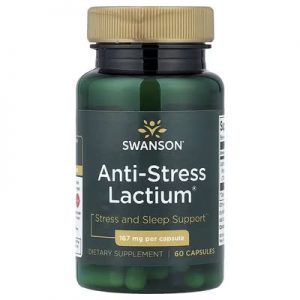
We all know the trope of “warm milk before bed.” It sounds like an old wives’ tale. But researchers have isolated specific milk-protein peptides that may contribute to the post-feeding drowsiness many people associate with warm milk.
This peptide is sold under the Lactium brand and is standardized around the milk-derived peptide alpha-casozepine.
Marketed as a gentle anti-stress ingredient that may support a calmer stress response (often discussed in terms like “cortisol”), it has become a popular add-on in sleep formulas—though in adults the effect is typically described as subtle rather than drug-like.
In this review, I analyze the science of hydrolyzed milk protein, its mechanism on GABA receptors, and share my disappointing 3-week trial.
What is Lactium?
What is Lactium made of?
Lactium is a milk protein hydrolysate. It is made by using a specific enzyme (trypsin) to digest the casein protein found in milk. In practice, it produces a specific alphaS1-casein tryptic hydrolysate (a controlled “cut” of milk protein rather than regular milk digestion).
- The Problem: In adults, most dietary peptides get further broken down during digestion, so how much intact alpha-casozepine (or active fragments) survives can vary a lot from person to person (ACS).
- The Solution: Lactium is manufactured to contain a standardized amount of alpha-casozepine, so you’re not relying on your own digestion to “generate” it from regular casein.
Is Lactium the same as lactose?
No. Lactose is a milk sugar. Lactium is a milk protein. Manufacturers typically report very low lactose levels (often <1%), but individual tolerance varies; anyone with a true milk allergy should avoid it.
The Mechanism: How It Works
Studies suggest it has a calming effect on the autonomic nervous system. In the human literature, Lactium is mostly studied as a stress-linked sleep support (people with sleep discomfort rather than severe insomnia), and results are mixed—some trials show small improvements, others show little change (Nutrients/MDPI).
- GABA Receptors: Alpha-casozepine is often discussed as interacting with the GABA-A system (the same broad system targeted by benzodiazepines).
- The Difference: In human supplement studies, the practical takeaway is usually mild “taking the edge off” for some people—not a guaranteed sedative effect.
Is Lactium good for anxiety?
This is the most common reason people try it: stress-linked sleep problems (“tired but wired”). In recent adult trials, Lactium is usually positioned as a daytime calm / evening wind-down tool, and it may help some people feel less keyed-up—though the effect is not consistent for everyone (Frontiers in Nutrition).
Reddit & Community Consensus
What do users on r/Nootropics and r/Sleep report? These are informal self-reports—useful for spotting patterns and dosing experiments, but not a substitute for controlled trial outcomes.
The Good:
- 1. “Subtle Calm”: A minority of users report a “taking the edge off” effect similar to L-Theanine but longer-lasting.
- 2. “Great for Day Stress”: Unlike melatonin, it doesn’t make you sleepy, so users like it for work anxiety.
The Bad:
- 1. “Expensive Placebo”: Many users report absolutely zero effect, even at high doses (300mg+).
- 2. “Digestive Issues”: Despite being low in lactose, some dairy-sensitive users report bloating.
- 3. “Weak for Insomnia”: The consensus is that while it might help mild stress, it is not strong enough to fix chronic maintenance insomnia or sleep onset issues.
What is the strongest herb for anxiety?
In user discussions, Kava Kava and Passionflower are often described as feeling stronger than Lactium for short-term calming, but safety profiles differ—NCCIH notes rare but serious liver injury reports with some kava products.
Alex’s Personal Review
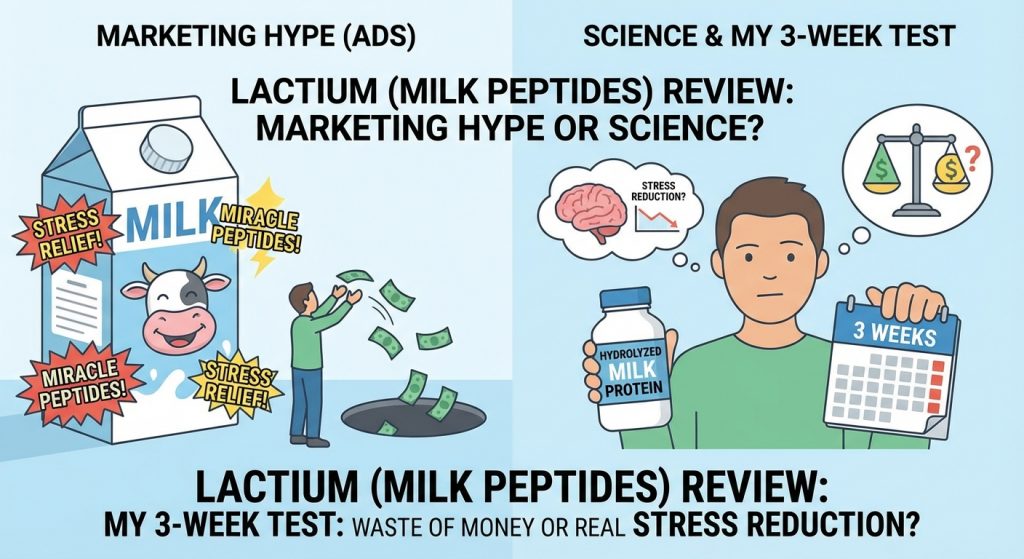
The following is based on my personal logs.
I bought a bottle of Lactium 150mg capsules, hoping for a non-drowsy “tired but wired” edge-reducer (the kind of effect people often shorthand as “cortisol support”).
My Experience:
I took 150mg to 300mg roughly 1 hour before bed for 3 weeks. I removed other adaptogens to test it in isolation.
- The Feeling: I waited for the “milk coma.” It never came. I felt… normal. Maybe slightly calmer? But it was indistinguishable from the placebo effect.
- Sleep Data: My Apple Watch Ultra 2 sleep estimates showed no meaningful improvement in Deep Sleep or Sleep Latency. My 4 AM wake-ups continued.
My Rating: 4/10
I think there is valid science behind the peptide, but perhaps my adult digestion destroys it, or the dosage needs to be much higher. For the price, I expected more. I believe a lot of the hype is marketing trying to monetize the “warm milk” nostalgia.
Where to Buy:
It is often found in “Sleep Support” blends (like Swanson or Life Extension) on iHerb.com.
Safety & Side Effects
Does Lactium have side effects?
Across published trials, side effects are typically uncommon and are often reported at rates similar to placebo.
Can you take Lactium long-term?
Longer-term use is typically described in trials as non-sedating and without clear dependence signals, but most published follow-ups are measured in weeks to a few months, not years.
Update for January 2026:
Since September 2025, the most useful “new” signal around Lactium is not that it became a knockout sleep aid—but that researchers and communities keep positioning it as a stress-buffer that can improve sleep indirectly.
1. A September 2025 systematic review on milk/dairy and sleep quality discusses dairy-based approaches and highlights that the evidence is generally modest and mixed, which fits the “gentle support” framing for milk peptides like Lactium (PubMed Central).
2. In late September 2025, a new registered clinical study started testing oral Lactium for reducing post-anesthesia “emergence agitation” (basically: can it calm the nervous system in a controlled setting); results are not posted yet, but it shows ongoing clinical interest in its calming angle (ClinicalTrials.gov).
3. In November 2025, a systematic review of L-theanine and sleep again reinforced a practical pattern: the stronger sleep results tend to come from combinations, and one of the better-known combo studies in this space uses Lactium + L-theanine (PubMed).
4. Toward the end of 2025, an exploratory trial write-up compared a sustained-release GABA + alpha-S1 casein hydrolysate combo versus melatonin using real-world sleep ratings—another example of milk-peptide approaches being tested as “sleep quality support,” not just melatonin clones (NCHP Journals).
5. In December 2025, a controlled study in veterinary behavior tested alpha-casozepine for anxiety during stressful vet visits; it’s not human sleep data, but it’s another controlled datapoint consistent with the “anti-stress peptide” narrative (DOI).
Summary
Lactium looks like a generally well-tolerated, mild option in the human studies so far, but it’s unlikely to be a stand-alone fix for serious insomnia.
- Try it if: You are chemically sensitive and find herbs like Ashwagandha or Valerian too strong.
- Skip it if: You need a reliable sleep aid; many people find more predictable benefit from basics like sleep hygiene plus well-studied options such as magnesium, and some also experiment with Apigenin.

By: Alex Warenstein.
Bio: Alex Warenstein is a sleep biohacker and founder of Night Time Comfort. After battling chronic insomnia and circadian disruption, he now helps others optimize their sleep using data-driven protocols. Read full story.
Disclaimer: Alex is not a doctor. This content is for educational purposes only. Always consult a specialist.