If you are reading this, you are likely in the same boat I was in for years. You are staring at the ceiling at 2:00 AM, not because of your own cortisol spikes (though we will get to that), but because the world is too loud. Maybe it is traffic, maybe it is a neighbor, or maybe—like in my case—it is a partner who snores.
I have spent a small fortune trying to optimize my sleep environment. I have taped my mouth, I have optimized my sleep hygiene checklist, and I have tested enough gadgets to fill a small warehouse. But sometimes, the problem is purely acoustic.
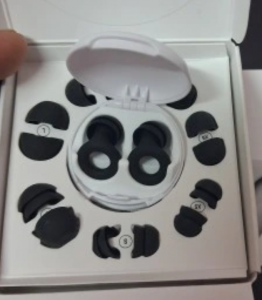
Recently, the internet hype machine caught me. I kept seeing ads for the Loop Quiet 2 earplugs. They promised to be the stylish, reusable, high-tech solution to replace the messy, old-school options I was used to. I bought the Loop Quiet 2 Plus Pro (the version with the double tips for extra silence), hoping they would be the endgame for my noise sensitivity.
Spoiler alert: I sent them back within the 14-day return window.
Today, I am going to break down exactly why, compare them against the gold standard of traditional wax earplugs, and help you decide which method of noise blocking might actually save your sleep.
The Contenders: High-Tech Silicone vs. Old-School Wax
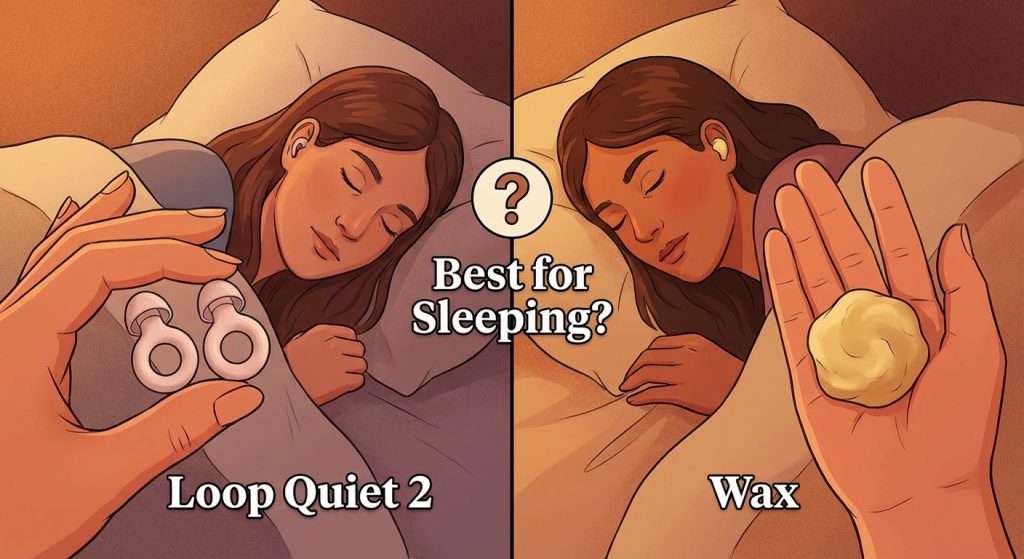
Before I dive into my personal experience, we need to understand what we are actually putting in our ears. The market for sleep occlusion is vast, but it generally boils down to two philosophies: insertion vs. sealing.
Loop Quiet 2 (The Modern Challenger)
The Loop Quiet 2 is a reusable silicone earplug. The design is clever: it has a circular ring (the “loop”) that sits in the concha of your ear, and a nozzle with a silicone tip that goes into your ear canal.
The marketing claims are impressive. They boast up to 24 dB (SNR) of noise reduction, and if you get the “Plus” version with the double tips—which I did—they claim to block even more. They are marketed as the best earplugs for sleep because they are low-profile, washable, and don’t look like medical equipment.
Traditional Wax (The Old Guard)
When I talk about “wax,” I am referring to the classic French or German style plugs (like Quies or Ohropax). These are essentially cotton fibers impregnated with a blend of mineral waxes.
Unlike silicone plugs that you shove into the canal, you warm these up in your hands, roll them into a ball, and flatten them over the ear opening. They create an airtight seal on the outside. They are disposable, they look greasy, and they are stuck in the 19th century. But they have a cult following for a reason.
My Experiment: Why I Returned the Loop Quiet 2
I wanted to love these. I really did. The idea of having a single pair of high-quality plugs that I could wash and reuse forever appealed to the practical side of me. I ordered the Loop Quiet 2 Plus, which comes with “Double Tips” designed to block maximum noise.
The Fit Issue
The packaging is beautiful. You get multiple sizes of tips (XS, S, M, L). I started with Medium.
Here is the first problem I encountered: The Pressure.
The Loop Quiet 2 is designed to sit flush within the ear so you can sleep on your side. However, the mechanism still relies on expanding inside your ear canal to create a seal.
When I used the Medium tips, I couldn’t get a perfect seal—I could still hear the ambient hum of the fridge downstairs. When I switched to the Large tips, the seal improved, but the sensation of pressure was immediate. It wasn’t pain, exactly, but a feeling of fullness that made me hyper-aware of my own ears.
The Side Sleeping Test
I am a strict side sleeper—it’s the best position for my airway health and to avoid apnea events (something I learned while analyzing my O2Ring data analysis).
When I laid my head down on my Tempur Sonata review pillow, the Loop plug pressed back against my ear cartilage. Even though the loop part is soft silicone, it is still a physical object occupying space in the outer ear. The pressure from the pillow transferred directly into my ear canal.
After 20 minutes, “discomfort” turned into a dull ache. I tried swapping to the smaller tips, but then the noise leaked in. I was stuck in a loop (pun intended) of choosing between pain or noise.
The Occlusion Effect
This was the dealbreaker for me. The “Occlusion Effect” is that booming sound of your own body—your heartbeat, your breathing, even the sound of your eyelids blinking—when your ear canal is blocked.
Because the Loop Quiet 2 goes deep into the canal, the occlusion effect was intense. I could hear my heart thumping against the pillow. It was louder than the snoring I was trying to block.
For some people, this is soothing. For me, it induced a sense of claustrophobia.
My Score: 5.5/10
They look great. They are easy to clean. If you are a back sleeper with average-sized ear canals, they might work. But for me? They failed the primary objective: disappearing so I could sleep. I returned them and, for now, I have switched to the soundcore sleep a30, which uses electronic pink noise masking rather than just passive blocking. But when I want pure silence without batteries, I know I will go back to wax.
Wax Earplugs: Why They Are Still the King of Comfort
Let’s compare this experience to wax earplugs. If you have never used them, the process is strange. You peel off the cotton layer, warm the wax in your palm until it is pliable, and then mold it over your ear canal.
The “Lid” Effect
The magic of wax is that it doesn’t enter the canal. It acts like a lid on a jar. This means there is zero internal pressure. You can wear them for 10 hours and not feel that “stretched” sensation inside your ear.
For side sleepers, this is crucial. When you press your ear against a pillow, the wax simply deforms. It flattens out. It doesn’t push back. This makes them, in my experience, the most comfortable earplugs for side sleeping.
The Seal
Because wax is sticky and amorphous, it creates a perfect, custom seal every single time. It conforms to the unique, jagged shape of your outer ear in a way that a pre-molded silicone tip never can. If you have weirdly shaped ears (like I apparently do), wax is the great equalizer.
Loop vs. Wax: The “Block Snoring Noise” Test
The biggest reason people buy earplugs is to block snoring noise. Whether it is a partner or a dog (my Spaniel snores occasionally), snoring is a specific acoustic enemy.
Snoring is largely low-frequency noise. It vibrates. Low frequencies are notoriously hard to block with passive earplugs because they travel through bone conduction (the skull) as much as through the air.
The Data
I am not the only one testing this. I spent days reading through independent reviews on sites like NoSleeplessNights and scouring threads on Reddit to see if I was crazy.
Interestingly, in subjective “snoring tests” performed by reviewers, both the Loop Quiet 2 and traditional Wax plugs (like Quies) often score similarly—around a 4/10 or 5/10 for blocking loud snoring.
Wait, only 4/10???
Yes. Neither of them completely silences a partner who is sawing logs right next to you. The physics just doesn’t allow it. However, there is a nuance in the type of sound they block.
- Loop Quiet 2: Excellent at blocking high-pitched sounds (crickets, birds at 4 AM, distant sirens). But for deep, rumbling snoring, the sound waves seem to pass through the silicone body.
- Wax: Because of the density of the material, I find wax dampens the “rumble” slightly better. It creates a “dead” silence that feels heavier.
If your goal is to block snoring noise completely, you might be disappointed by both. You generally need to combine earplugs with white noise benefits (a sound machine) to mask what the plugs can’t block. This is often called “sound layering.”
Detailed Comparison: Loop Quiet 2 vs. Wax
Let’s break this down by category so you can decide which trade-offs you are willing to make.
-
1. Comfort and Side Sleeping
Loop Quiet 2: The “soft touch” silicone is an improvement over old-school foam, but it is still a foreign object in the canal. If you have a firm pillow, you will feel it. I found that I had to constantly adjust my head position to stop the stem from digging in.
Wax: The clear winner. It warms up to body temperature and becomes part of your ear. You can grind your head into the pillow and feel nothing.
-
2. Hygiene and Maintenance
Loop Quiet 2: This is where Loop wins. You wash them with soap and water. They last for years. You don’t have to worry about running out.
Wax: They are disposable. You can reuse a pair maybe 2 or 3 times, but eventually, they get gross, pick up dust, or lose their stickiness. You are constantly generating waste, and you have to remember to buy more. It is a subscription model for your ears.
-
3. Application Speed
Loop Quiet 2: Instant. Pop them in, twist, done. If you wake up at 3 AM and need to put them in, it takes 2 seconds.
Wax: It’s a ritual. You have to warm them, knead them, and carefully apply them. Trying to do this in the dark while half-asleep is annoying. You risk dropping the sticky ball on the carpet (which is a disaster).
-
4. The Occlusion Effect (The Thump)
Loop Quiet 2: High occlusion. I could hear my own blood flow.
Wax: Moderate occlusion. Because they sit on the outside, I find the “underwater” sensation is less intense than with deep-insertion plugs.
What the Community Says (Reddit & Forums)
I rarely make a purchase without consulting the “hive mind.” Before buying the Loop Quiet 2, I dove into the r/LoopEarplugs subreddit and the ApneaBoard forums.
The “Loop” Consensus:
There is a massive divide. Half the users swear by them, calling them a “life saver” for sensory overload. The other half, usually the side sleepers, report the same issue I had: soreness in the concha (the bowl of the ear) after 4-5 hours.
A common tip I saw was to size down. Many users found that the size they thought they were (Medium) caused pain, and switching to XS solved it. I tried this. The pain stopped, but the seal broke. It seems you need a very specific ear anatomy to hit the sweet spot between comfort and silence.
The “Wax” Consensus:
On forums like SleepHQ and among biohackers discussing sleep divorce alternatives, wax is often the “old reliable.”
Tim Ferriss, a well-known biohacker (though not a sleep scientist), has famously recommended silicone putty (similar to wax in application) for years. The general consensus among long-term insomniacs is that while wax is messy, its ability to conform to any ear shape makes it superior for people who can’t find a comfortable pre-made plug.
Recent 2025 Updates:
Recently, discussion has shifted towards “hybrid” approaches. People are realizing that silicone earplugs alone aren’t enough for snoring. The trend on Reddit now is combining plugs with a Manta Sleep Mask (which has padded eye cups) to lift the face slightly off the pillow, reducing the pressure on the earplugs. It’s a clever hack, but it requires buying more gear.
Alternatives: If Both Fail, What Then?
If you have tried the Loop Quiet 2 and found them uncomfortable, and you find wax too messy, you are in the “Uncanny Valley” of sleep aids. This is where I ended up.
1. Active Noise Masking (My Current Choice)
As I mentioned, I currently use the Soundcore Sleep A30. These are not just passive plugs; they are tiny earbuds that play masking sounds (like rain or pink noise) directly into the ear.
Because they play sound, they don’t need to seal as perfectly as the Loop to block out snoring. The sound distracts your brain. They are smaller than the Loops and, in my opinion, better for side sleeping because the profile is flatter. However, they have batteries, and relying on electronics to sleep brings its own anxiety (what if the battery dies?).
2. Custom Molded Plugs
I haven’t gone down this route yet due to the cost, but it is the logical next step. You go to an audiologist, they take an impression of your ear, and create a silicone plug that fits your anatomy perfectly. This solves the pressure issue of the Loop but retains the hygiene benefits.
3. Fixing the Source (The Partner)
We have to talk about this. If you are buying industrial-grade ear protection because your partner snores, you might be band-aiding a serious health issue.
When my O2Ring showed drops in oxygen, I knew I had to investigate my breathing. If your partner is shaking the walls, they might need a home sleep apnea test.
Sometimes, the best sleep earplugs comparison ends with the realization that the earplugs aren’t the solution—a CPAP machine for your partner is.
If their snoring is mild (not apnea), you might suggest they try mouth taping benefits. It sounds crazy, but tape forces nasal breathing, which is much quieter than mouth breathing.
Summary: My Honest Takeaway
I am not going to give you a verdict, because your ears are not my ears. But I can give you my data points based on a failed experiment and years of trial and error.
Stick with Wax (or Putty) if:
- You are a dedicated side sleeper who pushes their ear hard into the pillow.
- You have sensitive ear canals that hurt with pressure.
- You have irregularly shaped ears that standard plugs don’t fit.
- You want the “heaviest” feeling of silence to dampen the rumble of snoring.
Try Loop Quiet 2 if:
- You sleep on your back.
- You want a sustainable, reusable solution and hate the waste of wax.
- You need to block high-frequency noises (traffic, birds, clicking) rather than deep snoring.
- You want something that looks good and is easy to insert in the dark.

By: Alex Warenstein.
Bio: Alex Warenstein is a sleep biohacker and founder of Night Time Comfort. After battling chronic insomnia and circadian disruption, he now helps others optimize their sleep using data-driven protocols. Read full story.
Disclaimer: Alex is not a doctor. This content is for educational purposes only. Always consult a specialist.