If you are reading this, you likely fall into a very specific, frustrating category of sleep patients. You have undergone a sleep study, perhaps even a home test, and were told your AHI (Apnea-Hypopnea Index) is “mild” or even “normal.” Yet, you wake up with a racing heart, you feel like a zombie until noon, and you are suffering from unexplainable fatigue. You may have tried a standard CPAP machine and found it intolerable, fighting against the constant pressure every time you try to exhale.
By the end of 2025, the medical community and patient advocacy groups have largely converged on a truth that was previously ignored: Upper Airway Resistance Syndrome (UARS) is a distinct, exhausting beast that requires a different weapon than standard Sleep Apnea.
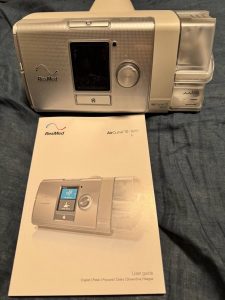
For many navigating the labyrinth of respiratory sleep disorders, that weapon has become the ResMed AirCurve 10 VAuto.
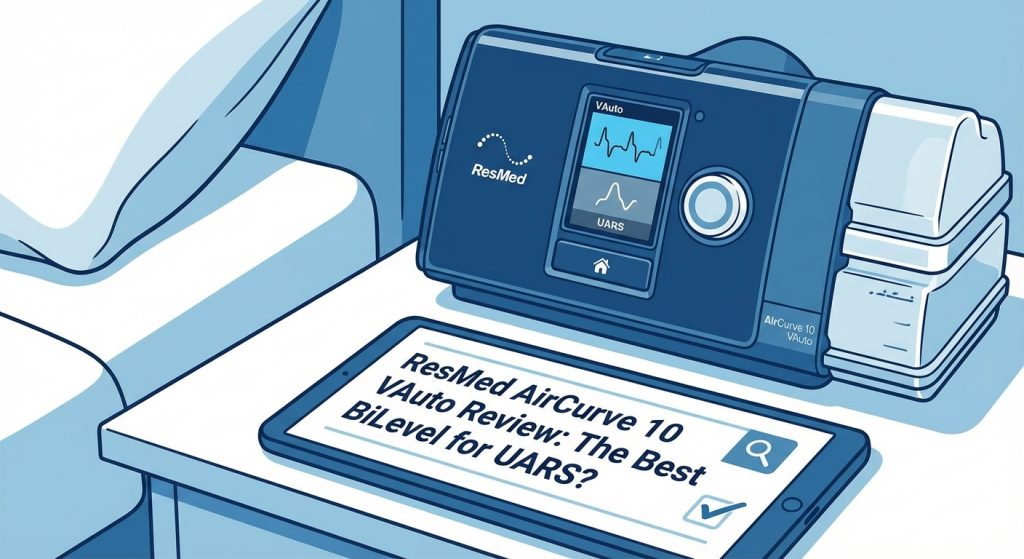
This is not a standard CPAP machine. It is a BiLevel device (often generically called BiPAP). In the communities of ApneaBoard, SleepHQ, and specialized Reddit groups, this machine is frequently cited as the “Gold Standard” for treating flow limitation when standard therapy fails. But is it right for you? This comprehensive review analyzes the VAuto algorithm, the critical role of Pressure Support, and why this machine succeeds where others fail in treating the subtle suffocation of UARS.
The UARS Problem: Why Standard CPAP Often Fails
To understand why the AirCurve 10 VAuto is so highly regarded, you must first understand the mechanics of the problem it solves. UARS is not always about your airway collapsing completely (an apnea). It is about your airway narrowing just enough to require massive physical effort to draw a breath.
Think of it like breathing through a thin straw. You get air, but your body has to work overtime to pull it in. This struggle creates a vacuum (negative pressure) in your chest. Your brain, sensing this struggle, jolts you out of deep sleep to restore muscle tone to the airway. These are Respiratory Effort-Related Arousals (RERAs). You might not fully wake up, but your sleep architecture is shattered. You rarely get the restorative deep sleep or REM sleep your brain needs to detoxify via the Glymphatic System.
The Failure of Fixed Pressure
Standard CPAP (Continuous Positive Airway Pressure) blows air at a single, constant pressure. To stint open a narrowed UARS airway, you often need higher pressures. However, breathing out against high pressure is physically exhausting and uncomfortable. It can cause aerophagia (swallowing air), bloating, and anxiety. Dr. Barry Krakow, a prominent figure in sleep medicine research, has noted in literature available through 2025 that attempts to eliminate RERAs with fixed pressure often hit a wall called “expiratory pressure intolerance.”
This is where the AirCurve 10 VAuto enters the conversation.
What is the AirCurve 10 VAuto?
The ResMed AirCurve 10 VAuto is an auto-adjusting BiLevel device. Unlike a CPAP that has one pressure setting, a BiLevel machine has two distinct pressures:
- 1. IPAP (Inspiratory Positive Airway Pressure): A higher pressure when you inhale to blow the airway open.
- 2. EPAP (Expiratory Positive Airway Pressure): A lower pressure when you exhale, allowing you to breathe out naturally without fighting the machine.
The Magic of “Pressure Support” (PS)
The difference between these two pressures is called Pressure Support (PS). If your inhale pressure is 14 and your exhale pressure is 10, your PS is 4.
In the context of UARS, Pressure Support is the primary lever for treatment. It acts as a pneumatic crutch, doing the work of breathing for you. When you initiate a breath, the machine instantly jumps to the higher pressure, effectively neutralizing the resistance in your airway (flow limitation) and allowing you to take a full, effortless breath without the physical struggle that causes cortisol spikes.
Deep Dive: The VAuto Algorithm Explained
The “VAuto” mode is what separates this machine from older, fixed BiLevel devices (like the “S” mode). It combines the comfort of BiLevel with the intelligence of ResMed’s famous AutoSet algorithm.
How it Works
In VAuto mode, you set a minimum EPAP and a maximum IPAP. This creates a “corridor” in which the machine can operate. You then set a fixed Pressure Support (PS).
Throughout the night, the machine monitors your breathing on a breath-by-breath basis. It looks for three things:
- 1. Flow Limitation: The flattening of the breath waveform, indicating narrowing.
- 2. Snoring: Vibration in the airway.
- 3. Obstructive Apneas: Full blockages.
If the VAuto algorithm detects flow limitation—the hallmark of UARS—it will automatically raise the EPAP (and consequently the IPAP, to maintain the fixed PS) to stabilize the airway. Once the breathing smooths out, it gently lowers the pressure back down.
This dynamic adjustment is critical because UARS is often positional or stage-dependent. You might need very little pressure while sleeping on your side, but significant support during REM sleep when your muscles are most relaxed. A fixed pressure machine cannot adapt to these changes; the VAuto can.
The Killer Features for UARS
While the dual pressures are the headline feature, the granular settings of the AirCurve 10 are what make it the preferred tool for biohackers and informed patients.
1. Trigger and Cycle Sensitivity
This is perhaps the most discussed setting in online communities like Reddit’s r/UARS. The Trigger determines how sensitive the machine is to your inhalation effort. The Cycle determines when the machine decides you are done inhaling and switches to exhalation pressure.
For UARS patients, the default “Medium” trigger often feels laggy. Because your respiratory drive might be subtle or rapid, a laggy trigger makes you feel like you are “sucking” air before the machine kicks in, which causes air hunger. Switching the Trigger to “High” or “Very High” is a common community recommendation. This makes the machine boost the pressure the millisecond you attempt to breathe, creating a feeling of instant synchronization.
2. TiControl (Ti Min and Ti Max)
Standard CPAP machines decide how long a breath should last. The AirCurve 10 lets you set safety limits.
- Ti Min: The minimum time the machine will stay in IPAP (inhalation).
- Ti Max: The maximum time.
This is vital for preventing the machine from cutting off your breath too early (which feels like suffocation) or lingering in high pressure too long when you want to exhale.
3. VSync Technology
Leak management is the Achilles heel of PAP therapy. If your mask leaks, pressure drops, and the therapy fails. ResMed’s VSync technology monitors unintentional “leak” and automatically increases the flow to compensate, ensuring that the prescribed Pressure Support is actually delivered to your airway, not just vented into the room.
Analysis: VAuto Mode vs. S Mode
Within the AirCurve 10 VAuto, you can choose between VAuto mode (auto-adjusting) and S Mode (Spontaneous, fixed pressure). There is a significant debate in 2025 forums regarding which is superior for UARS.
The Argument for VAuto Mode:
The majority of successful users prefer VAuto because of its adaptability. If you roll onto your back, your airway collapses more. VAuto detects this flow limitation and raises the baseline EPAP to compensate. When you roll back to your side, it lowers the pressure. This prevents over-treatment and aerophagia (swallowing air) during the easy parts of the night while protecting you during the hard parts.
The Argument for S Mode:
A vocal minority of users, particularly those with Tired But Wired syndrome or high sensitivity to pressure changes, find that the automatic adjustments of VAuto disturb their sleep. The machine “hunting” for the right pressure can cause micro-arousals. For these patients, locking the machine in S Mode (e.g., EPAP 6, IPAP 10, strictly fixed) provides a predictable, metronomic rhythm that is less disruptive, even if it is less theoretically efficient at clearing every single event.
The Critical Role of OSCAR
You cannot maximize the ResMed AirCurve 10 VAuto by looking at the small screen on the device. The “Smiley Face” report it gives you in the morning is virtually useless for UARS. It might report an AHI of 0.5 while you feel like you were hit by a truck.
To truly utilize this machine, patient communities universally recommend using OSCAR (Open Source CPAP Analysis Reporter). This software allows you to take the SD card from the machine and view your sleep data on a breath-by-breath level.
Why OSCAR is non-negotiable for UARS:
- 1. Visualizing Flow Limitation: The AirCurve 10 records a flow limitation graph. In OSCAR, you can see if your breath tops are “rounded” (healthy) or “flat/jagged” (restricted).
- 2. Tuning Pressure Support: If you see flat-topped breaths (flow limitation) persisting, the standard protocol discussed on forums like ApneaBoard.com is to incrementally increase Pressure Support until the breath creates a nice, round arc.
- 3. Identifying Leaks: You might think you slept through the night, but OSCAR might show a “Large Leak” section where your mouth dropped open, rendering the therapy useless. This would prompt you to look into Sleep Mouth Taping or a chin strap.
Real Patient Experiences: Who Does It Help?
Based on an exhaustive analysis of patient discussions, forum threads, and feedback loops current to late 2025, we can categorize the effectiveness of the AirCurve 10 VAuto into distinct groups.
The Success Stories (Who benefits most)
- 1. The “Low AHI, High Fatigue” Patient
This is the classic UARS profile. These users often fail standard CPAP because the fixed pressure does not resolve their fatigue. When switching to VAuto, they typically utilize a Pressure Support (PS) of 3 to 5. The PS acts to offload the work of breathing. User reports consistently highlight that the subjective feeling of “restoration” returns only when the flow limitation curve in OSCAR becomes rounded, regardless of what the AHI number says.
- 2. The Expiratory Intolerance Group
These users simply cannot sleep against a CPAP pressure of 10 or 12. Their abdominal muscles get sore, or they develop aerophagia. By using the VAuto, they can set a lower EPAP (e.g., 6) to make breathing out comfortable, while using PS to boost the inhale to 10 or 12. This separation of pressures is often the only way these patients can achieve compliance. - 3. The Synchronization Seekers
A specific subset of users reports that standard APAP feels “out of sync” with their natural rhythm. By customizing the Trigger sensitivity to “Very High” on the AirCurve 10, these users report a sensation that the machine is anticipating their breath, removing the subconscious “lag” that causes sleep fragmentation. - 4. The Positional Sleepers
Users who have significantly worse breathing on their backs find the VAuto mode indispensable. They report that the machine stays quiet and low-pressure while they side-sleep, but rapidly ramps up EPAP/IPAP when they roll supine, preventing the suffocating blockage that usually wakes them up.
The “Failure” Cases (Where it struggles)
- 1. The Pressure-Sensitive Insomniac
For patients whose primary issue is sleep maintenance insomnia driven by hyperarousal (high cortisol), the dynamic algorithm of the VAuto can be too stimulating. Even though their airway is open, the changing pressures wake them up. These users often find success only by switching the machine to fixed S Mode or narrowing the pressure range significantly to prevent swings.
- 2. The Central Apnea Reactive
Some users find that increasing Pressure Support triggers Treatment-Emergent Central Sleep Apnea (TECSA). As they increase the PS to treat flow limitation, they wash out too much carbon dioxide, causing the brain to pause breathing. These users often have to cap their PS at a lower level (e.g., 2 or 3) and accept some flow limitation to avoid central events, or they may require a different class of machine (ASV).
- 3. The “Perfect Numbers” Chaser
A psychological trap observed in forum users is the obsession with a perfectly flat flow limitation line. Some users crank up pressures aggressively to eliminate every trace of restriction visible in OSCAR. However, reports indicate that this often leads to fragmented sleep, mask leaks, and aerophagia. The consensus in late 2025 is that how you feel beats a perfect graph. If you feel rested with some residual flow limitation, chasing the graph is counterproductive.
- 4. The Aerophagia Sufferers
While BiLevel helps many with bloating, some users find that the rapid pressure swing between inhale and exhale pumps air into their stomach. For these specific anatomies, a standard CPAP with a gentle pressure relief setting (like EPR) sometimes works better than the distinct, sharp pressure changes of a VAuto.
Comparison: VAuto vs. The Competition
Why is the ResMed AirCurve 10 VAuto cited more often than DreamStation or Löwenstein BiLevel machines for UARS?
The consensus among biohackers (including data analysts like The Quantified Scientist) and forum veterans centers on the aggression of the algorithm. ResMed’s response to flow limitation is historically faster and more distinct than its competitors. For UARS, where a respiratory event is subtle and fleeting, a “lazy” algorithm misses the event entirely. ResMed’s aggressive tracking of the breath-by-breath flow shape makes it uniquely anxiety-inducing for some, but highly effective for neutralizing the specific mechanics of UARS.
Furthermore, the integration with OSCAR is most robust for ResMed devices. The granularity of data available—specifically the high-resolution flow rate graphs—allows for the kind of self-titration that is usually required to solve UARS, given that many doctors are still catching up to the nuances of the syndrome.
Things to Know: Menu, Masks & Models
The “Clinical Menu”
To utilize the features discussed here (Trigger, Cycle, PS), you must access the “Clinical Menu” of the device. This is generally done by holding the Home and Dial buttons simultaneously for three seconds. While legal to do on your own machine, you should educate yourself thoroughly via resources like ApneaBoard’s wiki before changing prescription settings.
The Mask Factor
The VAuto is a high-performance machine. It generates significant pressure swings. This puts more stress on your mask seal than a standard CPAP. If you are using a minimalist nasal pillow mask, you may experience “mask puffing” or leaks during the IPAP phase. Many VAuto users find they need to upgrade to more stable masks or use Sleep Mouth Taping to prevent mouth leaks from wrecking the therapy.
Used vs. New
As of late 2025, the AirCurve 10 VAuto is technically a “previous generation” device, succeeded by the AirCurve 11. However, the AirCurve 10 remains the preferred choice in many expert communities. The reasoning is the motor reliability and the proven, stable algorithm. If you are paying out of pocket, a low-hour used AirCurve 10 VAuto is often considered a safer bet and better value than newer models that have not yet stood the test of time regarding motor longevity.
Summary
The ResMed AirCurve 10 VAuto has earned its reputation as the premier tool for treating Upper Airway Resistance Syndrome, not because of marketing, but because of its mechanical alignment with the disorder’s physiology. UARS is a battle against inspiratory effort; the VAuto is a machine designed specifically to delete that effort via Pressure Support.
It is not a magic wand. It requires patience, a willingness to engage with data via OSCAR, and often a period of trial and error to dial in the Trigger sensitivities and pressure ranges. For those simply suffering from standard obstructive apnea, it may be overkill. But for the “tired but wired” patient, the person with the 4 AM awakenings and the “normal” sleep study who is desperate for a solution, the VAuto offers a level of customizability and respiratory relief that standard CPAP simply cannot match.
If you suspect your fatigue is flow-limitation based, this machine acts as both a diagnostic tool (via OSCAR data) and a highly effective treatment. It allows you to decouple the pressure needed to keep your airway open (EPAP) from the pressure needed to help you take a breath (IPAP)—and for the UARS patient, that separation is often the difference between a struggle and sleep.
*** Disclaimer: I am not a doctor. This review is based on extensive analysis of patient data, technical specifications, and community consensus current to late 2025. It is designed to equip you with the knowledge needed to have a productive, informed conversation with your sleep specialist or somnologist. Please consult your doctor before making any changes to your prescribed therapy.

By: Alex Warenstein.
Bio: Alex Warenstein is a sleep biohacker and founder of Night Time Comfort. After battling chronic insomnia and circadian disruption, he now helps others optimize their sleep using data-driven protocols. Read full story.
Disclaimer: Alex is not a doctor. This content is for educational purposes only. Always consult a specialist.