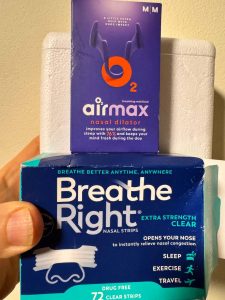
If you struggle with the quality of your sleep, you have likely encountered the “bottleneck” of the upper airway: the nose. For many, the journey to restorative rest begins not with complex pharmaceuticals, but with the simple mechanical act of opening the nostrils.
Nasal congestion, a deviated septum, or simply narrow nasal passages can lead to mouth breathing. This, in turn, causes dry mouth, snoring, and a fragmented sleep architecture that leaves you exhausted. While traditional adhesive strips have been the drugstore standard for decades, a new category of “magnetic nasal dilators” claims to offer a superior solution.
The Intake Breathing system is the most prominent player in this magnetic space. It promises to open airways wider than any adhesive strip and stay secure longer than any internal dilator. But is it worth the premium price tag? Does it actually help with UARS flow limitation or stop nasal snoring?
This review analyzes the mechanics, the comfort, the cost, and the real-world performance of Intake Breathing compared to its main competitors, specifically the Mute internal dilator and classic strips.
The Mechanics of Airflow: Why Your Nose Matters
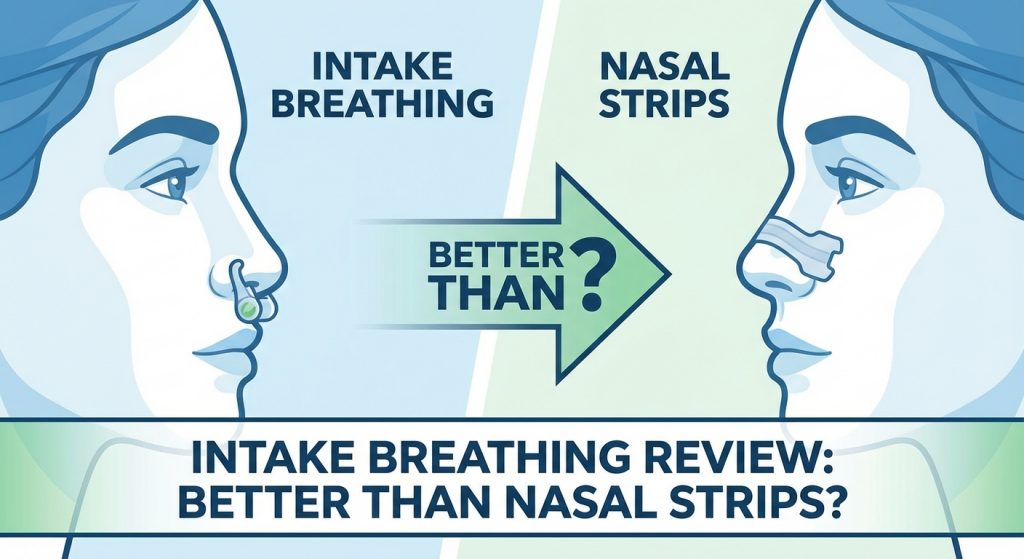
To understand why a device like Intake exists, we must first understand the problem it solves: Nasal Valve Collapse.
The internal nasal valve is the narrowest part of the human airway. When you inhale deeply—especially during sleep when muscle tone relaxes—the negative pressure can cause the side walls of your nose to collapse inward. This creates a “straw effect.” Try drinking a thick milkshake through a paper straw; as you suck harder, the straw collapses, and airflow stops.
When this happens at night, your body compensates. You might switch to mouth breathing, which bypasses the nose’s filtration and humidification systems. Mouth breathing alters the position of the jaw and tongue, often causing them to fall backward, which can trigger snoring, upper airway resistance, or even obstructive events.
How Intake Breathing Works
Unlike traditional nasal strips (like Breathe Right), which rely on the elastic recoil of a plastic band to lift the skin of the nose, Intake uses magnetism.
The system consists of two parts:
- 1. Adhesive Tabs: You apply two small adhesive patches to the outside of your nose, right above the nostrils. Each tab contains a small steel disc.
- 2. The Magnetic Band: A rigid, reusable plastic band with magnets on both ends.
When you bring the band close to your nose, it “clicks” onto the steel discs. Because the band is rigid and wider than your nose, it physically pulls the nostrils outward. This mechanical action creates a significantly wider opening than the natural recoil of a standard strip can achieve.
The company claims this allows for significantly increased airflow. But in the world of sleep optimization, mechanical theory must be backed by comfort and data.
Intake vs. Mute: The Great Dilator Debate
When looking for a nasal strips alternative, most people eventually choose between an external magnetic system (Intake) or an internal stent (Mute/Turbine). This comparison is critical because they approach the same problem from opposite directions.
Mute (Internal Dilator)
Mute creates space by inserting a scaffolding inside the nose. It pushes the nasal walls out from the inside.
- Pros: It is adjustable, relatively inexpensive, and extremely effective at structurally propping open the valve.
- Cons: The “intrusion factor.” Many users on forums report that while Mute works, having a foreign object inside the nostril all night can cause soreness, mucosal irritation, or a runny nose. It can be difficult to ignore while trying to fall asleep.
Intake (External Magnetic Dilator)
Intake creates space by pulling from the outside.
- Pros: Nothing goes inside your nose. The airway feels completely unobstructed. It avoids the internal pressure points that cause sores with internal dilators.
- Cons: It requires a multi-step application process (cleaning skin, applying tabs). It is significantly more expensive due to the cost of the disposable adhesive tabs.
The Consensus:
In discussions across UARS and biohacking communities (including subreddits like r/Biohackers and r/SleepApnea), a pattern emerges. Users who cannot tolerate the sensation of something inside their nose almost universally prefer Intake. Furthermore, for users with severe collapse who find that internal dilators just get “squeezed” shut or cause pain, the magnetic pull of Intake provides a stronger, more sustainable opening force throughout the night.
Performance Analysis: Snoring and Flow Limitation
Does it actually work for sleep pathology?
Impact on Snoring
If your snoring is “nasal snoring”—caused by vibration due to trying to force air through a narrow nasal passage—Intake can be highly effective. By widening the passage, the velocity of the air decreases (turbulence drops), and the vibration ceases.
However, if your snoring is “throat snoring” (caused by the tongue collapsing against the back of the throat), a nasal dilator alone may not solve it. That said, enabling nasal breathing is often the first step in a larger protocol. By reducing nasal resistance, you make it easier to keep your mouth closed, which is essential for stopping throat snoring. Many users pair Intake with sleep mouth taping (like 3M Micropore or Hostage Tape) to ensure the jaw stays shut, creating a complete anti-snore system.
UARS and Flow Limitation
For those investigating UARS probability (Upper Airway Resistance Syndrome), the goal is to eliminate “flow limitation.” This is a subtle flattening of the breath wave that causes your brain to panic and wake you up (micro-arousals) to restore muscle tone, often resulting in tired but wired symptoms the next day.
While there are no large-scale clinical trials specifically comparing Intake to Mute for UARS outcomes on PubMed as of late 2025, the mechanism of action is sound. Reducing resistance at the nasal valve reduces the respiratory effort required to pull air into the lungs.
Users monitoring their sleep with a Wellue O2Ring or looking at data from a WatchPAT One often report subjective improvements in sleep continuity. By lowering the “work of breathing,” the sympathetic nervous system (fight or flight) can calm down, potentially reducing the heart rate spikes associated with RERAs (Respiratory Effort-Related Arousals).
However, it is vital to note: Intake is a tool to reduce resistance, not a cure for sleep apnea. If you have significant oxygen desaturation (drops of 4% or more), you likely need positive pressure therapy (CPAP/BiPAP) or an oral appliance. Intake can be a fantastic adjunct to these therapies (helping you tolerate a CPAP mask by improving nasal flow), but it is rarely a standalone cure for moderate-to-severe OSA.
The “Sticky” Truth: Adhesion and Sweat
One area where Intake undeniably beats standard strips (like Breathe Right) is adhesion.
Standard strips rely on the spring force of the plastic band. This spring wants to straighten out, pulling the skin up. However, that same spring force is constantly trying to peel the tape off your skin. If you have oily skin, sweat at night, or wear the strip for 8 hours, the ends often pop loose.
Intake reverses this physics equation. The band is rigid. The magnets do the pulling. The adhesive tabs on your nose only have to hold onto the skin; they aren’t fighting a spring that is trying to peel them off.
This makes Intake the preferred choice for:
- 1. Athletes: It stays on during high-intensity exercise and heavy sweating.
- 2. Side Sleepers: Even if you bury your face in a Tempur Sonata or Cloudpilo, the low profile of the tabs and the strong magnetic connection usually withstand the friction against the pillowcase better than standard strips.
The Economic Barrier: Cost and DIY Solutions
The “Elephant in the room” regarding Intake Breathing is the cost. Unlike a box of generic strips you pick up for a few dollars, the Intake system operates on a refill model. You buy the “Starter Kit” once (which includes the magnetic band), but you must keep buying the adhesive tabs.
As of late 2025, the cost per night is significantly higher than standard strips. In forums and on Reddit, this is the single most cited reason for users abandoning the system despite loving the performance.
Community Hacks:
Because of the price, a thriving “DIY” culture has emerged. Users on r/sleep and r/CPAP often discuss purchasing medical-grade double-sided tape (like 3M medical tape) and reusing the metal discs from old tabs to create their own refills. While the company warns against this (citing hygiene and adhesive safety), it highlights the desperation of users who want the effect of the magnet without the recurring subscription cost.
If you choose to use the official tabs, it is an investment. You are paying for the reliability of the “waking up with the strip still on” experience.
Safety Profile and Skin Health
Intake uses medical-grade adhesive, but no adhesive is perfect for everyone.
According to recent FDA reports (MAUDE database, November 2024), there have been isolated reports of skin irritation, rash, or redness where the tabs adhere. This is a risk with any adhesive product worn for 8 hours a night.
To mitigate this, proper skin preparation is essential. The skin must be cleaned of oils (using an alcohol wipe) before application. Additionally, removing the tabs in the morning should be done slowly, perhaps with warm water, to avoid mechanical stripping of the upper skin layer.
Unlike internal dilators, there is no risk of inhaling a component or causing a nosebleed from internal friction. The safety profile is largely limited to dermatological reactions.
Comparison Summary: Intake vs. The Field
Intake vs. Breathe Right (Standard Strips)
- Airflow: Intake provides significantly more lift and is not limited by the “recoil strength” of the strip.
- Adhesion: Intake is far superior on oily skin or for sweaty sleepers.
- Cost: Standard strips are much cheaper.
- Verdict factor: If standard strips pop off your nose by 3 AM, they are useless. Intake solves the longevity issue.
Intake vs. Mute (Internal Stent)
- Comfort: Intake is non-invasive; Mute requires insertion.
- Hygiene: Intake tabs are single-use; Mute requires cleaning and eventual replacement.
- Effectiveness: Both are highly effective, but Intake works better for those with sensitive nasal linings or deviation that makes insertion painful.
- Cost: Mute is generally cheaper over the long term than official Intake refills.
Who Should Buy Intake Breathing?
Based on the mechanics and user feedback, Intake is the optimal choice for specific profiles:
- 1. The “Failed Strip” User: If you love the feeling of nasal strips but they peel off your nose halfway through the night, Intake’s magnetic locking mechanism is the solution.
- 2. The UARS / Flow Limitation Suspect: If you are trying to minimize respiratory effort to stop micro-arousals and tired but wired symptoms, maximizing the nasal aperture is critical. Intake offers the widest possible mechanical opening.
- 3. The Mouth Taper: If you practice sleep mouth taping to boost nitric oxide and oral health, you must ensure your nasal airway is 100% clear. Intake provides the “insurance policy” that you will be able to breathe through your nose while your mouth is taped.
- 4. The Athlete: For recovery sleep or training, the sweat resistance makes it superior to standard strips.
Summary
The Intake Breathing system represents the “heavy artillery” of nasal obstruction management. It is over-engineered, highly effective, and comes with a price tag to match. While it lacks the large-scale clinical trials of pharmaceutical interventions, the mechanical principles behind it are sound and validated by thousands of users in the biohacking and sleep apnea communities.
It effectively addresses the limitations of its predecessors: it opens the nose wider than adhesive strips and avoids the discomfort of internal dilators. For those chasing every percentage point of sleep quality—specifically looking to reduce resistance and maintain continuous nasal breathing—it is arguably the best non-invasive tool on the market in 2026.
If you can justify the recurring cost (or are willing to navigate DIY refill solutions), Intake provides a level of airway patency that standard strips simply cannot match. It effectively clears the path for air, allowing you to focus on the other pillars of sleep hygiene, whether that’s optimizing your bedroom CO2 levels, managing cortisol, or dialing in your circadian rhythm.
Key Takeaways for Your Sleep Stack
- Best For: Severe nasal congestion, nasal valve collapse, and active sleepers.
- Key Benefit: Superior airflow and adhesion compared to standard strips.
- Main Downside: Recurring cost of adhesive tabs.
- Pro Tip: Pair with sleep mouth taping for a complete cessation of mouth breathing and snoring.

By: Alex Warenstein.
Bio: Alex Warenstein is a sleep biohacker and founder of Night Time Comfort. After battling chronic insomnia and circadian disruption, he now helps others optimize their sleep using data-driven protocols. Read full story.
Disclaimer: Alex is not a doctor. This content is for educational purposes only. Always consult a specialist.