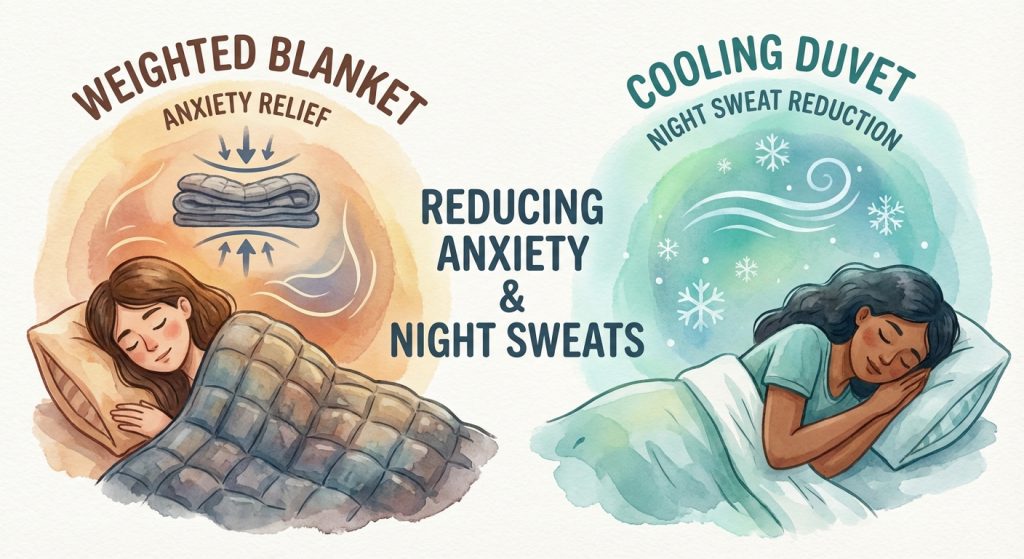
You are lying in bed, physically exhausted, yet your mind is running a marathon. This is the state of “tired but wired,” a condition where the body is fatigued, but the sympathetic nervous system—your fight-or-flight response—refuses to shut down. For years, the standard advice has been to improve your sleep hygiene checklist or take magnesium. However, for a specific subset of the population, the solution is not chemical; it is physical.
This brings us to the concept of Deep Pressure Stimulation (DPS) and the rise of the anxiety blanket.
However, there is a catch. The very tool that calms your nervous system—a heavy layer of beads and fabric—can create a thermal trap, leading to overheating, night sweats, and fragmented sleep. If you are a “hot sleeper,” a woman going through menopause sleep solutions, or someone living in a warm climate, the weight might feel good, but the heat will wake you up.
This guide explores the science behind weighted blanket benefits, analyzes the newest 2025 data on who actually needs them, and provides a definitive cooling duvet review for those who need to ditch the weight in favor of temperature regulation.
The Science of “The Hug”: What is Deep Pressure Stimulation?
To understand why a 15 lb (6.8 kg) blanket might act as a sedative, we must look at the mechanics of the autonomic nervous system. Deep Pressure Stimulation (DPS) is a firm, tactile sensory input that simulates the feeling of being held or hugged.
When consistent pressure is applied to the body, it signals the parasympathetic nervous system to initiate the “rest and digest” response. This is the physiological opposite of the “fight or flight” mode that keeps insomniacs awake at 3:00 AM.
The Clinical Evidence (2025 Update)
While marketing often outpaces science, the data supporting DPS has solidified over the last few years. A pivotal randomized controlled study published in the Journal of Clinical Sleep Medicine (AASM) demonstrated that weighted chain blankets significantly improved insomnia severity and reduced daytime symptoms in patients with major depressive disorder, bipolar disorder, and generalized anxiety disorder.
Furthermore, a 2024 review in Frontiers in Psychiatry aggregated data showing that heavy blanket sleep creates a “grounding” effect. This physical sensation helps lower the heart rate and reduce physiological arousal. It is not magic; it is a hack for your proprioceptive system (your body’s ability to sense its position in space). By stabilizing the body, the blanket reduces the micro-movements and fidgeting that often accompany Restless Legs Syndrome or high-cortisol states.
However, a 2024 synthesis in the Journal of Psychiatric Research notes that while the anxiety-reducing benefits are clear for many, the evidence specifically for curing chronic insomnia remains mixed. The blanket helps you feel calm enough to fall asleep (reducing sleep onset latency), but it may not cure the underlying metabolic or respiratory causes of sleep maintenance insomnia, such as those detected by an Oura Ring Gen 4.
Who actually needs an “Anxiety Blanket”?
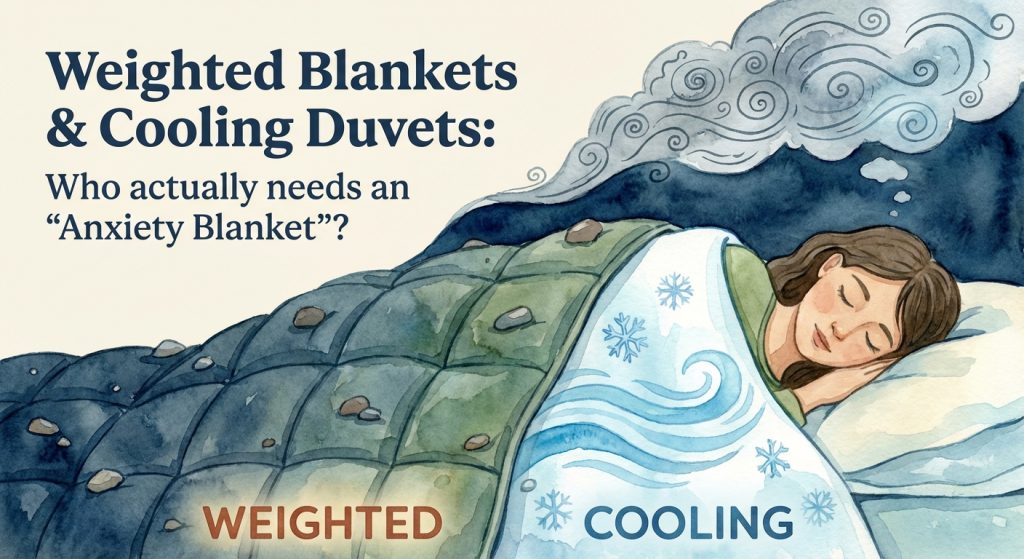
Not everyone benefits from being pinned to the mattress. Based on current research and discussions in communities like r/ADHD and r/Insomnia, three specific profiles see the most significant ROI (Return on Investment) from weighted blanket benefits:
- 1. The Neurodivergent Brain (ADHD & ASD):
For individuals with Attention Deficit Hyperactivity Disorder or Autism Spectrum Disorder, sensory processing can be chaotic. The “racing thoughts” that prevent sleep are often linked to a lack of sensory regulation. The compression of a weighted blanket provides a sensory anchor, quieting the “noise” of the nervous system. - 2. The “Tired but Wired” Profile:
If you have an inverted cortisol curve—where your stress hormones are high at night—you likely feel physically tense in bed. Users on forums describe a sensation of “floating” or “vibrating” when trying to sleep. The weight physically counters this, forcing muscle relaxation. - 3. High Anxiety & PTSD:
The sensation of safety provided by the “cocoon” effect can be a powerful tool for those suffering from nocturnal anxiety. It creates a physical boundary that can make the sleeping environment feel more secure.
The Heat Trap: When Weight Destroys Sleep Quality
There is a fundamental conflict in sleep optimization: Deep Pressure Stimulation requires mass, but mass usually creates insulation.
One of the absolute non-negotiables of high-quality sleep is a drop in core body temperature. For you to enter the deepest stages of sleep (NREM3), your core temperature must drop by approximately 2°F to 3°F (1°C to 1.5°C). This is why biohackers like Bryan Johnson meticulously control their bedroom climate and why supplements like L-Glycine are used to lower body temperature.
If you use a traditional weighted blanket made of polyester (minky fabric) or packed with plastic pellets, you are essentially wrapping yourself in insulation. This traps your metabolic heat. The result? You might fall asleep faster due to the comfort of the weight, but you will likely wake up at 2:00 AM sweating.
This phenomenon is the number one complaint on forums like r/Menopause and r/Bedding. Users report waking up in a “pool of sweat,” which triggers an adrenaline spike, effectively ruining the rest of the night. If your goal is to stop night sweats bedding, a standard weighted blanket is often the enemy.
The Weighted Blanket Selection Guide (2026 Standards)
If you have determined that your anxiety or sensory needs outweigh the heat risk, you must select the right tool. The market in 2026 has moved beyond the cheap, plastic-filled blankets of the past.
1. The 10% Rule (Calculated Precision)
The consensus for the “sweet spot” of weight is approximately 10% of your body weight.
- 150 lbs (68 kg) individual: Look for a 15 lb (6.8 kg) blanket.
- 200 lbs (90 kg) individual: Look for a 20 lb (9 kg) blanket.
Going significantly heavier does not increase the sedative effect but does increase the risk of orthopedic strain and heat retention.
2. Glass Beads vs. Plastic Pellets
Avoid plastic pellets. They are bulky, retain more heat, and are noisy. The industry standard for high-quality blankets is now micro-glass beads. They are denser, allowing the blanket to be thinner and contour to the body better, which improves the Deep Pressure Stimulation without feeling like a gym mat.
3. The “Open-Knit” Revolution
If you are a hot sleeper but crave weight, the most significant innovation is the open-knit weighted blanket (popularized by brands like Bearaby or Nuzzie). Unlike a duvet filled with beads, these are thick, heavy ropes of fabric woven together with large gaps (chunky knit).
- Pros: The holes allow for genuine airflow. Heat can escape directly through the gaps.
- Cons: They are often bulkier and may not provide the same uniform pressure as a bead-filled glass blanket.
4. Cooling Covers (PCM)
Some modern weighted blankets come with covers utilizing Phase Change Materials (PCM). These fabrics feel cool to the touch (high thermal conductivity) and absorb excess heat initially. However, be aware that once the PCM is saturated with heat, it stops cooling. It is a temporary buffer, not a permanent air conditioner.
The Pivot: When to Switch to a Bamboo Duvet
There comes a point where the benefits of weight are eclipsed by the damage of hyperthermia. If you are waking up damp, if your Apple Watch sleep tracking shows high restlessness due to temperature, or if you are suffering from night sweats due to hormonal shifts (like the luteal phase or menopause), you must prioritize temperature regulation over pressure.
This is where a high-performance cooling duvet review becomes relevant. The goal here is to stop night sweats bedding from becoming a sauna.
In 2025, the debate on r/Bedding and among textile experts has shifted away from cotton and toward semi-synthetic fibers derived from plant pulp, specifically Lyocell and Bamboo Viscose.
Why Cotton Fails the Sweat Test
Cotton is breathable, but it is highly absorbent. It holds onto moisture. If you sweat in cotton, the fabric stays wet, becoming heavy and clammy against your skin. This “wet towel” effect causes discomfort and skin irritation, leading to micro-awakenings.
The Bamboo / Lyocell Advantage
Often marketed under trade names like Tencel, these fabrics are derived from wood pulp (eucalyptus or bamboo).
- 1. Hydrophilic Nature: The fibers structure is designed to wick moisture away from the skin and disperse it across the surface of the fabric, where it can evaporate.
- 2. Thermal Regulation: Unlike polyester (which traps heat) or down (which insulates aggressively), a bamboo duvet allows for rapid heat exchange. It keeps you warm enough not to freeze but releases heat the moment your body temp spikes.
- 3. Texture: They are exceptionally smooth, often described as “vegan silk.” For people with sensory processing issues who find cotton rough, this is a secondary benefit.
Cooling Duvet Review: Material Hierarchy
When shopping for a cooling duvet/comforter to replace or supplement your heavy blanket, ignore the thread count marketing and look at the composition of two things: the shell and the fill.
1. The Gold Standard: 100% Bamboo/Lyocell Shell & Fill
The most effective cooling duvets use bamboo/lyocell for both the outer casing and the inner filling.
- Performance: Exceptional moisture management.
- Feel: Silky, draped, heavy enough to feel cozy but light enough to breathe.
- Cons: Can be flat. They lack the “fluffiness” of down.
2. The Hybrid: Cotton Shell + Wool Fill
Wool is the original biological temperature regulator. It evolved to keep sheep warm in snow and cool in the sun.
- Performance: Wool is superior at humidity regulation. It can absorb 30% of its weight in moisture without feeling wet.
- Feel: Heavier than bamboo, providing a “mini” weighted effect naturally.
- Cons: Distinct smell (sometimes), harder to wash, expensive.
3. The Budget Trap: “Cooling” Polyester
Avoid anything labeled “microfiber” or “cooling alternative down” unless it specifically uses advanced tech like Outlast. Standard polyester is plastic. It will not help you stop night sweats bedding issues; it will exacerbate them.
Integration: How to Combine DPS and Cooling
You do not necessarily have to choose between weighted blanket benefits and thermal regulation. Many biohackers and sleep optimizers use a hybrid protocol to get the best of both worlds.
Protocol A: The “Pre-Sleep” Anchor
Use the weighted blanket only for the transition period.
- 1. Get into bed 30 minutes before your target sleep time.
- 2. Use the weighted blanket while reading or doing 4-7-8 breathing & NSDR. This utilizes the Deep Pressure Stimulation to calm the sympathetic nervous system and lower your heart rate.
- 3. Once you feel drowsiness setting in (the “sleep gate” opening), remove the weighted blanket and switch to your lightweight bamboo duvet for the actual sleep duration.
- Why this works: You get the anxiety reduction of DPS without the heat retention during the night.
Protocol B: The Leg Anchor
Many users on r/RestlessLegs find that they do not need full-body compression. Placing a smaller weighted blanket (or a folded one) only over the legs or hips can provide sufficient grounding to stop fidgeting while leaving the upper body and core free to dissipate heat.
Protocol C: The “Cold Room” Compensation
If you absolutely must sleep under a heavy blanket sleep system, you must aggressively lower the room temperature to compensate. The standard recommendation for room temperature is around 65°F (18.3°C). If you use a weighted blanket, you may need to drop this to 62°F (16.5°C) or lower. This aligns with the “thermal gradient” theory—keeping the head cool while the body is warm. However, this can be expensive in energy costs and uncomfortable for partners (the “Sleep Divorce” scenario).
Biohacking Perspectives: What the Data Says
Top-tier biohackers like Bryan Johnson and the community following the Blueprint protocol prioritize data over feelings. The metric to watch here is Heart Rate Variability (HRV) and Deep Sleep duration.
If a weighted blanket increases your deep sleep (tracked via Apple Watch sleep tracking or similar) without causing wake-ups, it is a net positive. However, if you see your “Restfulness” score drop or your body temperature deviation rise on an Oura Ring, the blanket is likely acting as a thermal stressor.
The Quantified Scientist (a data-driven reviewer) and discussions on SleepHQ often highlight that what feels “cozy” psychologically is often “stressful” physiologically if it raises the pulse rate. Heat raises the pulse. Therefore, if your tracker shows an elevated heart rate in the first 4 hours of sleep, suspect your bedding.
Frequently Asked Questions
Can I wash a weighted blanket?
Yes, but with caution. Most blankets with glass beads are machine washable on a gentle, cold cycle, but they are heavy when wet and can damage older washing machines. It is highly recommended to use a removable duvet cover and wash that regularly, washing the heavy insert only 2-3 times a year. Open-knit blankets usually require commercial-sized washers or bathtub hand-washing.
Is a weighted blanket safe for sleep apnea?
If you have Obstructive Sleep Apnea (OSA) or UARS, you should consult your doctor. While generally safe, placing heavy weight on the chest of someone with compromised respiratory muscle strength or severe lung issues could theoretically increase the work of breathing. Most modern guidance suggests keeping the weight around the legs or waist if this is a concern, or ensuring the weight does not exceed the 10% ratio.
Why does my bamboo duvet smell funny?
Viscose and rayon from bamboo are processed fibers. Sometimes, a “factory smell” persists from the manufacturing process. This usually dissipates after one or two wash cycles and proper airing out. If the smell is sharp or chemical-like and persists, it may be a sign of lower-quality processing chemicals; look for OEKO-TEX certification to ensure safety.
Does a weighted blanket replace melatonin?
No. Melatonin is a hormone that signals timing (circadian rhythm); a weighted blanket provides sensory input (nervous system regulation). They work via completely different mechanisms. They can be stacked: Melatonin to signal “when” to sleep, and the blanket to help the body physically settle down.
Summary: The Decision Matrix
Making the choice between maximizing pressure or maximizing cooling depends on your primary symptom.
Choose a Weighted Blanket (Glass Beads/Open Knit) IF:
- You struggle primarily with sleep onset latency (taking hours to fall asleep).
- You have high anxiety, ADHD, or “racing thoughts” in bed.
- You wake up because of limb movements or Restless Legs Syndrome.
- Your room is consistently cold (below 65°F / 18°C).
- Recommendation: Look for an “Open-Knit” design to mitigate heat risk.
Choose a Bamboo/Lyocell Cooling Duvet IF:
- You fall asleep easily but wake up sweating (Sleep Maintenance Insomnia).
- You are going through menopause or hormonal fluctuations (Luteal phase).
- You live in a warm climate or cannot lower AC temperature.
- You dislike the feeling of being “trapped” or restricted.
- Recommendation: Verify 100% Lyocell/Viscose from Bamboo content for both shell and fill.
The Middle Ground:
- If you need both, try Protocol A (using weight to calm down, then discarding it) or investigate a high-end “Cooling Weighted Blanket” that utilizes Lyocell fabric covers, though understand that even breathable weight is warmer than air.
Sleep is a game of elimination. You remove the light, you remove the noise, and you remove the stress. Bedding is the interface between your body and the environment. Whether you choose the grounding embrace of a weighted blanket or the breathable freedom of bamboo, the goal remains the same: a night where you close your eyes and don’t open them until morning.

By: Alex Warenstein.
Bio: Alex Warenstein is a sleep biohacker and founder of Night Time Comfort. After battling chronic insomnia and circadian disruption, he now helps others optimize their sleep using data-driven protocols. Read full story.
Disclaimer: Alex is not a doctor. This content is for educational purposes only. Always consult a specialist.