Stop guessing. Before you spend money on gadgets or run endless experiments, use this step-by-step elimination process to narrow down the most likely causes — and jump straight to Level 4 if you’re waking up gasping, choking, or feeling consistently unrefreshed.
If you are reading this, you are tired. Maybe you can’t fall asleep, or maybe you wake up at 3:00 AM staring at the ceiling.
The internet often jumps to worst-case diagnoses. In reality, many sleep complaints are driven by habits, timing, stress, and environment — so we rule out the “horses” first before chasing “zebras” (rare medical conditions).
I designed this Sleep Triage Protocol to filter your problems layer by layer. We start with the basics. Only if you “pass” the early levels do we move to the clinical diagnostics.
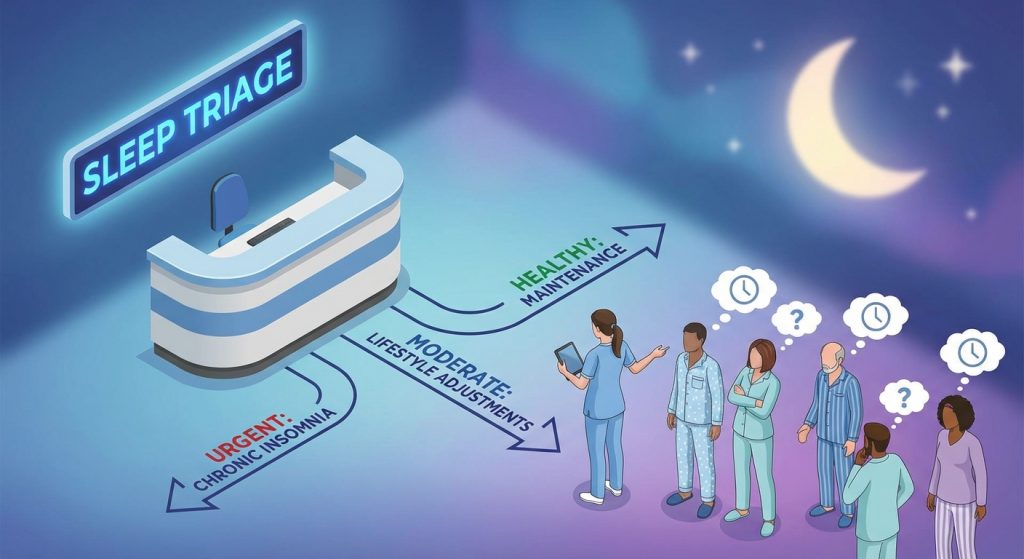
Level 1: The Foundation Check (Environment & Habits)
Before analyzing your biology, let’s analyze your bedroom. If your environment is hostile to sleep, supplements rarely compensate for it — so start here.
1. The Temperature Test
The Problem: Your core body temperature must drop by ~2°F (1°C) to initiate deep sleep. If your room is too warm, your body fights to cool down, causing micro-wakeups.
The Question: Do you wake up sweating, throwing off covers, or searching for the “cool side” of the pillow?
The Fix: Start around 60°F – 67°F (16°C – 19°C) and adjust from there — this range aligns with guidance from the National Sleep Foundation.
Deep Dive: If you cannot control the room temp, read our review on Pink Noise vs. White Noise (to mask AC sounds) or consider active cooling tools like the Eight Sleep Pod.
2. The Light Toxicity Test
The Problem: Light at night can reduce or delay melatonin for some people — especially bright or blue-leaning light (as summarized by Harvard Health).
The Question: Can you see your hand in front of your face when the lights are out? If yes, your room is not dark enough.
The Fix: Blackout curtains (or a well-fitting sleep mask) are usually worth it.
The Protocol: You must anchor your circadian rhythm. Read our guide on Morning Sunlight: The Huberman Protocol to understand why light in the morning fixes sleep at night.
3. The Stimulant Half-Life Calculation
The Problem: Caffeine’s half-life averages about ~5 hours but varies widely by person (per the NIH), so an afternoon coffee can still be affecting you at bedtime.
The Question: Do you consume caffeine after 1:00 PM? Do you drink alcohol within 3 hours of bedtime? (Alcohol can make you feel sleepy at first, but it often fragments sleep later in the night).
The Fix: Calculate your cutoff time using our Caffeine Half-Life Calculator. Check The Anti-Sleep Diet to see if your dinner is keeping you awake.
Level 2: The Physical Check (Ergonomics & Back Pain)
Sometimes the problem isn’t your brain; it’s your spine.
1. The “Numb Arm” Test
The Problem: If your mattress is too firm, it cuts off circulation to your shoulders/hips. If it’s too soft, your spine hammocks.
The Question: Do you wake up with numbness, tingling in your fingers, or lower back stiffness that disappears 30 minutes after waking up?
The Fix: Side sleepers generally need softer zones. Read our Mattress Firmness Selector guide.
2. The Pillow Alignment
The Problem: The most common cause of “tossing and turning” is a neck that is fighting for alignment.
The Question: Do you fold your pillow in half? Do you put your arm under your head?
The Fix: You need a pillow with the correct “Loft” (height) for your shoulder width. Consult our Pillow Height Guide.
Level 3: The Biochemistry Check (Diet & Stress)
You passed Levels 1 and 2. Your room is dark, cool, and your bed is comfy. But you are still waking up. Now we look inside.
1. The 3:00 AM “Sugar Crash”
The Problem: Nocturnal Hypoglycemia. A blood-sugar swing. For some people, a high-sugar/carb snack before bed can spike glucose and then drop later, which may trigger a stress response and a sudden, “wide-awake” wake-up.
The Symptom: You wake up suddenly, alert, heart pounding, maybe hungry.
The Diagnosis: A CGM can help confirm the pattern — ideally, review the data with a clinician if you’re on glucose-affecting meds or have metabolic risk. Read our Freestyle Libre 3 Review.
The Fix: Switch to Best Bedtime Snacks for Deep Sleep (like Almonds or Yogurt) or read about Sugar & Fruit Before Bed.
2. The “Tired but Wired” (Cortisol Inversion)
The Problem: Your circadian rhythm is flipped. You have low energy in the morning but are wide awake at 11:00 PM.
The Symptom: You feel exhausted all day, but as soon as you get in bed, your mind starts racing and planning tomorrow.
The Diagnosis: If this pattern is persistent, consider discussing it with a clinician; some people use salivary cortisol testing, but it’s not required for everyone.
The Fix: You need to lower evening “activation.” Some people experiment with Phosphatidylserine, Holy Basil, or Ashwagandha KSM-66; introduce one change at a time and watch for side effects or interactions.
3. The Bathroom Run (Nocturia)
The Problem: You wake up multiple times to pee.
The Symptom: You lose sleep simply because your bladder won’t let you rest.
The Fix: It might not be just “drinking too much water.” Nocturia has multiple common causes (overview: Cleveland Clinic). Read our guide Stop Waking Up to Pee: Nocturia — and if you explore options like Pygeum Africanum, treat them as experiments rather than guaranteed fixes.
Level 4: The Clinical Triage (Apnea & UARS)
If you have optimized your hygiene, environment, and diet, and you are STILL exhausted, unrefreshed, or waking up gasping—you may have a mechanical airway issue. These are classic red flags highlighted by the American Academy of Sleep Medicine, and they’re worth a proper sleep evaluation.
Use this flowchart to distinguish between the three main “Invisible” sleep thieves.
Profile A: The “Classic” Apnea (OSA)
The airway physically collapses. Oxygen drops.
The Vibe: Heavy, loud, gasping.
Key Symptoms:
- Loud snoring (partners complain).
- Waking up gasping for air or choking.
- Morning headaches and dry mouth.
The Gadget Check:
- Look for Oxygen Drops (<90%).
- Use a Wellue O2Ring to find “sawtooth” drop patterns.
- Read: SpO2 & Oxygen Desaturation: Understanding the 4% Drop Rule.
Action: You need a diagnosis. If a doctor is unavailable, consider a home test like the WatchPAT One. If diagnosed, review our guides on CPAP Machines and Masks.
Profile B: The “Hidden” Struggle (UARS)
The airway narrows (like a straw), requiring huge effort to breathe. Oxygen stays normal, but sleep is fragmented.
The Vibe: Tense, anxious, light sleeper.
Key Symptoms:
- Cold hands and feet (poor circulation due to stress).
- Low blood pressure or dizziness upon standing.
- Waking up feeling “unrefreshed” rather than sleepy.
The Gadget Check:
- Oxygen is normal (>95%), which is why doctors miss it.
- Pulse Spikes: Look for heart rate spikes every few minutes during the night (e.g., 60 -> 90 -> 60). This is the adrenaline rush waking you up.
- Read: O2Ring Data Analysis: Estimating Your Apnea/UARS Probability.
Action: See a doctor for a sleep study (Full PSG).
*** UARS is the most insidious and “sneaky” sleep thief. Standard home tests often miss it because oxygen doesn’t drop.
The most informative diagnosis typically requires a clinician-led full Polysomnography (PSG) to detect RERAs (Respiratory Effort-Related Arousals) that standard AHI scores often ignore.
Profile C: Psychophysiological Insomnia
The hardware is fine, but the software is glitched. Your brain has learned to fear the bed.
The Vibe: Frustrated, helpless, “wired” specifically at bedtime.
Key Symptoms:
- The “Reverse” Sleepiness: You feel heavy-eyed and ready to sleep while watching TV or reading on the couch, but the moment you get into your own bed, you are wide awake and alert.
- Conditioned Arousal: For some, sleep improves in hotels or new environments because the brain hasn’t associated that specific bed with the frustration of insomnia yet (though for others with high anxiety, a new place changes nothing).
The Gadget Check: Your O2Ring and Apple Watch show stable oxygen and normal pulse, but you wake up feeling unrefreshed or convinced that you slept very poorly compared to the data.
Action Plan:
- Manage Orthosomnia: If checking your data every morning causes anxiety (“Oh no, only 10 minutes of deep sleep!”), stop tracking for a week. Use gadgets to rule out Apnea, not to judge your performance.
- Retrain the Brain (Therapy):
CBT-I (Cognitive Behavioral Therapy for Insomnia): a first-line approach recommended by the American College of Physicians.SRT (Sleep Restriction Therapy): A tough but effective method of limiting time in bed to build high “sleep pressure.”
- Dietary Supplements (“Racing Mind” Stack): Try L-Theanine, Apigenin, Passionflower, or other supplements for sleep to lower the mental volume.
- Medical Options (Talk to your Doctor): If hygiene and supplements fail, consult a doctor. They may consider:
Prescription: Low-dose Doxepin (Silenor) or Trittico (Trazodone) for sleep maintenance.OTC/Pharmacy: Some antihistamines are sold as sleep aids in certain countries, but availability and risks vary — treat this as something to discuss with a clinician or pharmacist rather than a default plan.
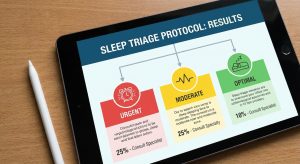
Summary: What is your next move?
1. Fix the Room: Keep it cool, dark, and quiet. Ensure proper temperature and monitor Bedroom Air Quality (CO2).
2. Fix the Food: Check the Anti-Sleep Diet list to avoid foods that will destroy your sleep.
3. Fix the Body: Optimize Supplements (Magnesium L-Threonate, Apigenin, Glycine, etc.), ensure the correct Pillow and Mattress, strictly avoid late Caffeine, stabilize Blood Sugar, and manage Nocturia.
4. Check the Data:
- Perfect data but zero or bad sleep? -> Focus on Supplements, Sleep Hygiene, and Psychology (CBT-I).
- Oxygen drops? → Read our Wellue O2Ring Review (along with our Data Analysis guide and the SpO2 3% vs 4% Rule). Then, see a doctor for Apnea testing (Full PSG or home devices like WatchPAT One).
- Pulse spikes + Cold Hands? → This could be UARS. You need to see a doctor for a full in-lab PSG.
*** Warning: UARS (and mild Apnea) is the trickiest condition to spot. A simple home test usually cannot detect it. For the most accurate diagnosis, you generally need a clinician to order and interpret a full in-lab Polysomnography (PSG) to count the subtle breathing efforts (called RERAs) that standard machines miss.
*** Disclaimer: I’m not a clinician. This protocol is educational and designed to help you organize symptoms and questions so you can make faster progress — including with a qualified professional when needed.

By: Alex Warenstein.
Bio: Alex Warenstein is a sleep biohacker and founder of Night Time Comfort. After battling chronic insomnia and circadian disruption, he now helps others optimize their sleep using data-driven protocols. Read full story.
Disclaimer: Alex is not a doctor. This content is for educational purposes only. Always consult a specialist.